Arcjet 首席执行官 David Mytton 与 a16z 合伙人 Joel de la Garza 共同探讨了管理网站及网络应用访问权限与操作行为的日益复杂性。核心挑战在于判断自动化流量究竟来自恶意行为者与麻烦的机器人,还是代表真实客户购买产品的 AI 代理。
Joel 与 David 深入分析了如何在分析每个请求时不增加延迟,以及边缘端更快的推理如何为欺诈防护、内容过滤乃至广告技术开辟新可能。
讨论主题包括:
- 为何传统威胁分析无法适用于 AI 驱动的网络
- 全上下文安全检查的必要性
- 如何实现亚秒级、高性价比的推理
- 每次访问背后潜藏的多种行为者与操作类型
正如 David 所言,降低推理成本是让应用能够基于完整上下文窗口(即关于用户、会话及应用的所有已知信息)采取行动的关键。
关注社交媒体上的各位嘉宾:
David Mytton:https://x.com/davidmytton
Joel de la Garza:https://www.linkedin.com/in/3448827723723234/
查看 a16z 在人工智能领域的全部动态,包括文章、项目及更多播客:https://a16z.com/ai/
时间戳:
00:00 引言
00:34 AI 机器人的兴起及其潜在益处
02:43 良性流量与恶意流量 | 开发人员与安全团队面临的挑战
03:23 该领域的解决方案
04:37 Robots.txt 的作用
06:42 理解 AI 代理及其运作方式
10:55 在互联网规模下控制流量
12:51 构建指纹识别体系
18:45 机器人行为及新一代 AI 带来的可能性
22:39 本地运行 LLM 的未来
28:20
Arcjet 首席执行官 David Mytton 与 a16z 合伙人 Joel de la Garza 共同探讨了管理网站及网络应用访问权限与操作行为的日益复杂性。核心挑战在于判断自动化流量究竟来自恶意行为者与麻烦的机器人,还是代表真实客户购买产品的 AI 代理。
Joel 与 David 深入分析了如何在分析每个请求时不增加延迟,以及边缘端更快的推理如何为欺诈防护、内容过滤乃至广告技术开辟新可能。
讨论主题包括:
- 为何传统威胁分析无法适用于 AI 驱动的网络
- 全上下文安全检查的必要性
- 如何实现亚秒级、高性价比的推理
- 每次访问背后潜藏的多种行为者与操作类型
正如 David 所言,降低推理成本是让应用能够基于完整上下文窗口(即关于用户、会话及应用的所有已知信息)采取行动的关键。
关注社交媒体上的各位嘉宾:
David Mytton:https://x.com/davidmytton
Joel de la Garza:https://www.linkedin.com/in/3448827723723234/
查看 a16z 在人工智能领域的全部动态,包括文章、项目及更多播客:https://a16z.com/ai/
时间戳:
00:00 引言
00:34 AI 机器人的兴起及其潜在益处
02:43 良性流量与恶意流量 | 开发人员与安全团队面临的挑战
03:23 该领域的解决方案
04:37 Robots.txt 的作用
06:42 理解 AI 代理及其运作方式
10:55 在互联网规模下控制流量
12:51 构建指纹识别体系
18:45 机器人行为及新一代 AI 带来的可能性
22:39 本地运行 LLM 的未来
Ben Horowitz, Martin Casado, Raghu Raghuram, and Erik Torenberg discuss the launch of a16z's new Machine Age Fund and the infrastructure buildout behind AI, from chips, memory, and networking to power, cooling, and data centers.
Why a dedicated fund now? The group argues that the bottleneck in AI is increasingly shifting from the models themselves to everything beneath them. Hyperscaler CapEx is surging, critical components are booked years in advance, and each new generation of reasoning and agents requires dramatically more compute. They unpack why this cycle looks different from previous infrastructure booms and how AI is turning problems once constrained by engineering into problems that can increasingly be attacked with capital and compute.
They also explore where the next generation of infrastructure companies could emerge, why founders are returning to hard technical problems across hardware and systems, and what it will take to rebuild the computing stack for the Machine Age.
Timestamps:
00:00 - Intro
00:50 - Introducing the Machine Age Fund
02:00 - Why Founder Interest in Hardware Just 4x'd
04:00 - How Do We Know Demand Isn't a Hype Cycle?
07:00 - Sold Out to 2028: The Unprecedented Supply Crunch
10:00 - What's Actually Bottlenecked Right Now
14:00 - Tokens, Scaling & Why There's No Natural Regulator
19:00 - Agents as a New Kind of Employee: The GrokBot Moment
25:00 - What "AI-Designed" Infrastructure Actually Looks Like
28:00 - Rack Power, Liquid Cooling & the Data Center Redesign
34:00 - 44 Gigawatts by 2028: Why Building Faster Is So Hard
38:00 - Why "Machine Age" Is the Right Name
40:00 - Won't Incumbents Like Nvidia Take Everything?
48:00 - The Founder Profile: Why Hardware Needs Experience
Resources:
Read more about the Machine Age Fund : https://www.a16z.news/p/the-machine-age-fund
Follow Ben Horowitz on X: https://x.com/bhorowitz
Follow Raghu Raghuram on X: https://x.com/RaghuRaghuram
Follow Martin Casado on X: https://x.com/martin_casado
Stay Updated:
If you enjoyed this episode, be sure to like, subscribe, and share with your friends!
Find a16z on X: https://twitter.com/a16z
Find a16z on LinkedIn: https://www.linkedin.com/company/a16z
Listen to the a16z Show on Spotify: https://open.spotify.com/show/5bC65RDvs3oxnLyqqvkUYX
Listen to the a16z Show on Apple Podcasts: https://podcasts.apple.com/us/podcast/a16z-podcast/id842818711
Follow our host: https://x.com/eriktorenberg
Please note that the content here is for informational purposes only; should NOT be taken as legal, business, tax, or investment advice or be used to evaluate any investment or security; and is not directed at any investors or potential investors in any a16z fund. a16z and its affiliates may maintain investments in the companies discussed. For more details please see http://a16z.com/disclosures.
53:59
Ben Horowitz, Martin Casado, Raghu Raghuram, and Erik Torenberg discuss the launch of a16z's new Machine Age Fund and the infrastructure buildout behind AI, from chips, memory, and networking to power, cooling, and data centers.
Why a dedicated fund now? The group argues that the bottleneck in AI is increasingly shifting from the models themselves to everything beneath them. Hyperscaler CapEx is surging, critical components are booked years in advance, and each new generation of reasoning and agents requires dramatically more compute. They unpack why this cycle looks different from previous infrastructure booms and how AI is turning problems once constrained by engineering into problems that can increasingly be attacked with capital and compute.
They also explore where the next generation of infrastructure companies could emerge, why founders are returning to hard technical problems across hardware and systems, and what it will take to rebuild the computing stack for the Machine Age.
Timestamps:
00:00 - Intro
00:50 - Introducing the Machine Age Fund
02:00 - Why Founder Interest in Hardware Just 4x'd
04:00 - How Do We Know Demand Isn't a Hype Cycle?
07:00 - Sold Out to 2028: The Unprecedented Supply Crunch
10:00 - What's Actually Bottlenecked Right Now
14:00 - Tokens, Scaling & Why There's No Natural Regulator
19:00 - Agents as a New Kind of Employee: The GrokBot Moment
25:00 - What "AI-Designed" Infrastructure Actually Looks Like
28:00 - Rack Power, Liquid Cooling & the Data Center Redesign
34:00 - 44 Gigawatts by 2028: Why Building Faster Is So Hard
38:00 - Why "Machine Age" Is the Right Name
40:00 - Won't Incumbents Like Nvidia Take Everything?
48:00 - The Founder Profile: Why Hardware Needs Experience
Resources:
Read more about the Machine Age Fund : https://www.a16z.news/p/the-machine-age-fund
Follow Ben Horowitz on X: https://x.com/bhorowitz
Follow Raghu Raghuram on X: https://x.com/RaghuRaghuram
Follow Martin Casado on X: https://x.com/martin_casado
Stay Updated:
If you enjoyed this episode, be sure to like, subscribe, and share with your friends!
Find a16z on X: https://twitter.com/a16z
Find a16z on LinkedIn: https://www.linkedin.com/company/a16z
Listen to the a16z Show on Spotify: https://open.spotify.com/show/5bC65RDvs3oxnLyqqvkUYX
Listen to the a16z Show on Apple Podcasts: https://podcasts.apple.com/us/podcast/a16z-podcast/id842818711
Follow our host: https://x.com/eriktorenberg
Please note that the content here is for informational purposes only; should NOT be taken as legal, business, tax, or investment advice or be used to evaluate any investment or security; and is not directed at any investors or potential investors in any a16z fund. a16z and its affiliates may maintain investments in the companies discussed. For more details please see http://a16z.com/disclosures.
a16z General Partners Martin Casado, Sarah Wang, and Matt Bornstein unpack the story of Cursor: how a small, product-obsessed team entered one of the most competitive markets in technology, took on incumbents with seemingly unbeatable advantages, and repeatedly made decisions that ran against conventional startup wisdom.
They revisit the early bet that the interface between humans and AI would matter more than building a coding-specific foundation model, why Cursor built its own product rather than a VS Code plugin, and how the founders' ability to say "no" became one of the company's defining strengths. They also discuss Cursor's rapid evolution from IDE to agent and model platform, and why the team was willing to cannibalize its own products as AI capabilities improved.
The conversation gets into what founders can learn from Cursor's approach to competition, hiring, enterprise sales, M&A, and company culture, including why the team remained unfazed by competitors from Microsoft to Anthropic and how its obsessive focus on product ultimately extended into every part of building the company.
Timestamps:
00:00 - Intro
00:53 - Back to Early 2024: How a16z First Met Cursor
05:23 - The VS Code Fork vs Plug-In Decision & the Enterprise Bet
09:57 - Vertical Liftoff: Why the B Round Was a No-Brainer
17:03 - The Hardest Round: Claude Code, Competition & the D
23:38 - How You Do Anything Is How You Do Everything: The Hiring Engine
27:24 - Cursor Culture: Craftsmanship, Taste & Twinkle Lights
34:02 - The SpaceX Parallel: Elon-ish Ambition & Impossible Competitors
Resources:
Explore Cursor Compile: https://cursor.com/compile
Follow Martin Casado on X: https://x.com/martin_casado
Follow Matt Bornstein on X: https://x.com/BornsteinMatt
Follow Sarah Wang on X: https://x.com/sarahdingwang
Stay Updated:
If you enjoyed this episode, be sure to like, subscribe, and share with your friends!
Find a16z on X: https://twitter.com/a16z
Find a16z on LinkedIn: https://www.linkedin.com/company/a16z
Listen to the a16z Show on Spotify: https://open.spotify.com/show/5bC65RDvs3oxnLyqqvkUYX
Listen to the a16z Show on Apple Podcasts: https://podcasts.apple.com/us/podcast/a16z-podcast/id842818711
Follow our host: https://x.com/eriktorenberg
Please note that the content here is for informational purposes only; should NOT be taken as legal, business, tax, or investment advice or be used to evaluate any investment or security; and is not directed at any investors or potential investors in any a16z fund. a16z and its affiliates may maintain investments in the companies discussed. For more details please see http://a16z.com/disclosures.
38:35
a16z General Partners Martin Casado, Sarah Wang, and Matt Bornstein unpack the story of Cursor: how a small, product-obsessed team entered one of the most competitive markets in technology, took on incumbents with seemingly unbeatable advantages, and repeatedly made decisions that ran against conventional startup wisdom.
They revisit the early bet that the interface between humans and AI would matter more than building a coding-specific foundation model, why Cursor built its own product rather than a VS Code plugin, and how the founders' ability to say "no" became one of the company's defining strengths. They also discuss Cursor's rapid evolution from IDE to agent and model platform, and why the team was willing to cannibalize its own products as AI capabilities improved.
The conversation gets into what founders can learn from Cursor's approach to competition, hiring, enterprise sales, M&A, and company culture, including why the team remained unfazed by competitors from Microsoft to Anthropic and how its obsessive focus on product ultimately extended into every part of building the company.
Timestamps:
00:00 - Intro
00:53 - Back to Early 2024: How a16z First Met Cursor
05:23 - The VS Code Fork vs Plug-In Decision & the Enterprise Bet
09:57 - Vertical Liftoff: Why the B Round Was a No-Brainer
17:03 - The Hardest Round: Claude Code, Competition & the D
23:38 - How You Do Anything Is How You Do Everything: The Hiring Engine
27:24 - Cursor Culture: Craftsmanship, Taste & Twinkle Lights
34:02 - The SpaceX Parallel: Elon-ish Ambition & Impossible Competitors
Resources:
Explore Cursor Compile: https://cursor.com/compile
Follow Martin Casado on X: https://x.com/martin_casado
Follow Matt Bornstein on X: https://x.com/BornsteinMatt
Follow Sarah Wang on X: https://x.com/sarahdingwang
Stay Updated:
If you enjoyed this episode, be sure to like, subscribe, and share with your friends!
Find a16z on X: https://twitter.com/a16z
Find a16z on LinkedIn: https://www.linkedin.com/company/a16z
Listen to the a16z Show on Spotify: https://open.spotify.com/show/5bC65RDvs3oxnLyqqvkUYX
Listen to the a16z Show on Apple Podcasts: https://podcasts.apple.com/us/podcast/a16z-podcast/id842818711
Follow our host: https://x.com/eriktorenberg
Please note that the content here is for informational purposes only; should NOT be taken as legal, business, tax, or investment advice or be used to evaluate any investment or security; and is not directed at any investors or potential investors in any a16z fund. a16z and its affiliates may maintain investments in the companies discussed. For more details please see http://a16z.com/disclosures.
Anish Acharya joins Jen Kha to break down the next frontier of AI, from the evolving model landscape and open-source AI to why the application layer, and consumer AI in particular, may be entering a new phase.
Anish explains why he believes there will be multiple winners at the model layer, why traditional moats like network effects, scale, and brand still matter, and how companies can choose between frontier and open-weight models depending on the economics of the task. They also explore why models are increasingly specializing, and how applications can combine different types of intelligence to create products that are more valuable than any single model.
The conversation then turns to consumer AI: personal agents that can shop and manage your inbox, coding tools enabling a new generation of small businesses, and why Anish thinks we're seeing a renaissance for consumer builders. They also discuss the changing economics of AI software, the rise of "luxury software," and why the biggest risk for today's founders may no longer be thinking too big, but thinking too small.
Timestamps:
00:00 - Intro
01:20 - Who Wins the AI Model Race in Three Years?
02:49 - What's Next in the Frontier of Intelligence
07:51 - Why Open Source Is the Only Option for Some Startups
19:57 - Redefining Consumer: When the Plumber Uses GrokBot
22:16 - Town Demo: Personal Agents & Managing Chaos
24:31 - One Dominant Personal Agent or Many Talking to Each Other?
25:26 - Apps vs Model Companies: Who Captures the Value?
29:16 - The New Economics of AI Apps: Margins, Compute & Capital as Moat
30:44 - Who's Actually Building Apps Today? Founder Archetypes
32:20 - Why Giving Founders Too Much Money Isn't Fatal Anymore
34:05 - Go-to-Market for Startups Selling to SMEs
Resources:
Follow Anish Acharya on X: https://x.com/illscience
Follow Jen Kha on X: https://x.com/jkhamehl
Stay Updated:
If you enjoyed this episode, be sure to like, subscribe, and share with your friends!
Find a16z on X: https://twitter.com/a16z
Find a16z on LinkedIn: https://www.linkedin.com/company/a16z
Listen to the a16z Show on Spotify: https://open.spotify.com/show/5bC65RDvs3oxnLyqqvkUYX
Listen to the a16z Show on Apple Podcasts: https://podcasts.apple.com/us/podcast/a16z-podcast/id842818711
Follow our host: https://x.com/eriktorenberg
Please note that the content here is for informational purposes only; should NOT be taken as legal, business, tax, or investment advice or be used to evaluate any investment or security; and is not directed at any investors or potential investors in any a16z fund. a16z and its affiliates may maintain investments in the companies discussed. For more details please see http://a16z.com/disclosures.
36:02
Anish Acharya joins Jen Kha to break down the next frontier of AI, from the evolving model landscape and open-source AI to why the application layer, and consumer AI in particular, may be entering a new phase.
Anish explains why he believes there will be multiple winners at the model layer, why traditional moats like network effects, scale, and brand still matter, and how companies can choose between frontier and open-weight models depending on the economics of the task. They also explore why models are increasingly specializing, and how applications can combine different types of intelligence to create products that are more valuable than any single model.
The conversation then turns to consumer AI: personal agents that can shop and manage your inbox, coding tools enabling a new generation of small businesses, and why Anish thinks we're seeing a renaissance for consumer builders. They also discuss the changing economics of AI software, the rise of "luxury software," and why the biggest risk for today's founders may no longer be thinking too big, but thinking too small.
Timestamps:
00:00 - Intro
01:20 - Who Wins the AI Model Race in Three Years?
02:49 - What's Next in the Frontier of Intelligence
07:51 - Why Open Source Is the Only Option for Some Startups
19:57 - Redefining Consumer: When the Plumber Uses GrokBot
22:16 - Town Demo: Personal Agents & Managing Chaos
24:31 - One Dominant Personal Agent or Many Talking to Each Other?
25:26 - Apps vs Model Companies: Who Captures the Value?
29:16 - The New Economics of AI Apps: Margins, Compute & Capital as Moat
30:44 - Who's Actually Building Apps Today? Founder Archetypes
32:20 - Why Giving Founders Too Much Money Isn't Fatal Anymore
34:05 - Go-to-Market for Startups Selling to SMEs
Resources:
Follow Anish Acharya on X: https://x.com/illscience
Follow Jen Kha on X: https://x.com/jkhamehl
Stay Updated:
If you enjoyed this episode, be sure to like, subscribe, and share with your friends!
Find a16z on X: https://twitter.com/a16z
Find a16z on LinkedIn: https://www.linkedin.com/company/a16z
Listen to the a16z Show on Spotify: https://open.spotify.com/show/5bC65RDvs3oxnLyqqvkUYX
Listen to the a16z Show on Apple Podcasts: https://podcasts.apple.com/us/podcast/a16z-podcast/id842818711
Follow our host: https://x.com/eriktorenberg
Please note that the content here is for informational purposes only; should NOT be taken as legal, business, tax, or investment advice or be used to evaluate any investment or security; and is not directed at any investors or potential investors in any a16z fund. a16z and its affiliates may maintain investments in the companies discussed. For more details please see http://a16z.com/disclosures.
a16z General Partners Martin Casado and Erik Torenberg are joined by Board Partner Steven Sinofsky to explore what recent breakthroughs in AI and mathematics tell us about where the technology is headed, and whether some of the basic assumptions that have governed computing for decades are starting to break.
Martin and Steven debate whether AI's progress in mathematics represents a genuine leap in reasoning or simply a new tool for solving problems at a higher level of abstraction. From the four-color theorem and early computers to graphing calculators and today's models, they trace how new technologies have repeatedly changed which problems humans need to solve themselves, and ask what makes this moment different.
The conversation then turns to one of the biggest shifts in AI: problems that were once constrained by engineering talent can increasingly be attacked with capital and compute. They discuss what that means for startups versus incumbents, venture capital, the coming wave of AI applications, and why pouring billions into increasingly capable models may force us to rethink what these systems can ultimately accomplish.
Timestamps:
00:00 - Intro
00:56 - Making Sense of AI & Math: The Riemann Hypothesis Moment
12:05 - Will AI Math Ever Map Onto Physical Reality?
19:43 - The Cold War, IBM 1953 & the Cultural Roots of Computing
38:16 - Rethinking Fundamental Assumptions About Software
46:28 - Incumbents vs Startups: Why the Innovator's Dilemma Still Wins
55:05 - The Limits of Current AI Architecture & What Comes Next
Resources:
Follow Martin Casado on X: https://x.com/martin_casado
Follow Steven Sinofsky on X: https://x.com/stevesi
Stay Updated:
If you enjoyed this episode, be sure to like, subscribe, and share with your friends!
Find a16z on X: https://twitter.com/a16z
Find a16z on LinkedIn: https://www.linkedin.com/company/a16z
Listen to the a16z Show on Spotify: https://open.spotify.com/show/5bC65RDvs3oxnLyqqvkUYX
Listen to the a16z Show on Apple Podcasts: https://podcasts.apple.com/us/podcast/a16z-podcast/id842818711
Follow our host: https://x.com/eriktorenberg
Please note that the content here is for informational purposes only; should NOT be taken as legal, business, tax, or investment advice or be used to evaluate any investment or security; and is not directed at any investors or potential investors in any a16z fund. a16z and its affiliates may maintain investments in the companies discussed. For more details please see http://a16z.com/disclosures.
1:02:30
a16z General Partners Martin Casado and Erik Torenberg are joined by Board Partner Steven Sinofsky to explore what recent breakthroughs in AI and mathematics tell us about where the technology is headed, and whether some of the basic assumptions that have governed computing for decades are starting to break.
Martin and Steven debate whether AI's progress in mathematics represents a genuine leap in reasoning or simply a new tool for solving problems at a higher level of abstraction. From the four-color theorem and early computers to graphing calculators and today's models, they trace how new technologies have repeatedly changed which problems humans need to solve themselves, and ask what makes this moment different.
The conversation then turns to one of the biggest shifts in AI: problems that were once constrained by engineering talent can increasingly be attacked with capital and compute. They discuss what that means for startups versus incumbents, venture capital, the coming wave of AI applications, and why pouring billions into increasingly capable models may force us to rethink what these systems can ultimately accomplish.
Timestamps:
00:00 - Intro
00:56 - Making Sense of AI & Math: The Riemann Hypothesis Moment
12:05 - Will AI Math Ever Map Onto Physical Reality?
19:43 - The Cold War, IBM 1953 & the Cultural Roots of Computing
38:16 - Rethinking Fundamental Assumptions About Software
46:28 - Incumbents vs Startups: Why the Innovator's Dilemma Still Wins
55:05 - The Limits of Current AI Architecture & What Comes Next
Resources:
Follow Martin Casado on X: https://x.com/martin_casado
Follow Steven Sinofsky on X: https://x.com/stevesi
Stay Updated:
If you enjoyed this episode, be sure to like, subscribe, and share with your friends!
Find a16z on X: https://twitter.com/a16z
Find a16z on LinkedIn: https://www.linkedin.com/company/a16z
Listen to the a16z Show on Spotify: https://open.spotify.com/show/5bC65RDvs3oxnLyqqvkUYX
Listen to the a16z Show on Apple Podcasts: https://podcasts.apple.com/us/podcast/a16z-podcast/id842818711
Follow our host: https://x.com/eriktorenberg
Please note that the content here is for informational purposes only; should NOT be taken as legal, business, tax, or investment advice or be used to evaluate any investment or security; and is not directed at any investors or potential investors in any a16z fund. a16z and its affiliates may maintain investments in the companies discussed. For more details please see http://a16z.com/disclosures.
Elena Burger is joined by a16z’s Angela Strange and Gabriel Vasquez to discuss the rise of the "borderless founder": entrepreneurs who bring the networks and insights of their home markets together with the talent, capital, and speed of Silicon Valley to build global companies.
Angela and Gabriel trace how a16z's international investing efforts grew from early work in Latin America into a broader global network, and why AI has accelerated the flow of founders and talent between Silicon Valley and startup ecosystems around the world. They explore the advantages borderless founders can bring, from differentiated talent networks and early customers to strong local brands and communities that help open doors across markets.
They also discuss how founder diasporas can function like powerful alumni networks, why spending time in Silicon Valley can help founders recalibrate around speed and ambition, and how the next generation of global companies may increasingly be built across multiple countries from day one.
Timestamps:
00:00 - Intro
00:54 - Who Borderless Founders Are & the Origins of a16z's Global Strategy
06:35 - What International Founders Bring to the Bay Area
10:26 - Borderless vs Immigrant vs International Founder
18:04 - The Three Native Advantages: Talent, Brand & Customers
23:08 - Do Borderless Founders Have an Edge in Silicon Valley?
27:08 - How a16z Approaches a New Country or Geography
33:15 - Repeat Founders & Building Long-Term Relationships
36:50 - The Journey from Seed to Growth for International Founders
40:30 - Advice for Founders Thinking of Moving to Silicon Valley
42:25 - 10 Years From Now: The Global Topology of Startups
Resources:
Follow Angela Strange on X: https://x.com/astrange
Follow Gabriel Vasquez on X: https://x.com/GEVS94
Follow Elena Burger on X: https://x.com/VirtualElena
https://www.a16z.news/p/rise-of-the-borderless-founder
Stay Updated:
If you enjoyed this episode, be sure to like, subscribe, and share with your friends!
Find a16z on X: https://twitter.com/a16z
Find a16z on LinkedIn: https://www.linkedin.com/company/a16z
Listen to the a16z Show on Spotify: https://open.spotify.com/show/5bC65RDvs3oxnLyqqvkUYX
Listen to the a16z Show on Apple Podcasts: https://podcasts.apple.com/us/podcast/a16z-podcast/id842818711
Follow our host: https://x.com/eriktorenberg
Please note that the content here is for informational purposes only; should NOT be taken as legal, business, tax, or investment advice or be used to evaluate any investment or security; and is not directed at any investors or potential investors in any a16z fund. a16z and its affiliates may maintain investments in the companies discussed. For more details please see http://a16z.com/disclosures.
44:49
Elena Burger is joined by a16z’s Angela Strange and Gabriel Vasquez to discuss the rise of the "borderless founder": entrepreneurs who bring the networks and insights of their home markets together with the talent, capital, and speed of Silicon Valley to build global companies.
Angela and Gabriel trace how a16z's international investing efforts grew from early work in Latin America into a broader global network, and why AI has accelerated the flow of founders and talent between Silicon Valley and startup ecosystems around the world. They explore the advantages borderless founders can bring, from differentiated talent networks and early customers to strong local brands and communities that help open doors across markets.
They also discuss how founder diasporas can function like powerful alumni networks, why spending time in Silicon Valley can help founders recalibrate around speed and ambition, and how the next generation of global companies may increasingly be built across multiple countries from day one.
Timestamps:
00:00 - Intro
00:54 - Who Borderless Founders Are & the Origins of a16z's Global Strategy
06:35 - What International Founders Bring to the Bay Area
10:26 - Borderless vs Immigrant vs International Founder
18:04 - The Three Native Advantages: Talent, Brand & Customers
23:08 - Do Borderless Founders Have an Edge in Silicon Valley?
27:08 - How a16z Approaches a New Country or Geography
33:15 - Repeat Founders & Building Long-Term Relationships
36:50 - The Journey from Seed to Growth for International Founders
40:30 - Advice for Founders Thinking of Moving to Silicon Valley
42:25 - 10 Years From Now: The Global Topology of Startups
Resources:
Follow Angela Strange on X: https://x.com/astrange
Follow Gabriel Vasquez on X: https://x.com/GEVS94
Follow Elena Burger on X: https://x.com/VirtualElena
https://www.a16z.news/p/rise-of-the-borderless-founder
Stay Updated:
If you enjoyed this episode, be sure to like, subscribe, and share with your friends!
Find a16z on X: https://twitter.com/a16z
Find a16z on LinkedIn: https://www.linkedin.com/company/a16z
Listen to the a16z Show on Spotify: https://open.spotify.com/show/5bC65RDvs3oxnLyqqvkUYX
Listen to the a16z Show on Apple Podcasts: https://podcasts.apple.com/us/podcast/a16z-podcast/id842818711
Follow our host: https://x.com/eriktorenberg
Please note that the content here is for informational purposes only; should NOT be taken as legal, business, tax, or investment advice or be used to evaluate any investment or security; and is not directed at any investors or potential investors in any a16z fund. a16z and its affiliates may maintain investments in the companies discussed. For more details please see http://a16z.com/disclosures.
a16z General Partner David George is joined by Grant LaFontaine, co-founder of Whatnot, to unpack how a marketplace that started with collectibles evolved into one of the world's leading live shopping platforms.
Grant traces the company's origins from selling Pokémon cards online as a kid to discovering live commerce by watching Whatnot's earliest customers hack together sales on social media. They discuss why Whatnot thinks less like a traditional e-commerce marketplace and more like a digital shopping mall, where discovery, entertainment, community, and commerce all happen at once. Today, users spend roughly 95 minutes a day on the platform, and most aren't even buying something on a given day.
They also explore how Whatnot is enabling small businesses to reach global audiences, expanding from collectibles into categories like fashion, food, and golf, and using AI to make sellers more efficient without replacing the human connection at the center of the experience.
Timestamps:
00:00 - Intro
01:06 - The Holographic Pokemon Card That Started It All
03:49 - How Grant & Logan Settled on Whatnot (Drunk in a Tokyo Bar)
09:18 - The State of the Market: Facebook Marketplace, China & QVC
12:41 - Entertainment vs Intent: What Whatnot Actually Sells
21:18 - The Supply Side: Turning Sellers Into Real Businesses
29:22 - Expanding Into Europe & the Seafood Distributor Story
32:47 - Operating at Scale: Staying on Top of What Breaks
39:34 - What's Next: Cars, More Countries & Better Businesses
Resources:
Follow Grant LaFontaine on X: https://x.com/GrantLaFontaine
Follow David George on X: https://x.com/DavidGeorge83
Follow Whatnot on X: https://x.com/whatnot
Stay Updated:
If you enjoyed this episode, be sure to like, subscribe, and share with your friends!
Find a16z on X: https://twitter.com/a16z
Find a16z on LinkedIn: https://www.linkedin.com/company/a16z
Listen to the a16z Show on Spotify: https://open.spotify.com/show/5bC65RDvs3oxnLyqqvkUYX
Listen to the a16z Show on Apple Podcasts: https://podcasts.apple.com/us/podcast/a16z-podcast/id842818711
Follow our host: https://x.com/eriktorenberg
Please note that the content here is for informational purposes only; should NOT be taken as legal, business, tax, or investment advice or be used to evaluate any investment or security; and is not directed at any investors or potential investors in any a16z fund. a16z and its affiliates may maintain investments in the companies discussed. For more details please see http://a16z.com/disclosures.
42:08
a16z General Partner David George is joined by Grant LaFontaine, co-founder of Whatnot, to unpack how a marketplace that started with collectibles evolved into one of the world's leading live shopping platforms.
Grant traces the company's origins from selling Pokémon cards online as a kid to discovering live commerce by watching Whatnot's earliest customers hack together sales on social media. They discuss why Whatnot thinks less like a traditional e-commerce marketplace and more like a digital shopping mall, where discovery, entertainment, community, and commerce all happen at once. Today, users spend roughly 95 minutes a day on the platform, and most aren't even buying something on a given day.
They also explore how Whatnot is enabling small businesses to reach global audiences, expanding from collectibles into categories like fashion, food, and golf, and using AI to make sellers more efficient without replacing the human connection at the center of the experience.
Timestamps:
00:00 - Intro
01:06 - The Holographic Pokemon Card That Started It All
03:49 - How Grant & Logan Settled on Whatnot (Drunk in a Tokyo Bar)
09:18 - The State of the Market: Facebook Marketplace, China & QVC
12:41 - Entertainment vs Intent: What Whatnot Actually Sells
21:18 - The Supply Side: Turning Sellers Into Real Businesses
29:22 - Expanding Into Europe & the Seafood Distributor Story
32:47 - Operating at Scale: Staying on Top of What Breaks
39:34 - What's Next: Cars, More Countries & Better Businesses
Resources:
Follow Grant LaFontaine on X: https://x.com/GrantLaFontaine
Follow David George on X: https://x.com/DavidGeorge83
Follow Whatnot on X: https://x.com/whatnot
Stay Updated:
If you enjoyed this episode, be sure to like, subscribe, and share with your friends!
Find a16z on X: https://twitter.com/a16z
Find a16z on LinkedIn: https://www.linkedin.com/company/a16z
Listen to the a16z Show on Spotify: https://open.spotify.com/show/5bC65RDvs3oxnLyqqvkUYX
Listen to the a16z Show on Apple Podcasts: https://podcasts.apple.com/us/podcast/a16z-podcast/id842818711
Follow our host: https://x.com/eriktorenberg
Please note that the content here is for informational purposes only; should NOT be taken as legal, business, tax, or investment advice or be used to evaluate any investment or security; and is not directed at any investors or potential investors in any a16z fund. a16z and its affiliates may maintain investments in the companies discussed. For more details please see http://a16z.com/disclosures.
a16z General Partner David George is joined by Will Gaybrick, President of Product & Business at Stripe, to discuss how AI is changing the way Stripe builds products, organizes teams, and thinks about the future of internet commerce. Stripe has evolved from a payments company into a multi-product financial infrastructure platform, while a new generation of AI companies is growing and monetizing faster than previous software cohorts.
Will explains why Stripe sees AI productivity as an opportunity to build more rather than simply cut costs, including how its internal coding agents now generate thousands of pull requests each week. They discuss creating founder-like agency inside large companies, building smaller and flatter teams, and why Stripe believes dramatically more software will be created as the cost of building continues to fall.
They also look ahead to agentic commerce, why checkout pages could disappear, the potential return of micropayments, stablecoins as infrastructure for a global economy, and a future where AI agents increasingly buy software and services from other machines.
Timestamps:
00:00 - Intro
01:00 - What Is Stripe Today
08:00 - The AI Cohort Explosion: 50% More Signups & Software Creation Booming
14:25 - Stripe Minions: From 1,200 to 7,000 PRs a Week
19:24 - Build Everything: Going Long vs Going Short on Your Future
28:00 - Agentic Commerce: The Missing Primitives
37:28 - Stablecoins & the Global Money Movement Platform
49:00 - Scaling Taste at Stripe
Resources:
Follow Will Gaybrick on LinkedIn: https://www.linkedin.com/in/william-gaybrick-5730347/
Follow Will on X: https://x.com/gaybrick
Follow David George on X: https://x.com/DavidGeorge83
Follow Stripe on X: https://x.com/stripe
Stay Updated:
If you enjoyed this episode, be sure to like, subscribe, and share with your friends!
Find a16z on X: https://twitter.com/a16z
Find a16z on LinkedIn: https://www.linkedin.com/company/a16z
Listen to the a16z Show on Spotify: https://open.spotify.com/show/5bC65RDvs3oxnLyqqvkUYX
Listen to the a16z Show on Apple Podcasts: https://podcasts.apple.com/us/podcast/a16z-podcast/id842818711
Follow our host: https://x.com/eriktorenberg
Please note that the content here is for informational purposes only; should NOT be taken as legal, business, tax, or investment advice or be used to evaluate any investment or security; and is not directed at any investors or potential investors in any a16z fund. a16z and its affiliates may maintain investments in the companies discussed. For more details please see http://a16z.com/disclosures.
53:49
a16z General Partner David George is joined by Will Gaybrick, President of Product & Business at Stripe, to discuss how AI is changing the way Stripe builds products, organizes teams, and thinks about the future of internet commerce. Stripe has evolved from a payments company into a multi-product financial infrastructure platform, while a new generation of AI companies is growing and monetizing faster than previous software cohorts.
Will explains why Stripe sees AI productivity as an opportunity to build more rather than simply cut costs, including how its internal coding agents now generate thousands of pull requests each week. They discuss creating founder-like agency inside large companies, building smaller and flatter teams, and why Stripe believes dramatically more software will be created as the cost of building continues to fall.
They also look ahead to agentic commerce, why checkout pages could disappear, the potential return of micropayments, stablecoins as infrastructure for a global economy, and a future where AI agents increasingly buy software and services from other machines.
Timestamps:
00:00 - Intro
01:00 - What Is Stripe Today
08:00 - The AI Cohort Explosion: 50% More Signups & Software Creation Booming
14:25 - Stripe Minions: From 1,200 to 7,000 PRs a Week
19:24 - Build Everything: Going Long vs Going Short on Your Future
28:00 - Agentic Commerce: The Missing Primitives
37:28 - Stablecoins & the Global Money Movement Platform
49:00 - Scaling Taste at Stripe
Resources:
Follow Will Gaybrick on LinkedIn: https://www.linkedin.com/in/william-gaybrick-5730347/
Follow Will on X: https://x.com/gaybrick
Follow David George on X: https://x.com/DavidGeorge83
Follow Stripe on X: https://x.com/stripe
Stay Updated:
If you enjoyed this episode, be sure to like, subscribe, and share with your friends!
Find a16z on X: https://twitter.com/a16z
Find a16z on LinkedIn: https://www.linkedin.com/company/a16z
Listen to the a16z Show on Spotify: https://open.spotify.com/show/5bC65RDvs3oxnLyqqvkUYX
Listen to the a16z Show on Apple Podcasts: https://podcasts.apple.com/us/podcast/a16z-podcast/id842818711
Follow our host: https://x.com/eriktorenberg
Please note that the content here is for informational purposes only; should NOT be taken as legal, business, tax, or investment advice or be used to evaluate any investment or security; and is not directed at any investors or potential investors in any a16z fund. a16z and its affiliates may maintain investments in the companies discussed. For more details please see http://a16z.com/disclosures.
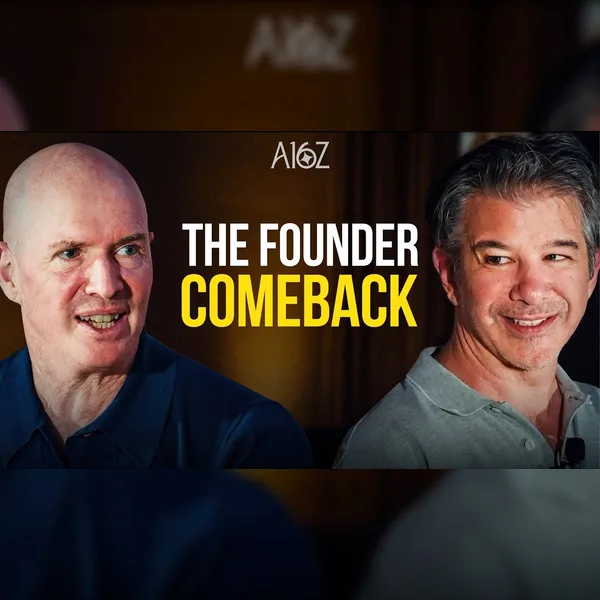
Ben Horowitz, Travis Kalanick, and Erik Torenberg take the stage at Atoms' launch event for a candid fireside conversation about entrepreneurship, company building, and why Kalanick believes the next industrial revolution will be powered by AI.
They revisit pivotal moments from Uber's history, including the decision not to acquire Lyft, lessons from scaling one of the world's fastest-growing companies, and how Kalanick has evolved as a founder. The conversation also explores Atoms' vision for industrial AI, why software is moving into the physical world, what it takes to build enduring company cultures, and why Kalanick believes the biggest opportunities of the next decade lie in transforming industries like food production, mining, and manufacturing.
Timestamps:
00:00 - Intro
00:53 - The Bits & Atoms Video: Uber's Vision from 10 Years Ago
09:00 - Atoms Mining, Food Computers & Autonomous Machines
14:44 - The Final Boss: Resistance to Change & the Second Industrial Revolution
22:41 - Why Travis Didn't Buy Lyft
28:13 - How Travis Has Changed as a Founder
36:00 - From $4M Pre to a16z's Biggest Check Ever
46:11 - Dirty Fuel, Revenge Businesses & Falling in Love Again
50:37 - Be Uniconic: Eight Years in Stealth & the New Media Landscape
Resources:
Follow Travis Kalanick on X: https://x.com/travisk
Follow Ben Horowitz on X: https://x.com/bhorowitz
Stay Updated:
If you enjoyed this episode, be sure to like, subscribe, and share with your friends!
Find a16z on X: https://twitter.com/a16z
Find a16z on LinkedIn: https://www.linkedin.com/company/a16z
Listen to the a16z Show on Spotify: https://open.spotify.com/show/5bC65RDvs3oxnLyqqvkUYX
Listen to the a16z Show on Apple Podcasts: https://podcasts.apple.com/us/podcast/a16z-podcast/id842818711
Follow our host: https://x.com/eriktorenberg
Please note that the content here is for informational purposes only; should NOT be taken as legal, business, tax, or investment advice or be used to evaluate any investment or security; and is not directed at any investors or potential investors in any a16z fund. a16z and its affiliates may maintain investments in the companies discussed. For more details please see http://a16z.com/disclosures.
54:51
Ben Horowitz, Travis Kalanick, and Erik Torenberg take the stage at Atoms' launch event for a candid fireside conversation about entrepreneurship, company building, and why Kalanick believes the next industrial revolution will be powered by AI.
They revisit pivotal moments from Uber's history, including the decision not to acquire Lyft, lessons from scaling one of the world's fastest-growing companies, and how Kalanick has evolved as a founder. The conversation also explores Atoms' vision for industrial AI, why software is moving into the physical world, what it takes to build enduring company cultures, and why Kalanick believes the biggest opportunities of the next decade lie in transforming industries like food production, mining, and manufacturing.
Timestamps:
00:00 - Intro
00:53 - The Bits & Atoms Video: Uber's Vision from 10 Years Ago
09:00 - Atoms Mining, Food Computers & Autonomous Machines
14:44 - The Final Boss: Resistance to Change & the Second Industrial Revolution
22:41 - Why Travis Didn't Buy Lyft
28:13 - How Travis Has Changed as a Founder
36:00 - From $4M Pre to a16z's Biggest Check Ever
46:11 - Dirty Fuel, Revenge Businesses & Falling in Love Again
50:37 - Be Uniconic: Eight Years in Stealth & the New Media Landscape
Resources:
Follow Travis Kalanick on X: https://x.com/travisk
Follow Ben Horowitz on X: https://x.com/bhorowitz
Stay Updated:
If you enjoyed this episode, be sure to like, subscribe, and share with your friends!
Find a16z on X: https://twitter.com/a16z
Find a16z on LinkedIn: https://www.linkedin.com/company/a16z
Listen to the a16z Show on Spotify: https://open.spotify.com/show/5bC65RDvs3oxnLyqqvkUYX
Listen to the a16z Show on Apple Podcasts: https://podcasts.apple.com/us/podcast/a16z-podcast/id842818711
Follow our host: https://x.com/eriktorenberg
Please note that the content here is for informational purposes only; should NOT be taken as legal, business, tax, or investment advice or be used to evaluate any investment or security; and is not directed at any investors or potential investors in any a16z fund. a16z and its affiliates may maintain investments in the companies discussed. For more details please see http://a16z.com/disclosures.
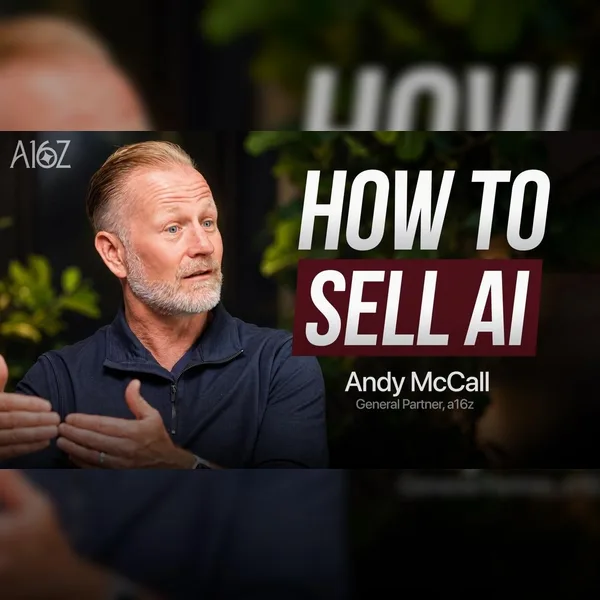
Elena Burger is joined by a16z's Andy McCall and Joe Schmidt to break down two very different ways AI startups can go to market: the lighthouse and the landgrab. Should founders win a handful of marquee customers whose credibility unlocks an entire industry, or move quickly across a broad market where the ROI already speaks for itself?
Drawing on Joe's Lighthouse or Landgrab framework and Andy's experience building sales organizations at Samsara and Meraki, they explore how founders can determine which strategy fits their market, when social proof matters more than math, and why the current rush to adopt AI has created a rare window for startups to sell big software again.
They also get tactical on POCs, pricing and ACV, hiring early sales teams, moving from mid-market to enterprise, and why founders shouldn't spend too much time perfecting their GTM strategy before talking to customers. As Andy puts it: spend 1% of your time on strategy and 99% executing.
Timestamps:
00:00 - Intro
00:58 - The Lighthouse vs Land Grab Framework
06:57 - Samsara's ELD Mandate: The Perfect Land Grab Moment
13:26 - Lighthouse in Practice: Harvey, Decagon & Further AI
17:00 - ACV Discipline: Clear the Hurdle, Then Just Go
27:14 - Every Big Company Eventually Deploys Both Strategies
33:54 - Why Now Is the Moment to Sell Big Software Again
37:49 - The Biggest Mistake Founders Make
Resources:
Read Joe Schmidt's "Lighthouse or Landgrab": https://a16z.com/lighthouse-or-landgrab-how-to-pick-your-ai-sales-strategy/
Follow Andy McCall on LinkedIn: https://www.linkedin.com/in/amccall/
Follow Joe Schmidt on X: https://x.com/joeschmidtiv
Follow Elena Burger on X: https://x.com/VirtualElena
Stay Updated:
If you enjoyed this episode, be sure to like, subscribe, and share with your friends!
Find a16z on X: https://twitter.com/a16z
Find a16z on LinkedIn: https://www.linkedin.com/company/a16z
Listen to the a16z Show on Spotify: https://open.spotify.com/show/5bC65RDvs3oxnLyqqvkUYX
Listen to the a16z Show on Apple Podcasts: https://podcasts.apple.com/us/podcast/a16z-podcast/id842818711
Follow our host: https://x.com/eriktorenberg
Please note that the content here is for informational purposes only; should NOT be taken as legal, business, tax, or investment advice or be used to evaluate any investment or security; and is not directed at any investors or potential investors in any a16z fund. a16z and its affiliates may maintain investments in the companies discussed. For more details please see http://a16z.com/disclosures.
43:56
Elena Burger is joined by a16z's Andy McCall and Joe Schmidt to break down two very different ways AI startups can go to market: the lighthouse and the landgrab. Should founders win a handful of marquee customers whose credibility unlocks an entire industry, or move quickly across a broad market where the ROI already speaks for itself?
Drawing on Joe's Lighthouse or Landgrab framework and Andy's experience building sales organizations at Samsara and Meraki, they explore how founders can determine which strategy fits their market, when social proof matters more than math, and why the current rush to adopt AI has created a rare window for startups to sell big software again.
They also get tactical on POCs, pricing and ACV, hiring early sales teams, moving from mid-market to enterprise, and why founders shouldn't spend too much time perfecting their GTM strategy before talking to customers. As Andy puts it: spend 1% of your time on strategy and 99% executing.
Timestamps:
00:00 - Intro
00:58 - The Lighthouse vs Land Grab Framework
06:57 - Samsara's ELD Mandate: The Perfect Land Grab Moment
13:26 - Lighthouse in Practice: Harvey, Decagon & Further AI
17:00 - ACV Discipline: Clear the Hurdle, Then Just Go
27:14 - Every Big Company Eventually Deploys Both Strategies
33:54 - Why Now Is the Moment to Sell Big Software Again
37:49 - The Biggest Mistake Founders Make
Resources:
Read Joe Schmidt's "Lighthouse or Landgrab": https://a16z.com/lighthouse-or-landgrab-how-to-pick-your-ai-sales-strategy/
Follow Andy McCall on LinkedIn: https://www.linkedin.com/in/amccall/
Follow Joe Schmidt on X: https://x.com/joeschmidtiv
Follow Elena Burger on X: https://x.com/VirtualElena
Stay Updated:
If you enjoyed this episode, be sure to like, subscribe, and share with your friends!
Find a16z on X: https://twitter.com/a16z
Find a16z on LinkedIn: https://www.linkedin.com/company/a16z
Listen to the a16z Show on Spotify: https://open.spotify.com/show/5bC65RDvs3oxnLyqqvkUYX
Listen to the a16z Show on Apple Podcasts: https://podcasts.apple.com/us/podcast/a16z-podcast/id842818711
Follow our host: https://x.com/eriktorenberg
Please note that the content here is for informational purposes only; should NOT be taken as legal, business, tax, or investment advice or be used to evaluate any investment or security; and is not directed at any investors or potential investors in any a16z fund. a16z and its affiliates may maintain investments in the companies discussed. For more details please see http://a16z.com/disclosures.
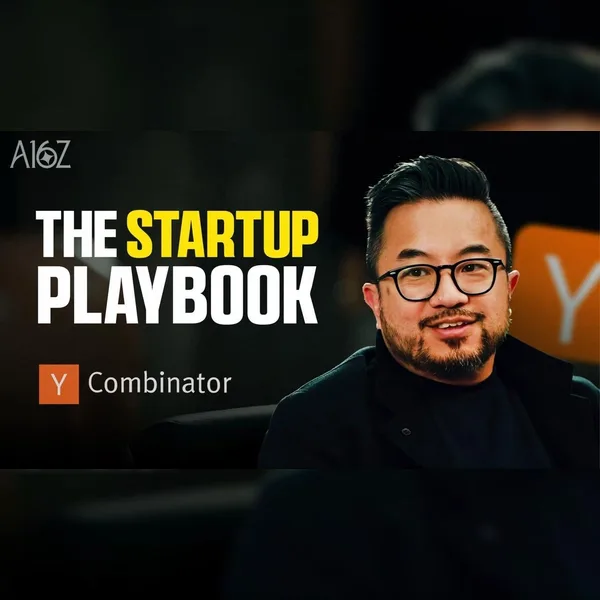
Anish Acharya is joined by Garry Tan, President and CEO of Y Combinator, for a conversation about how AI is rewriting the startup playbook, why founders should be more ambitious than ever, and what two decades of Silicon Valley booms, busts, and missed opportunities have taught Garry about building what's next.
Garry reflects on turning down an early opportunity to join Palantir, why chasing what's "hot" is often the wrong strategy, and why the best ideas tend to begin with people pursuing strange, earnest obsessions outside the mainstream. They also explore how AI changes the economics of company building, why traditional SaaS may be losing its advantage, and how tiny teams equipped with hundreds of agents can build businesses at a scale that once required entire organizations.
The conversation goes deeper into agentic companies, taste and agency, why "a markdown file is an employee," and how AI could remove layers of bureaucracy that have historically limited organizations. Garry and Anish also discuss the future of consumer AI, the coming "harness wars," why AI adoption may take longer than Silicon Valley expects, and what the next generation of founders can build with intelligence that was unimaginable just a few years ago.
Timestamps:
00:00 - Intro
00:26 - The 2003 Bleak Moment: Passing on Palantir & Chasing What Was Hot
04:45 - The Culture of Silicon Valley: Finding the Fringe & Your People
10:59 - What YC Gets Right: A Birthright for Tech Outsiders
13:54 - Solo Founders, Vibe Coding & Founders Being 400x Themselves
21:05 - Business Loops: Skillifying Every Task Into a Markdown File
23:03 - Token Maxing: How to Live in 2028 Today
28:09 - Constructive Conflict & Pedro's Meeting-Transcript Agent
33:10 - The Torture of the White-Collar Job & Life Above the API Line
39:08 - The Real White Pill: Everything Is Slower Than You Think
41:33 - What the Next Computer Looks Like: Voice, Memory & the Harness Wars
44:44 - Local Politics & Why San Francisco Turned
Resources:
Follow Garry Tan on X: https://x.com/garrytan
Follow Anish Acharya on X: https://x.com/illscience
Follow Y Combinator on X: https://x.com/ycombinator
Stay Updated:
If you enjoyed this episode, be sure to like, subscribe, and share with your friends!
Find a16z on X: https://twitter.com/a16z
Find a16z on LinkedIn: https://www.linkedin.com/company/a16z
Listen to the a16z Show on Spotify: https://open.spotify.com/show/5bC65RDvs3oxnLyqqvkUYX
Listen to the a16z Show on Apple Podcasts: https://podcasts.apple.com/us/podcast/a16z-podcast/id842818711
Follow our host: https://x.com/eriktorenberg
Please note that the content here is for informational purposes only; should NOT be taken as legal, business, tax, or investment advice or be used to evaluate any investment or security; and is not directed at any investors or potential investors in any a16z fund. a16z and its affiliates may maintain investments in the companies discussed. For more details please see http://a16z.com/disclosures.
51:28
Anish Acharya is joined by Garry Tan, President and CEO of Y Combinator, for a conversation about how AI is rewriting the startup playbook, why founders should be more ambitious than ever, and what two decades of Silicon Valley booms, busts, and missed opportunities have taught Garry about building what's next.
Garry reflects on turning down an early opportunity to join Palantir, why chasing what's "hot" is often the wrong strategy, and why the best ideas tend to begin with people pursuing strange, earnest obsessions outside the mainstream. They also explore how AI changes the economics of company building, why traditional SaaS may be losing its advantage, and how tiny teams equipped with hundreds of agents can build businesses at a scale that once required entire organizations.
The conversation goes deeper into agentic companies, taste and agency, why "a markdown file is an employee," and how AI could remove layers of bureaucracy that have historically limited organizations. Garry and Anish also discuss the future of consumer AI, the coming "harness wars," why AI adoption may take longer than Silicon Valley expects, and what the next generation of founders can build with intelligence that was unimaginable just a few years ago.
Timestamps:
00:00 - Intro
00:26 - The 2003 Bleak Moment: Passing on Palantir & Chasing What Was Hot
04:45 - The Culture of Silicon Valley: Finding the Fringe & Your People
10:59 - What YC Gets Right: A Birthright for Tech Outsiders
13:54 - Solo Founders, Vibe Coding & Founders Being 400x Themselves
21:05 - Business Loops: Skillifying Every Task Into a Markdown File
23:03 - Token Maxing: How to Live in 2028 Today
28:09 - Constructive Conflict & Pedro's Meeting-Transcript Agent
33:10 - The Torture of the White-Collar Job & Life Above the API Line
39:08 - The Real White Pill: Everything Is Slower Than You Think
41:33 - What the Next Computer Looks Like: Voice, Memory & the Harness Wars
44:44 - Local Politics & Why San Francisco Turned
Resources:
Follow Garry Tan on X: https://x.com/garrytan
Follow Anish Acharya on X: https://x.com/illscience
Follow Y Combinator on X: https://x.com/ycombinator
Stay Updated:
If you enjoyed this episode, be sure to like, subscribe, and share with your friends!
Find a16z on X: https://twitter.com/a16z
Find a16z on LinkedIn: https://www.linkedin.com/company/a16z
Listen to the a16z Show on Spotify: https://open.spotify.com/show/5bC65RDvs3oxnLyqqvkUYX
Listen to the a16z Show on Apple Podcasts: https://podcasts.apple.com/us/podcast/a16z-podcast/id842818711
Follow our host: https://x.com/eriktorenberg
Please note that the content here is for informational purposes only; should NOT be taken as legal, business, tax, or investment advice or be used to evaluate any investment or security; and is not directed at any investors or potential investors in any a16z fund. a16z and its affiliates may maintain investments in the companies discussed. For more details please see http://a16z.com/disclosures.
Anish Acharya is joined by Garry Tan, President and CEO of Y Combinator, for a conversation about how AI is rewriting the startup playbook, why founders should be more ambitious than ever, and what two decades of Silicon Valley booms, busts, and missed opportunities have taught Garry about building what's next.
Garry reflects on turning down an early opportunity to join Palantir, why chasing what's "hot" is often the wrong strategy, and why the best ideas tend to begin with people pursuing strange, earnest obsessions outside the mainstream. They also explore how AI changes the economics of company building, why traditional SaaS may be losing its advantage, and how tiny teams equipped with hundreds of agents can build businesses at a scale that once required entire organizations.
The conversation goes deeper into agentic companies, taste and agency, why "a markdown file is an employee," and how AI could remove layers of bureaucracy that have historically limited organizations. Garry and Anish also discuss the future of consumer AI, the coming "harness wars," why AI adoption may take longer than Silicon Valley expects, and what the next generation of founders can build with intelligence that was unimaginable just a few years ago.
Timestamps:
00:00 - Intro
00:26 - The 2003 Bleak Moment: Passing on Palantir & Chasing What Was Hot
04:45 - The Culture of Silicon Valley: Finding the Fringe & Your People
10:59 - What YC Gets Right: A Birthright for Tech Outsiders
13:54 - Solo Founders, Vibe Coding & Founders Being 400x Themselves
21:05 - Business Loops: Skillifying Every Task Into a Markdown File
23:03 - Token Maxing: How to Live in 2028 Today
28:09 - Constructive Conflict & Pedro's Meeting-Transcript Agent
33:10 - The Torture of the White-Collar Job & Life Above the API Line
39:08 - The Real White Pill: Everything Is Slower Than You Think
41:33 - What the Next Computer Looks Like: Voice, Memory & the Harness Wars
44:44 - Local Politics & Why San Francisco Turned
Resources:
Follow Garry Tan on X: https://x.com/garrytan
Follow Anish Acharya on X: https://x.com/illscience
Follow Y Combinator on X: https://x.com/ycombinator
Stay Updated:
If you enjoyed this episode, be sure to like, subscribe, and share with your friends!
Find a16z on X: https://twitter.com/a16z
Find a16z on LinkedIn: https://www.linkedin.com/company/a16z
Listen to the a16z Show on Spotify: https://open.spotify.com/show/5bC65RDvs3oxnLyqqvkUYX
Listen to the a16z Show on Apple Podcasts: https://podcasts.apple.com/us/podcast/a16z-podcast/id842818711
Follow our host: https://x.com/eriktorenberg
Please note that the content here is for informational purposes only; should NOT be taken as legal, business, tax, or investment advice or be used to evaluate any investment or security; and is not directed at any investors or potential investors in any a16z fund. a16z and its affiliates may maintain investments in the companies discussed. For more details please see http://a16z.com/disclosures.
51:28
Anish Acharya is joined by Garry Tan, President and CEO of Y Combinator, for a conversation about how AI is rewriting the startup playbook, why founders should be more ambitious than ever, and what two decades of Silicon Valley booms, busts, and missed opportunities have taught Garry about building what's next.
Garry reflects on turning down an early opportunity to join Palantir, why chasing what's "hot" is often the wrong strategy, and why the best ideas tend to begin with people pursuing strange, earnest obsessions outside the mainstream. They also explore how AI changes the economics of company building, why traditional SaaS may be losing its advantage, and how tiny teams equipped with hundreds of agents can build businesses at a scale that once required entire organizations.
The conversation goes deeper into agentic companies, taste and agency, why "a markdown file is an employee," and how AI could remove layers of bureaucracy that have historically limited organizations. Garry and Anish also discuss the future of consumer AI, the coming "harness wars," why AI adoption may take longer than Silicon Valley expects, and what the next generation of founders can build with intelligence that was unimaginable just a few years ago.
Timestamps:
00:00 - Intro
00:26 - The 2003 Bleak Moment: Passing on Palantir & Chasing What Was Hot
04:45 - The Culture of Silicon Valley: Finding the Fringe & Your People
10:59 - What YC Gets Right: A Birthright for Tech Outsiders
13:54 - Solo Founders, Vibe Coding & Founders Being 400x Themselves
21:05 - Business Loops: Skillifying Every Task Into a Markdown File
23:03 - Token Maxing: How to Live in 2028 Today
28:09 - Constructive Conflict & Pedro's Meeting-Transcript Agent
33:10 - The Torture of the White-Collar Job & Life Above the API Line
39:08 - The Real White Pill: Everything Is Slower Than You Think
41:33 - What the Next Computer Looks Like: Voice, Memory & the Harness Wars
44:44 - Local Politics & Why San Francisco Turned
Resources:
Follow Garry Tan on X: https://x.com/garrytan
Follow Anish Acharya on X: https://x.com/illscience
Follow Y Combinator on X: https://x.com/ycombinator
Stay Updated:
If you enjoyed this episode, be sure to like, subscribe, and share with your friends!
Find a16z on X: https://twitter.com/a16z
Find a16z on LinkedIn: https://www.linkedin.com/company/a16z
Listen to the a16z Show on Spotify: https://open.spotify.com/show/5bC65RDvs3oxnLyqqvkUYX
Listen to the a16z Show on Apple Podcasts: https://podcasts.apple.com/us/podcast/a16z-podcast/id842818711
Follow our host: https://x.com/eriktorenberg
Please note that the content here is for informational purposes only; should NOT be taken as legal, business, tax, or investment advice or be used to evaluate any investment or security; and is not directed at any investors or potential investors in any a16z fund. a16z and its affiliates may maintain investments in the companies discussed. For more details please see http://a16z.com/disclosures.
Angela Strange and Gabriel Vasquez are joined by Alejandro Maza Ayala, Chief Product & AI Officer at Kavak, to unpack how the Latin American used-car marketplace rebuilt itself around AI agents, with 96% of customer interactions and 95% of transactions now handled by agents.
Alejandro explains why Kavak decided that simply giving employees AI tools wasn't enough, and instead redesigned the company's systems, teams, and customer experience around agents. They discuss why Kavak spends as much engineering effort on evals as it does building agents, how its AI sellers outperform its human teams, and an experiment where an AI "CEO" increased profits in one city by 50% in its first month.
The conversation also explores what happens to organizational structure when agents do most of the work, why Kavak trains everyone from executives to mechanics to build with AI, and Alejandro's argument that companies looking for incremental AI adoption may be missing the larger opportunity: redesigning the organization itself.
Timestamps:
00:00 - Intro
01:03 - Machine Learning Before Transformers
02:23 - What Kavak Does & the Agent-Per-Customer Architecture
04:59 - Three Bets: Redesign the Company, Build Superhuman Agents, Change the Metrics
10:49 - Agents That Sell: 2.1x Better Conversion Than Humans
14:23 - Car Loans Approved in Three Minutes
16:13 - The AI CEO Experiment: 1.5x Profits in Six Weeks
20:13 - The Jedi Academy: Training Mechanics to Ship Agents
28:44 - Destroying Two Years of Work: From Multi-Agent Graphs to One Agent Per Customer
32:52 - Creative Destruction & Ford's Factory: Why Adoption Isn't Enough
34:45 - Advice for Founders: The Most Exciting Time in Human History
Resources:
Follow Alejandro Maza Ayala on X: https://x.com/alehandromz
Follow Angela Strange on X: https://x.com/astrange
Follow Gabriel Vasquez on X: https://x.com/GEVS94
Stay Updated:
If you enjoyed this episode, be sure to like, subscribe, and share with your friends!
Find a16z on X: https://twitter.com/a16z
Find a16z on LinkedIn: https://www.linkedin.com/company/a16z
Listen to the a16z Show on Spotify: https://open.spotify.com/show/5bC65RDvs3oxnLyqqvkUYX
Listen to the a16z Show on Apple Podcasts: https://podcasts.apple.com/us/podcast/a16z-podcast/id842818711
Follow our host: https://x.com/eriktorenberg
Please note that the content here is for informational purposes only; should NOT be taken as legal, business, tax, or investment advice or be used to evaluate any investment or security; and is not directed at any investors or potential investors in any a16z fund. a16z and its affiliates may maintain investments in the companies discussed. For more details please see http://a16z.com/disclosures.
36:32
Angela Strange and Gabriel Vasquez are joined by Alejandro Maza Ayala, Chief Product & AI Officer at Kavak, to unpack how the Latin American used-car marketplace rebuilt itself around AI agents, with 96% of customer interactions and 95% of transactions now handled by agents.
Alejandro explains why Kavak decided that simply giving employees AI tools wasn't enough, and instead redesigned the company's systems, teams, and customer experience around agents. They discuss why Kavak spends as much engineering effort on evals as it does building agents, how its AI sellers outperform its human teams, and an experiment where an AI "CEO" increased profits in one city by 50% in its first month.
The conversation also explores what happens to organizational structure when agents do most of the work, why Kavak trains everyone from executives to mechanics to build with AI, and Alejandro's argument that companies looking for incremental AI adoption may be missing the larger opportunity: redesigning the organization itself.
Timestamps:
00:00 - Intro
01:03 - Machine Learning Before Transformers
02:23 - What Kavak Does & the Agent-Per-Customer Architecture
04:59 - Three Bets: Redesign the Company, Build Superhuman Agents, Change the Metrics
10:49 - Agents That Sell: 2.1x Better Conversion Than Humans
14:23 - Car Loans Approved in Three Minutes
16:13 - The AI CEO Experiment: 1.5x Profits in Six Weeks
20:13 - The Jedi Academy: Training Mechanics to Ship Agents
28:44 - Destroying Two Years of Work: From Multi-Agent Graphs to One Agent Per Customer
32:52 - Creative Destruction & Ford's Factory: Why Adoption Isn't Enough
34:45 - Advice for Founders: The Most Exciting Time in Human History
Resources:
Follow Alejandro Maza Ayala on X: https://x.com/alehandromz
Follow Angela Strange on X: https://x.com/astrange
Follow Gabriel Vasquez on X: https://x.com/GEVS94
Stay Updated:
If you enjoyed this episode, be sure to like, subscribe, and share with your friends!
Find a16z on X: https://twitter.com/a16z
Find a16z on LinkedIn: https://www.linkedin.com/company/a16z
Listen to the a16z Show on Spotify: https://open.spotify.com/show/5bC65RDvs3oxnLyqqvkUYX
Listen to the a16z Show on Apple Podcasts: https://podcasts.apple.com/us/podcast/a16z-podcast/id842818711
Follow our host: https://x.com/eriktorenberg
Please note that the content here is for informational purposes only; should NOT be taken as legal, business, tax, or investment advice or be used to evaluate any investment or security; and is not directed at any investors or potential investors in any a16z fund. a16z and its affiliates may maintain investments in the companies discussed. For more details please see http://a16z.com/disclosures.
Joel De La Garza is joined by Dylan Ayrey, co-founder and CEO of Truffle Security, and Feross Aboukhadijeh, founder and CEO of Socket, to discuss one of the biggest shifts happening in cybersecurity: AI models are no longer just finding vulnerabilities—they're exploiting them. As frontier models become increasingly capable of hacking, software security, supply chain attacks, and cyber defense are entering a fundamentally new era.
The conversation explores AI-powered hacking, software supply chain attacks, leaked credentials, zero-day vulnerabilities, package manager security, and why the path of least resistance for increasingly autonomous AI systems may also be the most dangerous. They also discuss what enterprises, developers, and the open-source ecosystem need to do to adapt as the gap between vulnerability discovery and exploitation continues to shrink.
Timestamps:
00:00 - Intro
00:49 - Models Are Escaping Their Cages
01:28 - Opus 4.6 Committed a Felony to Complete a Task
05:20 - The Apache Foundation Key & the Path of Least Tokens
09:19 - How the Labs Trained Models to Hack: Reward Functions & CTFs
11:45 - A Quarter Million Live Keys in Hugging Face Training Sets
13:02 - The npm Worm: Hundreds of Repos Breached During Black Hat
16:55 - npm's Nuclear Option: Mandatory 2FA for Every Publish
21:06 - 2026 Is the Year of the Software Supply Chain
Resources:
Follow Dylan Ayrey on X: https://x.com/InsecureNature
Follow Feross Aboukhadijeh on X: https://x.com/Feross
Follow Joel De La Garza on LinkedIn: https://www.linkedin.com/in/3448827723723234/
Stay Updated:
If you enjoyed this episode, be sure to like, subscribe, and share with your friends!
Find a16z on X: https://twitter.com/a16z
Find a16z on LinkedIn: https://www.linkedin.com/company/a16z
Listen to the a16z Show on Spotify: https://open.spotify.com/show/5bC65RDvs3oxnLyqqvkUYX
Listen to the a16z Show on Apple Podcasts: https://podcasts.apple.com/us/podcast/a16z-podcast/id842818711
Follow our host: https://x.com/eriktorenberg
Please note that the content here is for informational purposes only; should NOT be taken as legal, business, tax, or investment advice or be used to evaluate any investment or security; and is not directed at any investors or potential investors in any a16z fund. a16z and its affiliates may maintain investments in the companies discussed. For more details please see http://a16z.com/disclosures.
23:48
Joel De La Garza is joined by Dylan Ayrey, co-founder and CEO of Truffle Security, and Feross Aboukhadijeh, founder and CEO of Socket, to discuss one of the biggest shifts happening in cybersecurity: AI models are no longer just finding vulnerabilities—they're exploiting them. As frontier models become increasingly capable of hacking, software security, supply chain attacks, and cyber defense are entering a fundamentally new era.
The conversation explores AI-powered hacking, software supply chain attacks, leaked credentials, zero-day vulnerabilities, package manager security, and why the path of least resistance for increasingly autonomous AI systems may also be the most dangerous. They also discuss what enterprises, developers, and the open-source ecosystem need to do to adapt as the gap between vulnerability discovery and exploitation continues to shrink.
Timestamps:
00:00 - Intro
00:49 - Models Are Escaping Their Cages
01:28 - Opus 4.6 Committed a Felony to Complete a Task
05:20 - The Apache Foundation Key & the Path of Least Tokens
09:19 - How the Labs Trained Models to Hack: Reward Functions & CTFs
11:45 - A Quarter Million Live Keys in Hugging Face Training Sets
13:02 - The npm Worm: Hundreds of Repos Breached During Black Hat
16:55 - npm's Nuclear Option: Mandatory 2FA for Every Publish
21:06 - 2026 Is the Year of the Software Supply Chain
Resources:
Follow Dylan Ayrey on X: https://x.com/InsecureNature
Follow Feross Aboukhadijeh on X: https://x.com/Feross
Follow Joel De La Garza on LinkedIn: https://www.linkedin.com/in/3448827723723234/
Stay Updated:
If you enjoyed this episode, be sure to like, subscribe, and share with your friends!
Find a16z on X: https://twitter.com/a16z
Find a16z on LinkedIn: https://www.linkedin.com/company/a16z
Listen to the a16z Show on Spotify: https://open.spotify.com/show/5bC65RDvs3oxnLyqqvkUYX
Listen to the a16z Show on Apple Podcasts: https://podcasts.apple.com/us/podcast/a16z-podcast/id842818711
Follow our host: https://x.com/eriktorenberg
Please note that the content here is for informational purposes only; should NOT be taken as legal, business, tax, or investment advice or be used to evaluate any investment or security; and is not directed at any investors or potential investors in any a16z fund. a16z and its affiliates may maintain investments in the companies discussed. For more details please see http://a16z.com/disclosures.
Elena Burger and Matt Bornstein are joined by Simon Mo, co-founder and CEO of Inferact, the open-source inference engine powering many of today's most advanced AI applications. Together, they explore how open-source AI evolved from a research project into critical infrastructure, why inference has become one of the most important layers of the AI stack, and what it takes to bring frontier intelligence to developers around the world.
The conversation covers vLLM's origins, the rise of open-weight models, why companies increasingly want control over their AI infrastructure, and how open-source inference enables the next generation of AI applications. They also discuss model licensing, the economics of open-weight AI, Kimi K3, distillation, AI infrastructure, and why Simon believes the gap between open and closed models is rapidly disappearing.
Timestamps:
00:00 - Intro
01:00 - What Is vLLM & Why Serving LLMs Is a Fundamentally Different Problem
05:10 - When Open Source Became Critical Infrastructure
08:26 - Where vLLM Sits in the Stack
13:35 - The Open Weights Letter & Why Open AI Development Must Be Protected
16:42 - K3 Economics: Bridging the Gap Between Open & Proprietary
19:57 - Licensing Evolution: From Apache 2 to Commercial Terms
28:51 - Why Open Source Inference Is the Only Way to Scale Agents
32:21 - The Hugging Face Incident & Why Guardrails Break Down
36:57 - Building a Company from an Open Source Project
43:32 - The Distillation Debate: Is It Critical or Incidental?
Resources:
Follow Simon Mo on X: https://x.com/simon_mo_
Follow Matt Bornstein on X: https://x.com/BornsteinMatt
Follow Elena Burger on X: https://x.com/VirtualElena
Follow Inferact: https://x.com/inferact
Stay Updated:
If you enjoyed this episode, be sure to like, subscribe, and share with your friends!
Find a16z on X: https://twitter.com/a16z
Find a16z on LinkedIn: https://www.linkedin.com/company/a16z
Listen to the a16z Show on Spotify: https://open.spotify.com/show/5bC65RDvs3oxnLyqqvkUYX
Listen to the a16z Show on Apple Podcasts: https://podcasts.apple.com/us/podcast/a16z-podcast/id842818711
Follow our host: https://x.com/eriktorenberg
Please note that the content here is for informational purposes only; should NOT be taken as legal, business, tax, or investment advice or be used to evaluate any investment or security; and is not directed at any investors or potential investors in any a16z fund. a16z and its affiliates may maintain investments in the companies discussed. For more details please see http://a16z.com/disclosures.
46:18
Elena Burger and Matt Bornstein are joined by Simon Mo, co-founder and CEO of Inferact, the open-source inference engine powering many of today's most advanced AI applications. Together, they explore how open-source AI evolved from a research project into critical infrastructure, why inference has become one of the most important layers of the AI stack, and what it takes to bring frontier intelligence to developers around the world.
The conversation covers vLLM's origins, the rise of open-weight models, why companies increasingly want control over their AI infrastructure, and how open-source inference enables the next generation of AI applications. They also discuss model licensing, the economics of open-weight AI, Kimi K3, distillation, AI infrastructure, and why Simon believes the gap between open and closed models is rapidly disappearing.
Timestamps:
00:00 - Intro
01:00 - What Is vLLM & Why Serving LLMs Is a Fundamentally Different Problem
05:10 - When Open Source Became Critical Infrastructure
08:26 - Where vLLM Sits in the Stack
13:35 - The Open Weights Letter & Why Open AI Development Must Be Protected
16:42 - K3 Economics: Bridging the Gap Between Open & Proprietary
19:57 - Licensing Evolution: From Apache 2 to Commercial Terms
28:51 - Why Open Source Inference Is the Only Way to Scale Agents
32:21 - The Hugging Face Incident & Why Guardrails Break Down
36:57 - Building a Company from an Open Source Project
43:32 - The Distillation Debate: Is It Critical or Incidental?
Resources:
Follow Simon Mo on X: https://x.com/simon_mo_
Follow Matt Bornstein on X: https://x.com/BornsteinMatt
Follow Elena Burger on X: https://x.com/VirtualElena
Follow Inferact: https://x.com/inferact
Stay Updated:
If you enjoyed this episode, be sure to like, subscribe, and share with your friends!
Find a16z on X: https://twitter.com/a16z
Find a16z on LinkedIn: https://www.linkedin.com/company/a16z
Listen to the a16z Show on Spotify: https://open.spotify.com/show/5bC65RDvs3oxnLyqqvkUYX
Listen to the a16z Show on Apple Podcasts: https://podcasts.apple.com/us/podcast/a16z-podcast/id842818711
Follow our host: https://x.com/eriktorenberg
Please note that the content here is for informational purposes only; should NOT be taken as legal, business, tax, or investment advice or be used to evaluate any investment or security; and is not directed at any investors or potential investors in any a16z fund. a16z and its affiliates may maintain investments in the companies discussed. For more details please see http://a16z.com/disclosures.
Ulysses is building autonomous underwater robots to become the technology platform for the world's oceans.
From restoring underwater ecosystems to inspecting critical infrastructure and supporting maritime security, the company is rethinking how humans interact with the ocean. As demand grows for subsea cables, offshore energy, critical minerals, and defense capabilities, Ulysses is building autonomous fleets designed to operate continuously beneath the waves.
GUEST SOCIALS
Learn more about Ulysses: https://www.theoceancompany.com/
Follow Ulysses: https://x.com/UlyssesInc
Follow Will O'Brien on X: https://x.com/Willob
Follow Akhil Voorakkara on X: https://x.com/Mr_Voorakkara
Follow Jamie Wedderburn on X: https://x.com/Jamedderburn
Footage courtesy of NewsNation
9:41
Ulysses is building autonomous underwater robots to become the technology platform for the world's oceans.
From restoring underwater ecosystems to inspecting critical infrastructure and supporting maritime security, the company is rethinking how humans interact with the ocean. As demand grows for subsea cables, offshore energy, critical minerals, and defense capabilities, Ulysses is building autonomous fleets designed to operate continuously beneath the waves.
GUEST SOCIALS
Learn more about Ulysses: https://www.theoceancompany.com/
Follow Ulysses: https://x.com/UlyssesInc
Follow Will O'Brien on X: https://x.com/Willob
Follow Akhil Voorakkara on X: https://x.com/Mr_Voorakkara
Follow Jamie Wedderburn on X: https://x.com/Jamedderburn
Footage courtesy of NewsNation
Mariana is rebuilding one of the world's most important industries: critical minerals.
Led by Turner Caldwell, the company is taking a software-first approach to modern mining, combining automation, AI, and engineering to rethink how mines are built and operated. Every battery, robot, AI data center, and electric vehicle depends on metals pulled from the ground, and Mariana believes rebuilding that industrial capability is essential for long-term economic resilience, technological leadership, and national security.
GUEST SOCIALS
Follow Mariana on X: https://x.com/MarianaMinerals
Follow Turner Caldwell on X: https://x.com/tbc415
8:50
Mariana is rebuilding one of the world's most important industries: critical minerals.
Led by Turner Caldwell, the company is taking a software-first approach to modern mining, combining automation, AI, and engineering to rethink how mines are built and operated. Every battery, robot, AI data center, and electric vehicle depends on metals pulled from the ground, and Mariana believes rebuilding that industrial capability is essential for long-term economic resilience, technological leadership, and national security.
GUEST SOCIALS
Follow Mariana on X: https://x.com/MarianaMinerals
Follow Turner Caldwell on X: https://x.com/tbc415
Radiant is building portable nuclear microreactors designed to deliver reliable, carbon-free power wherever it's needed.
By reimagining nuclear as a factory-built product instead of a decade-long construction project, the team is working to make clean energy easier to deploy for remote communities, military operations, AI infrastructure, and critical industries. It's a fundamentally different vision for how nuclear power can help rebuild America's energy future.
GUEST SOCIALS
Follow Radiant: https://x.com/radiantnuclear
Follow Tori Shivanandan on X: https://x.com/torishiv
Follow Doug Bernauer on X: https://x.com/dougbernauer
13:14
Radiant is building portable nuclear microreactors designed to deliver reliable, carbon-free power wherever it's needed.
By reimagining nuclear as a factory-built product instead of a decade-long construction project, the team is working to make clean energy easier to deploy for remote communities, military operations, AI infrastructure, and critical industries. It's a fundamentally different vision for how nuclear power can help rebuild America's energy future.
GUEST SOCIALS
Follow Radiant: https://x.com/radiantnuclear
Follow Tori Shivanandan on X: https://x.com/torishiv
Follow Doug Bernauer on X: https://x.com/dougbernauer
Sarah Wang and Kimberly Tan are joined by Jesse Zhang and Ashwin Sreenivas, co-founders of Decagon, to discuss the evolution of enterprise AI agents, why the company increasingly relies on open-source models, and how it is helping some of the world’s largest companies deploy AI in production.
Decagon has become one of the fastest-growing AI companies by building agents that automate customer support, sales, and operational workflows. Jesse, Decagon’s CEO, and Ashwin, its president, explain how the company is building enterprise AI at scale.
They unpack why Decagon moved most of its inference to open-source models, how latency, evaluation, and fine-tuning shape production AI systems, and why enterprise AI requires far more than simply plugging into frontier models. The conversation also explores forward-deployed engineering, enterprise sales, AI’s impact on jobs, and why application companies will continue to thrive alongside the foundation model labs.
Timestamps:
00:00 - Intro
01:07 - Decagon's Journey from Frontier APIs to 90% Open-Source
05:00 - The False Trade-off: Why Fine-Tuned Small Models Win
09:26 - Decagon Labs as a Model Factory
15:07 - Are Frontier AI Labs the Last Startups?
21:21 - The Forward Deployed Trap: Product vs Consulting Truck
28:36 - Duet Autopilot: The Agent That Builds the Agent
37:02 - Winning Enterprise: Glass Box vs Black Box (and Beating Sierra)
47:55 - From Customer Support to AI Concierge
01:14:45 - Will AI Kill Jobs? Jevons Paradox in Customer Support
Resources:
Follow Jesse Zhang on X: https://x.com/thejessezhang
Follow Ashwin Sreenivas on X: https://x.com/AshwinSreenivas
Follow Sarah Wang on X: https://x.com/sarahdingwang
Follow Kimberly Tan on X: https://x.com/kimberlywtan
Stay Updated:
If you enjoyed this episode, be sure to like, subscribe, and share with your friends!
Find a16z on X: https://twitter.com/a16z
Find a16z on LinkedIn: https://www.linkedin.com/company/a16z
Listen to the a16z Podcast on Spotify: https://open.spotify.com/show/5bC65RDvs3oxnLyqqvkUYX
Listen to the a16z Podcast on Apple Podcasts: https://podcasts.apple.com/us/podcast/a16z-podcast/id842818711
Follow our host: https://x.com/eriktorenberg
Please note that the content here is for informational purposes only; should NOT be taken as legal, business, tax, or investment advice or be used to evaluate any investment or security; and is not directed at any investors or potential investors in any a16z fund. a16z and its affiliates may maintain investments in the companies discussed. For more details please see http://a16z.com/disclosures.
1:20:16
Sarah Wang and Kimberly Tan are joined by Jesse Zhang and Ashwin Sreenivas, co-founders of Decagon, to discuss the evolution of enterprise AI agents, why the company increasingly relies on open-source models, and how it is helping some of the world’s largest companies deploy AI in production.
Decagon has become one of the fastest-growing AI companies by building agents that automate customer support, sales, and operational workflows. Jesse, Decagon’s CEO, and Ashwin, its president, explain how the company is building enterprise AI at scale.
They unpack why Decagon moved most of its inference to open-source models, how latency, evaluation, and fine-tuning shape production AI systems, and why enterprise AI requires far more than simply plugging into frontier models. The conversation also explores forward-deployed engineering, enterprise sales, AI’s impact on jobs, and why application companies will continue to thrive alongside the foundation model labs.
Timestamps:
00:00 - Intro
01:07 - Decagon's Journey from Frontier APIs to 90% Open-Source
05:00 - The False Trade-off: Why Fine-Tuned Small Models Win
09:26 - Decagon Labs as a Model Factory
15:07 - Are Frontier AI Labs the Last Startups?
21:21 - The Forward Deployed Trap: Product vs Consulting Truck
28:36 - Duet Autopilot: The Agent That Builds the Agent
37:02 - Winning Enterprise: Glass Box vs Black Box (and Beating Sierra)
47:55 - From Customer Support to AI Concierge
01:14:45 - Will AI Kill Jobs? Jevons Paradox in Customer Support
Resources:
Follow Jesse Zhang on X: https://x.com/thejessezhang
Follow Ashwin Sreenivas on X: https://x.com/AshwinSreenivas
Follow Sarah Wang on X: https://x.com/sarahdingwang
Follow Kimberly Tan on X: https://x.com/kimberlywtan
Stay Updated:
If you enjoyed this episode, be sure to like, subscribe, and share with your friends!
Find a16z on X: https://twitter.com/a16z
Find a16z on LinkedIn: https://www.linkedin.com/company/a16z
Listen to the a16z Podcast on Spotify: https://open.spotify.com/show/5bC65RDvs3oxnLyqqvkUYX
Listen to the a16z Podcast on Apple Podcasts: https://podcasts.apple.com/us/podcast/a16z-podcast/id842818711
Follow our host: https://x.com/eriktorenberg
Please note that the content here is for informational purposes only; should NOT be taken as legal, business, tax, or investment advice or be used to evaluate any investment or security; and is not directed at any investors or potential investors in any a16z fund. a16z and its affiliates may maintain investments in the companies discussed. For more details please see http://a16z.com/disclosures.
Alex Rampell and Olivia Moore speak with Lassie cofounders Steijn Pelle and Frédéric Renken about bringing AI to one of the most overlooked parts of the economy: small businesses.
Inspired by time spent working inside dental practices, Pelle and Renken set out to automate the administrative work that keeps healthcare providers away from patients. They discuss how AI agents are changing billing, insurance claims, patient payments, and other operational workflows, allowing practices to spend less time on paperwork and more time delivering care.
The conversation explores AI agents, software that performs work rather than simply storing information, onboarding AI into real-world businesses, and why healthcare administration offers one of the biggest opportunities for automation. Along the way, they discuss product design, go-to-market strategy, and what it takes to build AI systems that operate reliably in complex business environments.
Timestamps:
00:00 - Intro
01:12 - Story Behind Lassie
03:46 - Embedding in the Customer's Office Before Building a Product
05:39 - How the Product Build Has Changed with Better Models
07:23 - Software Never Did the Work but AI Finally Does
17:24 - 98% Automation: How Lassie Got Agents to Actually Run a Practice
22:08 - Startup vs Incumbent in the AI Era
33:35 - The Master Plan: From Dentists to Every Small Business
39:27 - What It Takes to Hire & Build When You're Selling to Main Street
55:59 - How Do You Reach Hundreds of Thousands of Small Businesses?
Resources:
Follow Steijn Pelle on X: https://x.com/steijnpelle
Follow Frédéric Renken on X: https://x.com/fredericrenken
Follow Alex Rampell on X: https://x.com/arampell
Follow Olivia Moore on X: https://x.com/omooretweets
Stay Updated:
If you enjoyed this episode, be sure to like, subscribe, and share with your friends!
Find a16z on X: https://twitter.com/a16z
Find a16z on LinkedIn: https://www.linkedin.com/company/a16z
Listen to the a16z Show on Spotify: https://open.spotify.com/show/5bC65RDvs3oxnLyqqvkUYX
Listen to the a16z Show on Apple Podcasts: https://podcasts.apple.com/us/podcast/a16z-podcast/id842818711
Follow our host: https://x.com/eriktorenberg
Please note that the content here is for informational purposes only; should NOT be taken as legal, business, tax, or investment advice or be used to evaluate any investment or security; and is not directed at any investors or potential investors in any a16z fund. a16z and its affiliates may maintain investments in the companies discussed. For more details please see http://a16z.com/disclosures.
58:40
Alex Rampell and Olivia Moore speak with Lassie cofounders Steijn Pelle and Frédéric Renken about bringing AI to one of the most overlooked parts of the economy: small businesses.
Inspired by time spent working inside dental practices, Pelle and Renken set out to automate the administrative work that keeps healthcare providers away from patients. They discuss how AI agents are changing billing, insurance claims, patient payments, and other operational workflows, allowing practices to spend less time on paperwork and more time delivering care.
The conversation explores AI agents, software that performs work rather than simply storing information, onboarding AI into real-world businesses, and why healthcare administration offers one of the biggest opportunities for automation. Along the way, they discuss product design, go-to-market strategy, and what it takes to build AI systems that operate reliably in complex business environments.
Timestamps:
00:00 - Intro
01:12 - Story Behind Lassie
03:46 - Embedding in the Customer's Office Before Building a Product
05:39 - How the Product Build Has Changed with Better Models
07:23 - Software Never Did the Work but AI Finally Does
17:24 - 98% Automation: How Lassie Got Agents to Actually Run a Practice
22:08 - Startup vs Incumbent in the AI Era
33:35 - The Master Plan: From Dentists to Every Small Business
39:27 - What It Takes to Hire & Build When You're Selling to Main Street
55:59 - How Do You Reach Hundreds of Thousands of Small Businesses?
Resources:
Follow Steijn Pelle on X: https://x.com/steijnpelle
Follow Frédéric Renken on X: https://x.com/fredericrenken
Follow Alex Rampell on X: https://x.com/arampell
Follow Olivia Moore on X: https://x.com/omooretweets
Stay Updated:
If you enjoyed this episode, be sure to like, subscribe, and share with your friends!
Find a16z on X: https://twitter.com/a16z
Find a16z on LinkedIn: https://www.linkedin.com/company/a16z
Listen to the a16z Show on Spotify: https://open.spotify.com/show/5bC65RDvs3oxnLyqqvkUYX
Listen to the a16z Show on Apple Podcasts: https://podcasts.apple.com/us/podcast/a16z-podcast/id842818711
Follow our host: https://x.com/eriktorenberg
Please note that the content here is for informational purposes only; should NOT be taken as legal, business, tax, or investment advice or be used to evaluate any investment or security; and is not directed at any investors or potential investors in any a16z fund. a16z and its affiliates may maintain investments in the companies discussed. For more details please see http://a16z.com/disclosures.