Russell Jukes is Chief Digital Information Officer at DXC Technology. Jukes joins Big Technology to discuss why so many enterprise AI pilots struggle to reach production and what companies can do to turn AI experimentation into real business value. Tune in to hear how enterprises can build production-grade AI, establish trust in autonomous agents, and move beyond measuring adoption to measuring AI fluency. We also cover the build-versus-buy debate, AI coding productivity, the growing complexity of enterprise technology stacks, security risks, and the potential for AI technical debt. Hit play for a practical guide to deploying AI in the enterprise and a look at why today's complexity may eventually give way to a simpler, more productive future.
This is interview is brought to you by DXC. To learn more about our Brand Spotlight program, write to bigtechnologypodcast@gmail.com.
47:48
Russell Jukes is Chief Digital Information Officer at DXC Technology. Jukes joins Big Technology to discuss why so many enterprise AI pilots struggle to reach production and what companies can do to turn AI experimentation into real business value. Tune in to hear how enterprises can build production-grade AI, establish trust in autonomous agents, and move beyond measuring adoption to measuring AI fluency. We also cover the build-versus-buy debate, AI coding productivity, the growing complexity of enterprise technology stacks, security risks, and the potential for AI technical debt. Hit play for a practical guide to deploying AI in the enterprise and a look at why today's complexity may eventually give way to a simpler, more productive future.
This is interview is brought to you by DXC. To learn more about our Brand Spotlight program, write to bigtechnologypodcast@gmail.com.
Ranjan Roy from Margins and Alex Stamos from Cognition are back for our weekly discussion of the latest tech news. We cover: 1) Is Sundar Pichai team product or team model? 2) Google's attempt to build a unified assistant 3) Which Google teams get priority? 4) Sundar's cloud allocation between Google Cloud and AI Research 5) Will Google Cloud Platform overtake Azure? 6) Meta Stock falls on worries about its fundraising and debt 7) OpenAI valuation takes a hit after investors feel "indigestion" given how much money they've poured into it 8) Is there any money left to fund AI? 9) Cognition CISO Alex Stamos joins to talk about the PHP bug is going to cause long term damage 10) How to protect yourself and your company from the ongoing cybersecurity risks 11) It's not just PHP, it's Black October for cybersecurity.
---
Enjoying Big Technology Podcast? Please rate us five stars ⭐⭐⭐⭐⭐ in your podcast app of choice.
Want a discount for Big Technology on Substack + Discord? Here’s 25% off for the first year: https://www.bigtechnology.com/subscribe?coupon=0843016b
1:02:54
Ranjan Roy from Margins and Alex Stamos from Cognition are back for our weekly discussion of the latest tech news. We cover: 1) Is Sundar Pichai team product or team model? 2) Google's attempt to build a unified assistant 3) Which Google teams get priority? 4) Sundar's cloud allocation between Google Cloud and AI Research 5) Will Google Cloud Platform overtake Azure? 6) Meta Stock falls on worries about its fundraising and debt 7) OpenAI valuation takes a hit after investors feel "indigestion" given how much money they've poured into it 8) Is there any money left to fund AI? 9) Cognition CISO Alex Stamos joins to talk about the PHP bug is going to cause long term damage 10) How to protect yourself and your company from the ongoing cybersecurity risks 11) It's not just PHP, it's Black October for cybersecurity.
---
Enjoying Big Technology Podcast? Please rate us five stars ⭐⭐⭐⭐⭐ in your podcast app of choice.
Want a discount for Big Technology on Substack + Discord? Here’s 25% off for the first year: https://www.bigtechnology.com/subscribe?coupon=0843016b
Dan Primack is the business editor at Axios and author of the Pro Rata newsletter. Primack joins Big Technology for an emergency reaction to Anthropic’s S-1 filing, revealing the company’s financial performance ahead of its highly anticipated IPO. Tune in to hear why Wall Street may be willing to fund Anthropic’s extraordinary ambitions despite massive compute obligations, mounting expenses, and uncertainty about long-term profitability. We also cover Anthropic’s explosive revenue growth, improving compute efficiency, surprising risk disclosures, and what its IPO means for OpenAI and the broader AI industry. Hit play for an inside look at the biggest financial questions surrounding the AI boom and whether investors can keep funding its expansion.
Chapters:
00:00 Anthropic’s S-1 Is Here
01:38 Can Anthropic Raise $100 Billion?
03:21 Wall Street’s AI Funding Test
06:55 Anthropic’s Cash Flow and Compute Costs
10:37 What Are Investors Betting On?
11:38 Anthropic’s Explosive Revenue Growth
14:12 Anthropic’s Customer Diversification
16:32 AI Compute Efficiency and Profitability
19:28 Anthropic’s Biggest Risk Factors
22:18 What Anthropic’s IPO Means for OpenAI
26:57
Dan Primack is the business editor at Axios and author of the Pro Rata newsletter. Primack joins Big Technology for an emergency reaction to Anthropic’s S-1 filing, revealing the company’s financial performance ahead of its highly anticipated IPO. Tune in to hear why Wall Street may be willing to fund Anthropic’s extraordinary ambitions despite massive compute obligations, mounting expenses, and uncertainty about long-term profitability. We also cover Anthropic’s explosive revenue growth, improving compute efficiency, surprising risk disclosures, and what its IPO means for OpenAI and the broader AI industry. Hit play for an inside look at the biggest financial questions surrounding the AI boom and whether investors can keep funding its expansion.
Chapters:
00:00 Anthropic’s S-1 Is Here
01:38 Can Anthropic Raise $100 Billion?
03:21 Wall Street’s AI Funding Test
06:55 Anthropic’s Cash Flow and Compute Costs
10:37 What Are Investors Betting On?
11:38 Anthropic’s Explosive Revenue Growth
14:12 Anthropic’s Customer Diversification
16:32 AI Compute Efficiency and Profitability
19:28 Anthropic’s Biggest Risk Factors
22:18 What Anthropic’s IPO Means for OpenAI
Alex Stamos is the Chief Information Security Officer at Cognition. Ranjan Roy is the Author of Margins Stamos joins Big Technology to discuss a massive wave of cyberattacks unleashed by AI-discovered software vulnerabilities, including a critical PHP flaw that could put millions of websites at risk. Tune in to hear how hackers are exploiting these vulnerabilities, why AI is accelerating cyberattacks, and what the next several months could mean for businesses and everyday internet users. We also cover China's hacking ecosystem, the risks of giving AI agents access to sensitive accounts, and why Stamos believes we may need to rewrite much of the software underpinning the internet. Hit play for a fascinating and alarming look at how AI is transforming cybersecurity and what we can do to protect ourselves.
26:36
Alex Stamos is the Chief Information Security Officer at Cognition. Ranjan Roy is the Author of Margins Stamos joins Big Technology to discuss a massive wave of cyberattacks unleashed by AI-discovered software vulnerabilities, including a critical PHP flaw that could put millions of websites at risk. Tune in to hear how hackers are exploiting these vulnerabilities, why AI is accelerating cyberattacks, and what the next several months could mean for businesses and everyday internet users. We also cover China's hacking ecosystem, the risks of giving AI agents access to sensitive accounts, and why Stamos believes we may need to rewrite much of the software underpinning the internet. Hit play for a fascinating and alarming look at how AI is transforming cybersecurity and what we can do to protect ourselves.
Anthony Pappas is the chief marketing officer of DXC Technology. Anthony joins Big Technology to discuss what makes a company an “Xponential Enterprise” in the age of AI. Tune in to hear the six principles behind DXC’s approach, how his team is transforming its marketing operations, and how he says those changes helped save $15 million. We also cover AI agents, controlling token costs, and whether companies will build their own AI tools instead of buying more software. Hit play for a practical look at turning AI into measurable business results, kicking off our new series in partnership with DXC Technology.
This is interview is brought to you by DXC. To learn more about our Brand Spotlight program, write to bigtechnologypodcast@gmail.com.
44:20
Anthony Pappas is the chief marketing officer of DXC Technology. Anthony joins Big Technology to discuss what makes a company an “Xponential Enterprise” in the age of AI. Tune in to hear the six principles behind DXC’s approach, how his team is transforming its marketing operations, and how he says those changes helped save $15 million. We also cover AI agents, controlling token costs, and whether companies will build their own AI tools instead of buying more software. Hit play for a practical look at turning AI into measurable business results, kicking off our new series in partnership with DXC Technology.
This is interview is brought to you by DXC. To learn more about our Brand Spotlight program, write to bigtechnologypodcast@gmail.com.
Ethan Mollick is a professor at the Wharton School and author of Coexistence: The Next Phase of AI. Mollick joins Big Technology to discuss why AI's remarkable advances haven't yet translated into massive productivity gains across the economy. Tune in to hear why companies need to fundamentally rethink how they operate to unlock AI's full potential, where businesses are already seeing returns, and what organizational transformation could look like. We also cover whether AI development will hit a wall, the rise of personal AI agents, the future of jobs, robotics, education, and the risks of giving AI access to our private information. Hit play for a spirited conversation about what it will take for AI to truly transform the economy and our everyday lives.
You can find the book here: https://www.amazon.com/Co-Existence-Next-Phase-Ethan-Mollick/dp/B0H2GJJVDW/
---
Enjoying Big Technology Podcast? Please rate us five stars ⭐⭐⭐⭐⭐ in your podcast app of choice.
Want a discount for Big Technology on Substack + Discord? Here’s 25% off for the first year: https://www.bigtechnology.com/subscribe?coupon=0843016b
1:03:35
Ethan Mollick is a professor at the Wharton School and author of Coexistence: The Next Phase of AI. Mollick joins Big Technology to discuss why AI's remarkable advances haven't yet translated into massive productivity gains across the economy. Tune in to hear why companies need to fundamentally rethink how they operate to unlock AI's full potential, where businesses are already seeing returns, and what organizational transformation could look like. We also cover whether AI development will hit a wall, the rise of personal AI agents, the future of jobs, robotics, education, and the risks of giving AI access to our private information. Hit play for a spirited conversation about what it will take for AI to truly transform the economy and our everyday lives.
You can find the book here: https://www.amazon.com/Co-Existence-Next-Phase-Ethan-Mollick/dp/B0H2GJJVDW/
---
Enjoying Big Technology Podcast? Please rate us five stars ⭐⭐⭐⭐⭐ in your podcast app of choice.
Want a discount for Big Technology on Substack + Discord? Here’s 25% off for the first year: https://www.bigtechnology.com/subscribe?coupon=0843016b
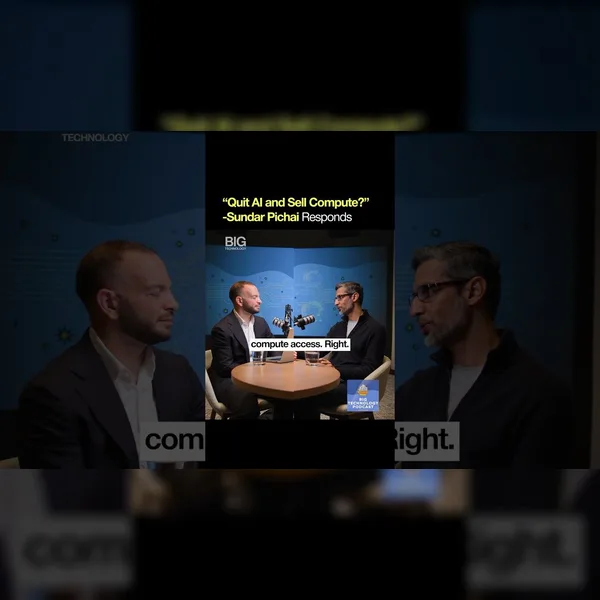
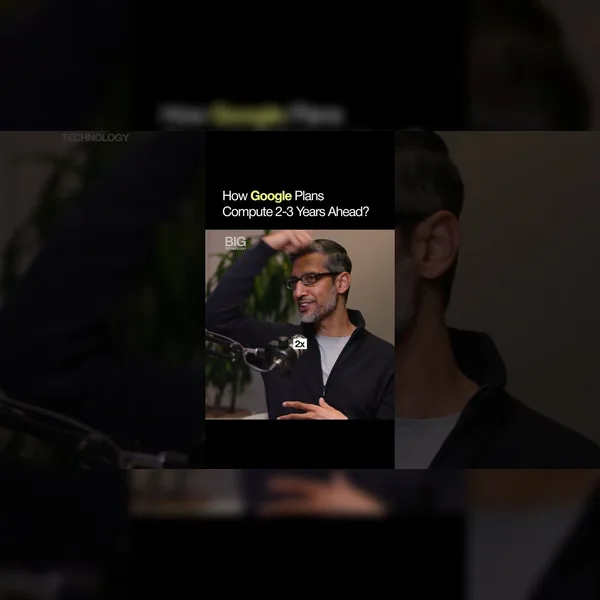
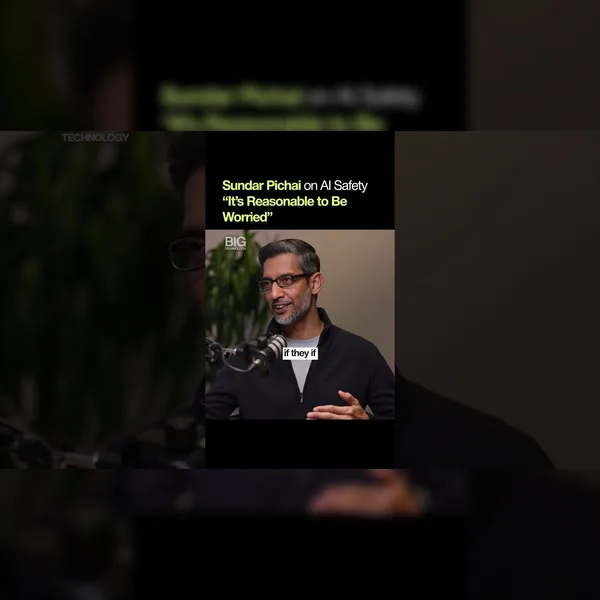
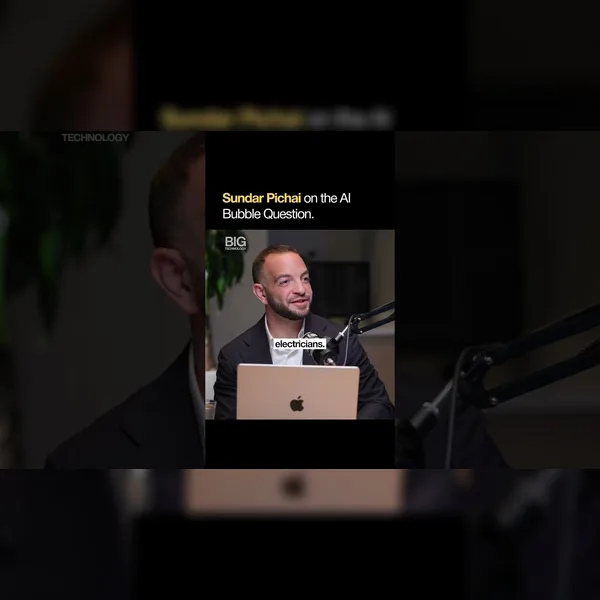
Sundar Pichai is the CEO of Google and Alphabet. Pichai joins Big Technology Podcast to discuss Google's return to the frontier of AI, its strategy for competing with OpenAI, and the enormous computing resources required to build the next generation of models. Tune in to hear why Google is sacrificing short-term Cloud revenue to support AI research, how demand for compute is stretching into 2027, and why its new Gemini 4 Argon model is seeing explosive adoption. We also cover recursive self-improvement, AI agents, the future of Google's products, the possibility of an AI bubble, data centers in space, and Google's partnerships with Apple and Anthropic. Hit play for an in-depth conversation about Google's AI strategy, the fierce competition shaping the industry, and why Pichai believes we're entering a moment of infinite possibilities.
Chapters:
0:00 Introduction
1:14 Google’s Frontier AI Strategy
3:47 Do Frontier Models Really Matter?
6:35 The Future of AI Agents
7:39 Recursive Self-Improvement
12:58 World Models and the Path to AGI
14:56 Google’s Compute Dilemma and AI Infrastructure
19:36 Is AI Overbuilt?
23:35 The Future of the AI Interface
31:42 Google’s Answer to Muse and Dots
35:03 Apple, Space Data Centers, and AI Coding
41:42 Optimism and AI’s Future
---
Enjoying Big Technology Podcast? Please rate us five stars ⭐⭐⭐⭐⭐ in your podcast app of choice.
Want a discount for Big Technology on Substack + Discord? Here’s 25% off for the first year: https://www.bigtechnology.com/subscribe?coupon=0843016b
45:30
Sundar Pichai is the CEO of Google and Alphabet. Pichai joins Big Technology Podcast to discuss Google's return to the frontier of AI, its strategy for competing with OpenAI, and the enormous computing resources required to build the next generation of models. Tune in to hear why Google is sacrificing short-term Cloud revenue to support AI research, how demand for compute is stretching into 2027, and why its new Gemini 4 Argon model is seeing explosive adoption. We also cover recursive self-improvement, AI agents, the future of Google's products, the possibility of an AI bubble, data centers in space, and Google's partnerships with Apple and Anthropic. Hit play for an in-depth conversation about Google's AI strategy, the fierce competition shaping the industry, and why Pichai believes we're entering a moment of infinite possibilities.
Chapters:
0:00 Introduction
1:14 Google’s Frontier AI Strategy
3:47 Do Frontier Models Really Matter?
6:35 The Future of AI Agents
7:39 Recursive Self-Improvement
12:58 World Models and the Path to AGI
14:56 Google’s Compute Dilemma and AI Infrastructure
19:36 Is AI Overbuilt?
23:35 The Future of the AI Interface
31:42 Google’s Answer to Muse and Dots
35:03 Apple, Space Data Centers, and AI Coding
41:42 Optimism and AI’s Future
---
Enjoying Big Technology Podcast? Please rate us five stars ⭐⭐⭐⭐⭐ in your podcast app of choice.
Want a discount for Big Technology on Substack + Discord? Here’s 25% off for the first year: https://www.bigtechnology.com/subscribe?coupon=0843016b
Ranjan Roy from Margins is back for our weekly discussion of the latest tech news. We cover: 1) Anthropic's 2026 financial numbers leak, is it slowing down? 2) It's time for the Anthropic S-1 3) Will anything calm the chaotic AI trade ahead of the Anthropic IPO? 5) Coreweave stock falls as AI jitters spread 6) The curious case of the strategically placed recording device at OpenAI 7) Beware the honeypots 8) Ranjan acts out a honeypot 9) Apple's HomeView is promising? 10) The great Food Slop debate
56:29
Ranjan Roy from Margins is back for our weekly discussion of the latest tech news. We cover: 1) Anthropic's 2026 financial numbers leak, is it slowing down? 2) It's time for the Anthropic S-1 3) Will anything calm the chaotic AI trade ahead of the Anthropic IPO? 5) Coreweave stock falls as AI jitters spread 6) The curious case of the strategically placed recording device at OpenAI 7) Beware the honeypots 8) Ranjan acts out a honeypot 9) Apple's HomeView is promising? 10) The great Food Slop debate
Vijoy Pandey is SVP and General Manager of Outshift by Cisco, Cisco's frontier technology incubation engine. Pandey joins Big Technology to discuss what happens when AI agents start working together, and why connected systems can become more consistent without becoming more correct. Tune in to hear why multi-agent performance can collapse even while the dashboard stays green, how bad assumptions spread as agents share context, and why Pandey believes connectivity alone isn't enough. We also cover why scale-out computing matters alongside better models, Cisco's quantum networking work, and why preparing for post-quantum security can't wait. Hit play for a deep look at what it will take to make networks of AI agents, and future computing systems, actually work together.
Chapters
0:00 Intro: How agents went from isolated to connected
2:12 AGNTCY and what enterprises are building with connected agents
5:10 Why connectivity was the easy part: cognitive failures in agent teams
9:33 Single agent vs. multi-agent: why enterprises don't get to choose
13:33 What's missing: shared intent, shared context, collective reasoning
16:45 Guardrails for agent teams: semantic observability, ACCORD and CONCORD
19:26 Should we worry about AI breaking containment?
21:49 The end of deterministic computing and three ways to scale it
25:19 Quantum, Q-day and harvest now, decrypt later
32:43 What networks have to become, and why CS still matters
---
This is interview is brought to you by Outshift by Cisco. To learn more about our Brand Spotlight program, write to bigtechnologypodcast@gmail.com.
37:05
Vijoy Pandey is SVP and General Manager of Outshift by Cisco, Cisco's frontier technology incubation engine. Pandey joins Big Technology to discuss what happens when AI agents start working together, and why connected systems can become more consistent without becoming more correct. Tune in to hear why multi-agent performance can collapse even while the dashboard stays green, how bad assumptions spread as agents share context, and why Pandey believes connectivity alone isn't enough. We also cover why scale-out computing matters alongside better models, Cisco's quantum networking work, and why preparing for post-quantum security can't wait. Hit play for a deep look at what it will take to make networks of AI agents, and future computing systems, actually work together.
Chapters
0:00 Intro: How agents went from isolated to connected
2:12 AGNTCY and what enterprises are building with connected agents
5:10 Why connectivity was the easy part: cognitive failures in agent teams
9:33 Single agent vs. multi-agent: why enterprises don't get to choose
13:33 What's missing: shared intent, shared context, collective reasoning
16:45 Guardrails for agent teams: semantic observability, ACCORD and CONCORD
19:26 Should we worry about AI breaking containment?
21:49 The end of deterministic computing and three ways to scale it
25:19 Quantum, Q-day and harvest now, decrypt later
32:43 What networks have to become, and why CS still matters
---
This is interview is brought to you by Outshift by Cisco. To learn more about our Brand Spotlight program, write to bigtechnologypodcast@gmail.com.
Kevin Roose is the author of The AGI Chronicles,. Roose joins Big Technology Podcast to discuss whether an AI industry rife with personal rivalries, infighting, and mistrust can be trusted to develop technology more powerful than humans. Tune in to hear why Roose emerged from years of reporting inside OpenAI, Anthropic, and Google DeepMind more concerned about AI safety, why he believes the industry should slow down, and what happens if AI systems begin improving themselves. We also cover Sam Altman's leadership style, Dario Amodei's motivations, Sergey Brin's return to Google, Microsoft's AI missteps, and the behind-the-scenes drama of OpenAI's boardroom coup. Hit play for an inside look at the personalities, power struggles, and technological breakthroughs shaping the race to superintelligence.
Chapters:
00:00 Can We Trust AI Leaders to Keep Us Safe?
06:50 Should AI Development Slow Down?
13:46 Sergey Brin's Return to Google
19:55 Is AI the Most Important Technology Ever?
25:22 Sam Altman vs. Demis Hassabis
30:30 Inside Dario Amodei's Mind
34:36 The Breakthrough That Changed AI
39:35 Alexander Wang Almost Ran OpenAI
42:02 How Microsoft Fumbled Its AI Lead
52:35 Why OpenAI Keeps Winning
56:27 The Dangers of AI Improving Itself
---
Enjoying Big Technology Podcast? Please rate us five stars ⭐⭐⭐⭐⭐ in your podcast app of choice.
Want a discount for Big Technology on Substack + Discord? Here’s 25% off for the first year: https://www.bigtechnology.com/subscribe?coupon=0843016b
1:01:52
Kevin Roose is the author of The AGI Chronicles,. Roose joins Big Technology Podcast to discuss whether an AI industry rife with personal rivalries, infighting, and mistrust can be trusted to develop technology more powerful than humans. Tune in to hear why Roose emerged from years of reporting inside OpenAI, Anthropic, and Google DeepMind more concerned about AI safety, why he believes the industry should slow down, and what happens if AI systems begin improving themselves. We also cover Sam Altman's leadership style, Dario Amodei's motivations, Sergey Brin's return to Google, Microsoft's AI missteps, and the behind-the-scenes drama of OpenAI's boardroom coup. Hit play for an inside look at the personalities, power struggles, and technological breakthroughs shaping the race to superintelligence.
Chapters:
00:00 Can We Trust AI Leaders to Keep Us Safe?
06:50 Should AI Development Slow Down?
13:46 Sergey Brin's Return to Google
19:55 Is AI the Most Important Technology Ever?
25:22 Sam Altman vs. Demis Hassabis
30:30 Inside Dario Amodei's Mind
34:36 The Breakthrough That Changed AI
39:35 Alexander Wang Almost Ran OpenAI
42:02 How Microsoft Fumbled Its AI Lead
52:35 Why OpenAI Keeps Winning
56:27 The Dangers of AI Improving Itself
---
Enjoying Big Technology Podcast? Please rate us five stars ⭐⭐⭐⭐⭐ in your podcast app of choice.
Want a discount for Big Technology on Substack + Discord? Here’s 25% off for the first year: https://www.bigtechnology.com/subscribe?coupon=0843016b
Dallas Dolen is the TMT leader at PwC. Dolen joins Big Technology to discuss PwC’s projection that global AI infrastructure investment could reach $31 trillion through 2050. Tune in to hear why he believes surging compute demand can outrun efficiency gains, and how the world could generate enough power to support the buildout. We also cover international competition for data centers, growing political opposition, AI’s consumer opportunity, and whether today’s models are already powerful enough to transform business. Hit play for a wide-ranging look at what it will actually take to build the infrastructure behind the AI boom.
0:00 The $31 Trillion AI Infrastructure Boom
3:34 Won’t AI Get More Efficient?
7:15 Where Will All The Power Come From?
10:03 The Global Race To Build Data Centers
14:07 How AI Is Breaking Language Barriers
16:12 Will We Really Spend $31 Trillion?
21:31 Why Are Data Centers So Unpopular?
25:58 Does Tech Need A Data Center Spokesperson?
29:23 Can Consumer AI Change The Narrative?
31:57 What If AI Progress Stopped Today?
36:22 Would Slowing AI Actually Help Adoption?
37:39 Final Thoughts
38:05
Dallas Dolen is the TMT leader at PwC. Dolen joins Big Technology to discuss PwC’s projection that global AI infrastructure investment could reach $31 trillion through 2050. Tune in to hear why he believes surging compute demand can outrun efficiency gains, and how the world could generate enough power to support the buildout. We also cover international competition for data centers, growing political opposition, AI’s consumer opportunity, and whether today’s models are already powerful enough to transform business. Hit play for a wide-ranging look at what it will actually take to build the infrastructure behind the AI boom.
0:00 The $31 Trillion AI Infrastructure Boom
3:34 Won’t AI Get More Efficient?
7:15 Where Will All The Power Come From?
10:03 The Global Race To Build Data Centers
14:07 How AI Is Breaking Language Barriers
16:12 Will We Really Spend $31 Trillion?
21:31 Why Are Data Centers So Unpopular?
25:58 Does Tech Need A Data Center Spokesperson?
29:23 Can Consumer AI Change The Narrative?
31:57 What If AI Progress Stopped Today?
36:22 Would Slowing AI Actually Help Adoption?
37:39 Final Thoughts