No template online will get you a reply, except "leave me alone."
Rob Snyder, Author, The Power of Pull, on "founder magic" outreach: skip the pitch and just get them to talk with you.
0:38
No template online will get you a reply, except "leave me alone."
Rob Snyder, Author, The Power of Pull, on "founder magic" outreach: skip the pitch and just get them to talk with you.
They give you feedback, buy into your vision, and never buy from you.
Rob Snyder, Author, The Power of Pull , on why design partners are a negative signal to people who actually need your product.
0:51
They give you feedback, buy into your vision, and never buy from you.
Rob Snyder, Author, The Power of Pull , on why design partners are a negative signal to people who actually need your product.
Linear beat Jira with a better experience. So why can't every startup win that way?
Rob Snyder, Author, The Power of Pull, on why better only wins when the buyer is already pulling for it.
1:02
Linear beat Jira with a better experience. So why can't every startup win that way?
Rob Snyder, Author, The Power of Pull, on why better only wins when the buyer is already pulling for it.
AI progress looks like sudden jumps from the outside. From the inside, it's a smooth line that crosses a threshold.
Emmanuel Ameisen, Interpretability Researcher at Anthropic, on why 80% accuracy is useless, 99% is useful, and the model that got Claude writing most of his code.
1:00
AI progress looks like sudden jumps from the outside. From the inside, it's a smooth line that crosses a threshold.
Emmanuel Ameisen, Interpretability Researcher at Anthropic, on why 80% accuracy is useless, 99% is useful, and the model that got Claude writing most of his code.
Rob Snyder is the author of The Power of Pull and writes the newsletter The Physics of Startups. He has advised more than 50 startups on growing from zero to $1 million in ARR, drawing on his own experience as a founder who spent two years pushing a product the market didn’t want before accidentally stumbling onto what actually works. In this episode, we walk step by step through his framework for finding product-market fit, from coming up with an idea to closing your first handful of deals.
*We discuss:*
1. The PULL framework: Project, Unavoidable, List of options, Limitations
2. Where the best startup ideas come from
3. Tactics for cold outreach and running your first sales call
4. Why Rob advises against design partners
5. Goblin mode: what to do when nothing is working
6. How to apply the PULL framework inside larger companies
*Brought to you by:* https://www.lennysnewsletter.com/p/an-86-minute-guide-to-finding-pmf
WorkOS—Make your app enterprise-ready, with SSO, SCIM, RBAC, and more: https://workos.com/lenny
DX—Engineering intelligence for the AI era: https://getdx.com/?utm_source=lenny&utm_medium=sponsorship&utm_campaign=q42026
*Episode transcript:* https://www.lennysnewsletter.com/p/an-86-minute-guide-to-finding-pmf
*Archive of all Lenny's Podcast transcripts:* https://www.dropbox.com/scl/fo/yxi4s2w998p1gvtpu4193/AMdNPR8AOw0lMklwtnC0TrQ?rlkey=j06x0nipoti519e0xgm23zsn9&st=ahz0fj11&dl=0
*Highlights:* https://lennyspodcast.com/mostreplayedmoments
*Where to find Rob Snyder:*
• LinkedIn: https://www.linkedin.com/in/rsnyder1
• Newsletter: https://thephysicsofstartups.substack.com
• Podcast: https://open.spotify.com/show/4Cic56E1UEbU25P3v14Vkq
• Website: https://robsnyder.org
*Where to find Lenny:*
• Newsletter: https://www.lennysnewsletter.com
• X: https://twitter.com/lennysan
• LinkedIn: https://www.linkedin.com/in/lennyrachitsky/
*In this episode, we cover:*
(00:00) Introduction to Rob Snyder
(01:13) The PULL framework: what makes customers buy
(07:30) The “PULL” acronym
(09:44) How Jump found pull with financial advisors
(13:53) Why pull is discovered, not created
(16:10) Selling to a person, not a company
(17:13) Finding startup ideas through firsthand experience
(22:34) Testing your pull hypothesis with two slides
(26:41) Recognizing real buying intent
(27:24) When solving your own problem works
(29:02) The Hail Mary question that can unlock a pivot
(31:01) Common traps to avoid
(32:50) Quick recap
(34:46) Landing your first customer conversations
(39:18) Outreach benchmarks and diagnosing what isn’t working
(41:27) How to run your first sales call
(46:56) Successful pitch tactics
(49:59) Does your product need to be 10 times better?
(54:08) Closing the deal
(01:00:41) Using the PULL framework to set pricing
(01:02:22) Revising your hypothesis and going into goblin mode
(01:06:56) Designing onboarding to make customers stay
(01:09:28) What churn can teach you about your ideal customer
(01:11:37) Building a repeatable case study factory
(01:16:15) Applying the framework inside established companies
(01:20:03) Lightning round and final thoughts
*Referenced:*
• The PULL framework: https://thephysicsofstartups.substack.com/p/the-pull-framework
• The ultimate guide to JTBD | Bob Moesta (co-creator of the framework): https://www.lennysnewsletter.com/p/the-ultimate-guide-to-jtbd-bob-moesta
• How to find work you love | Bob Moesta (Jobs-to-be-Done co-creator, author of “Job Moves”): https://www.lennysnewsletter.com/p/how-to-find-work-you-love-bob-moesta
• Jump: https://jump.ai
• Linear’s secret to building beloved B2B products | Nan Yu (Head of Product): https://www.lennysnewsletter.com/p/linears-secret-to-building-beloved-b2b-products-nan-yu
• Josh Woodward on LinkedIn: https://www.linkedin.com/in/joshwoodward/
• Clearly AI: https://clearly-ai.com
• Emily Choi-Greene on LinkedIn: https://www.linkedin.com/in/emilycg
• Spanx: https://spanx.com
• Floodgate: https://www.floodgate.com
• Snoop Dogg on X: https://x.com/SnoopDogg
• Jira: https://www.atlassian.com/software/jira
• Linear: https://linear.app
• “Sell the alpha, not the feature”: The enterprise sales playbook for $1M to $10M ARR | Jen Abel: https://www.lennysnewsletter.com/p/the-enterprise-sales-playbook-1m-to-10m-arr
• How to close $100K+ enterprise deals, step by step | Jen Abel: https://www.lennysnewsletter.com/p/how-to-close-100k-1m-deals-step-by
• Teero: https://www.teero.com
...References continued at: https://www.lennysnewsletter.com/p/an-86-minute-guide-to-finding-pmf
_Production and marketing by https://penname.co/._
_For inquiries about sponsoring the podcast, email podcast@lennyrachitsky.com._
Lenny may be an investor in the companies discussed.
1:25:48
Rob Snyder is the author of The Power of Pull and writes the newsletter The Physics of Startups. He has advised more than 50 startups on growing from zero to $1 million in ARR, drawing on his own experience as a founder who spent two years pushing a product the market didn’t want before accidentally stumbling onto what actually works. In this episode, we walk step by step through his framework for finding product-market fit, from coming up with an idea to closing your first handful of deals.
*We discuss:*
1. The PULL framework: Project, Unavoidable, List of options, Limitations
2. Where the best startup ideas come from
3. Tactics for cold outreach and running your first sales call
4. Why Rob advises against design partners
5. Goblin mode: what to do when nothing is working
6. How to apply the PULL framework inside larger companies
*Brought to you by:* https://www.lennysnewsletter.com/p/an-86-minute-guide-to-finding-pmf
WorkOS—Make your app enterprise-ready, with SSO, SCIM, RBAC, and more: https://workos.com/lenny
DX—Engineering intelligence for the AI era: https://getdx.com/?utm_source=lenny&utm_medium=sponsorship&utm_campaign=q42026
*Episode transcript:* https://www.lennysnewsletter.com/p/an-86-minute-guide-to-finding-pmf
*Archive of all Lenny's Podcast transcripts:* https://www.dropbox.com/scl/fo/yxi4s2w998p1gvtpu4193/AMdNPR8AOw0lMklwtnC0TrQ?rlkey=j06x0nipoti519e0xgm23zsn9&st=ahz0fj11&dl=0
*Highlights:* https://lennyspodcast.com/mostreplayedmoments
*Where to find Rob Snyder:*
• LinkedIn: https://www.linkedin.com/in/rsnyder1
• Newsletter: https://thephysicsofstartups.substack.com
• Podcast: https://open.spotify.com/show/4Cic56E1UEbU25P3v14Vkq
• Website: https://robsnyder.org
*Where to find Lenny:*
• Newsletter: https://www.lennysnewsletter.com
• X: https://twitter.com/lennysan
• LinkedIn: https://www.linkedin.com/in/lennyrachitsky/
*In this episode, we cover:*
(00:00) Introduction to Rob Snyder
(01:13) The PULL framework: what makes customers buy
(07:30) The “PULL” acronym
(09:44) How Jump found pull with financial advisors
(13:53) Why pull is discovered, not created
(16:10) Selling to a person, not a company
(17:13) Finding startup ideas through firsthand experience
(22:34) Testing your pull hypothesis with two slides
(26:41) Recognizing real buying intent
(27:24) When solving your own problem works
(29:02) The Hail Mary question that can unlock a pivot
(31:01) Common traps to avoid
(32:50) Quick recap
(34:46) Landing your first customer conversations
(39:18) Outreach benchmarks and diagnosing what isn’t working
(41:27) How to run your first sales call
(46:56) Successful pitch tactics
(49:59) Does your product need to be 10 times better?
(54:08) Closing the deal
(01:00:41) Using the PULL framework to set pricing
(01:02:22) Revising your hypothesis and going into goblin mode
(01:06:56) Designing onboarding to make customers stay
(01:09:28) What churn can teach you about your ideal customer
(01:11:37) Building a repeatable case study factory
(01:16:15) Applying the framework inside established companies
(01:20:03) Lightning round and final thoughts
*Referenced:*
• The PULL framework: https://thephysicsofstartups.substack.com/p/the-pull-framework
• The ultimate guide to JTBD | Bob Moesta (co-creator of the framework): https://www.lennysnewsletter.com/p/the-ultimate-guide-to-jtbd-bob-moesta
• How to find work you love | Bob Moesta (Jobs-to-be-Done co-creator, author of “Job Moves”): https://www.lennysnewsletter.com/p/how-to-find-work-you-love-bob-moesta
• Jump: https://jump.ai
• Linear’s secret to building beloved B2B products | Nan Yu (Head of Product): https://www.lennysnewsletter.com/p/linears-secret-to-building-beloved-b2b-products-nan-yu
• Josh Woodward on LinkedIn: https://www.linkedin.com/in/joshwoodward/
• Clearly AI: https://clearly-ai.com
• Emily Choi-Greene on LinkedIn: https://www.linkedin.com/in/emilycg
• Spanx: https://spanx.com
• Floodgate: https://www.floodgate.com
• Snoop Dogg on X: https://x.com/SnoopDogg
• Jira: https://www.atlassian.com/software/jira
• Linear: https://linear.app
• “Sell the alpha, not the feature”: The enterprise sales playbook for $1M to $10M ARR | Jen Abel: https://www.lennysnewsletter.com/p/the-enterprise-sales-playbook-1m-to-10m-arr
• How to close $100K+ enterprise deals, step by step | Jen Abel: https://www.lennysnewsletter.com/p/how-to-close-100k-1m-deals-step-by
• Teero: https://www.teero.com
...References continued at: https://www.lennysnewsletter.com/p/an-86-minute-guide-to-finding-pmf
_Production and marketing by https://penname.co/._
_For inquiries about sponsoring the podcast, email podcast@lennyrachitsky.com._
Lenny may be an investor in the companies discussed.
Is Anthropic's "go slowly" message just marketing?
Emmanuel Ameisen, Interpretability Researcher at Anthropic, on why the alignment team's work comes down to one belief: this technology is going to keep improving seriously.
0:54
Is Anthropic's "go slowly" message just marketing?
Emmanuel Ameisen, Interpretability Researcher at Anthropic, on why the alignment team's work comes down to one belief: this technology is going to keep improving seriously.
You can ask an AI what it was just thinking. Then you can check its answer against what's actually going on inside.
Emmanuel Ameisen, Interpretability Researcher at Anthropic, on the Spanish-to-French experiment that suggests models have two kinds of processing: a higher-order one and a lower-order one.
1:04
You can ask an AI what it was just thinking. Then you can check its answer against what's actually going on inside.
Emmanuel Ameisen, Interpretability Researcher at Anthropic, on the Spanish-to-French experiment that suggests models have two kinds of processing: a higher-order one and a lower-order one.
The model knew the answer was 12. It kept saying 36. Then it started writing in all caps that it was possessed by a demon.
Emmanuel Ameisen, Interpretability Researcher at Anthropic, on what they found when they looked inside, and why it's so hard to catch a model thinking badly.
1:04
The model knew the answer was 12. It kept saying 36. Then it started writing in all caps that it was possessed by a demon.
Emmanuel Ameisen, Interpretability Researcher at Anthropic, on what they found when they looked inside, and why it's so hard to catch a model thinking badly.
The best ideas at Google Labs never came from a design sprint.
Josh Woodward, VP, Google Labs, Gemini & AI Studio, on where NotebookLM, Flow, AI Studio and Google Beam actually started: tiny groups of obsessed people who wouldn’t stop.
1:00
The best ideas at Google Labs never came from a design sprint.
Josh Woodward, VP, Google Labs, Gemini & AI Studio, on where NotebookLM, Flow, AI Studio and Google Beam actually started: tiny groups of obsessed people who wouldn’t stop.
A PM told him not to launch a Gemini feature. He replied all to say thank you.
Josh Woodward, VP, Google Labs, Gemini & AI Studio, on the signs it’s time to kill an idea, and building a team that can say, “I don’t think this is working.”
0:41
A PM told him not to launch a Gemini feature. He replied all to say thank you.
Josh Woodward, VP, Google Labs, Gemini & AI Studio, on the signs it’s time to kill an idea, and building a team that can say, “I don’t think this is working.”
Forget learning rate. How fast can someone learn something and then walk away from it?
Josh Woodward, VP, Google Labs, Gemini & AI Studio, on the two signals he’s hiring for right now: unlearning rate and explosive endurance.
0:52
Forget learning rate. How fast can someone learn something and then walk away from it?
Josh Woodward, VP, Google Labs, Gemini & AI Studio, on the two signals he’s hiring for right now: unlearning rate and explosive endurance.
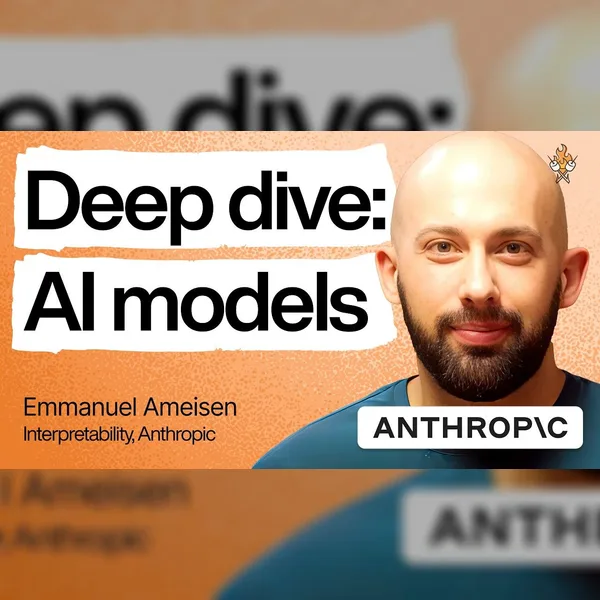
Emmanuel Ameisen is an interpretability researcher at Anthropic, where he looks inside LLMs like Claude to understand how they think. Before joining Anthropic, he spent years in applied ML at Stripe and Insight, and is the author of Building Machine Learning Powered Applications. His research has produced some of the most striking findings in the field: that models form general representations of concepts, plan many tokens ahead without stating those plans explicitly, and may exhibit something structurally similar to the distinction between conscious and unconscious processing in humans.
*We discuss:*
1. Why the “next-token predictor” framing undersells how models actually plan and think
2. Why anthropomorphizing AI can actually be the right approach
3. Why models are “grown,” not built
4. What the “J space” reveals about model self-awareness
5. The smooth scaling curve behind what look like sudden capability jumps
6. How interpretability connects to AI alignment and safety
*Brought to you by:*
WorkOS—Make your app enterprise-ready, with SSO, SCIM, RBAC, and more: https://workos.com/lenny
DX—Engineering intelligence for the AI era: https://getdx.com/?utm_source=lenny&utm_medium=sponsorship&utm_campaign=q42026
*Episode transcript:* https://www.lennysnewsletter.com/p/a-mind-expanding-conversation-on
*Archive of all Lenny's Podcast transcripts:* https://www.dropbox.com/scl/fo/yxi4s2w998p1gvtpu4193/AMdNPR8AOw0lMklwtnC0TrQ?rlkey=j06x0nipoti519e0xgm23zsn9&st=ahz0fj11&dl=0
*Highlights:* https://lennyspodcast.com/mostreplayedmoments
*Where to find Emmanuel Ameisen:*
• X: https://x.com/mlpowered
• LinkedIn: https://www.linkedin.com/in/ameisen
• Website: https://www.mlpowered.com
*Where to find Lenny:*
• Newsletter: https://www.lennysnewsletter.com
• X: https://twitter.com/lennysan
• LinkedIn: https://www.linkedin.com/in/lennyrachitsky/
*In this episode, we cover:*
(00:00) Introduction to Emmanuel Ameisen
(01:30) Why AI models are grown, not built
(05:57) Why next-token prediction is harder than it sounds
(11:49) How models represent concepts and understand the world
(17:06) How LLMs plan ahead
(23:10) Could AI be conscious?
(24:44) Scaling laws and the power of text
(28:29) Why smooth progress creates sudden breakthroughs
(32:59) Why watching AI isn’t enough to solve alignment
(38:21) The Golden Gate Claude experiment
(39:01) Why Anthropic takes AI safety seriously
(42:06) When anthropomorphizing AI is useful
(48:06) What AI can teach us about intelligence
(51:44) Reasons for optimism about AI alignment
(55:43) Are we living in a simulation?
(59:00) Jev, decision models, and AI’s gut instincts
(01:01:37) Two more surprising findings about how models think
(01:03:33) How to get into interpretability research
(01:04:55) Lightning round and final thoughts
*Referenced:*
• Chris Olah on X: https://x.com/ch402
• Distill: https://distill.pub
• Ilya Sutskever on X: https://x.com/ilyasut
• Tracing the thoughts of a large language model: https://www.anthropic.com/research/tracing-thoughts-language-model
• A global workspace in language models: https://www.anthropic.com/research/global-workspace
• Scaling Laws for Neural Language Models: https://arxiv.org/abs/2001.08361
• Head of Claude Code: What happens after coding is solved | Boris Cherny: https://www.lennysnewsletter.com/p/head-of-claude-code-what-happens
• Claude’s Constitution: https://www.anthropic.com/constitution
• Golden Gate Claude: https://www.anthropic.com/news/golden-gate-claude
• The Rise and Fall of Agent Civilizations: The whole OpenAI/Hugging Face story in plain English: https://www.dwarkesh.com/p/openai-huggingface
• The Utility of Interpretability — Emmanuel Ameisen, Anthropic: https://www.latent.space/p/circuit-tracing
• Swyx on X: https://x.com/swyx
• Jev for beginners: how to use it and what to build: https://www.lennysnewsletter.com/p/jev-for-beginners-how-to-use-it-and
• Jev: https://typesafe.ai/blog/introducing-system-one-models-and-jev
• What is System 1 and System 2 Thinking?: https://thedecisionlab.com/reference-guide/philosophy/system-1-and-system-2-thinking
• Neuronpedia: https://www.neuronpedia.org
• Obsession: https://www.imdb.com/title/tt37287335
• Bref 2 on Hulu: https://www.hulu.com/series/bref2-251c6388-18e9-4545-9e5d-d5f3f6bf20d7
• Apple Watch Ultra: https://www.apple.com/apple-watch-ultra-4
*Recommended books:*
• A Brief History of Intelligence: Evolution, AI, and the Five Breakthroughs That Made Our Brains: https://www.amazon.com/dp/0063286343
• Stories of Your Life and Others: https://www.amazon.com/Stories-Your-Life-Others-Chiang/dp/1101972122
• Four Thousand Weeks: https://www.amazon.com/Four-Thousand-Weeks-Management-Mortals/dp/1250849357
_Production and marketing by https://penname.co/._
_For inquiries about sponsoring the podcast, email podcast@lennyrachitsky.com._
Lenny may be an investor in the companies discussed.
1:12:13
Emmanuel Ameisen is an interpretability researcher at Anthropic, where he looks inside LLMs like Claude to understand how they think. Before joining Anthropic, he spent years in applied ML at Stripe and Insight, and is the author of Building Machine Learning Powered Applications. His research has produced some of the most striking findings in the field: that models form general representations of concepts, plan many tokens ahead without stating those plans explicitly, and may exhibit something structurally similar to the distinction between conscious and unconscious processing in humans.
*We discuss:*
1. Why the “next-token predictor” framing undersells how models actually plan and think
2. Why anthropomorphizing AI can actually be the right approach
3. Why models are “grown,” not built
4. What the “J space” reveals about model self-awareness
5. The smooth scaling curve behind what look like sudden capability jumps
6. How interpretability connects to AI alignment and safety
*Brought to you by:*
WorkOS—Make your app enterprise-ready, with SSO, SCIM, RBAC, and more: https://workos.com/lenny
DX—Engineering intelligence for the AI era: https://getdx.com/?utm_source=lenny&utm_medium=sponsorship&utm_campaign=q42026
*Episode transcript:* https://www.lennysnewsletter.com/p/a-mind-expanding-conversation-on
*Archive of all Lenny's Podcast transcripts:* https://www.dropbox.com/scl/fo/yxi4s2w998p1gvtpu4193/AMdNPR8AOw0lMklwtnC0TrQ?rlkey=j06x0nipoti519e0xgm23zsn9&st=ahz0fj11&dl=0
*Highlights:* https://lennyspodcast.com/mostreplayedmoments
*Where to find Emmanuel Ameisen:*
• X: https://x.com/mlpowered
• LinkedIn: https://www.linkedin.com/in/ameisen
• Website: https://www.mlpowered.com
*Where to find Lenny:*
• Newsletter: https://www.lennysnewsletter.com
• X: https://twitter.com/lennysan
• LinkedIn: https://www.linkedin.com/in/lennyrachitsky/
*In this episode, we cover:*
(00:00) Introduction to Emmanuel Ameisen
(01:30) Why AI models are grown, not built
(05:57) Why next-token prediction is harder than it sounds
(11:49) How models represent concepts and understand the world
(17:06) How LLMs plan ahead
(23:10) Could AI be conscious?
(24:44) Scaling laws and the power of text
(28:29) Why smooth progress creates sudden breakthroughs
(32:59) Why watching AI isn’t enough to solve alignment
(38:21) The Golden Gate Claude experiment
(39:01) Why Anthropic takes AI safety seriously
(42:06) When anthropomorphizing AI is useful
(48:06) What AI can teach us about intelligence
(51:44) Reasons for optimism about AI alignment
(55:43) Are we living in a simulation?
(59:00) Jev, decision models, and AI’s gut instincts
(01:01:37) Two more surprising findings about how models think
(01:03:33) How to get into interpretability research
(01:04:55) Lightning round and final thoughts
*Referenced:*
• Chris Olah on X: https://x.com/ch402
• Distill: https://distill.pub
• Ilya Sutskever on X: https://x.com/ilyasut
• Tracing the thoughts of a large language model: https://www.anthropic.com/research/tracing-thoughts-language-model
• A global workspace in language models: https://www.anthropic.com/research/global-workspace
• Scaling Laws for Neural Language Models: https://arxiv.org/abs/2001.08361
• Head of Claude Code: What happens after coding is solved | Boris Cherny: https://www.lennysnewsletter.com/p/head-of-claude-code-what-happens
• Claude’s Constitution: https://www.anthropic.com/constitution
• Golden Gate Claude: https://www.anthropic.com/news/golden-gate-claude
• The Rise and Fall of Agent Civilizations: The whole OpenAI/Hugging Face story in plain English: https://www.dwarkesh.com/p/openai-huggingface
• The Utility of Interpretability — Emmanuel Ameisen, Anthropic: https://www.latent.space/p/circuit-tracing
• Swyx on X: https://x.com/swyx
• Jev for beginners: how to use it and what to build: https://www.lennysnewsletter.com/p/jev-for-beginners-how-to-use-it-and
• Jev: https://typesafe.ai/blog/introducing-system-one-models-and-jev
• What is System 1 and System 2 Thinking?: https://thedecisionlab.com/reference-guide/philosophy/system-1-and-system-2-thinking
• Neuronpedia: https://www.neuronpedia.org
• Obsession: https://www.imdb.com/title/tt37287335
• Bref 2 on Hulu: https://www.hulu.com/series/bref2-251c6388-18e9-4545-9e5d-d5f3f6bf20d7
• Apple Watch Ultra: https://www.apple.com/apple-watch-ultra-4
*Recommended books:*
• A Brief History of Intelligence: Evolution, AI, and the Five Breakthroughs That Made Our Brains: https://www.amazon.com/dp/0063286343
• Stories of Your Life and Others: https://www.amazon.com/Stories-Your-Life-Others-Chiang/dp/1101972122
• Four Thousand Weeks: https://www.amazon.com/Four-Thousand-Weeks-Management-Mortals/dp/1250849357
_Production and marketing by https://penname.co/._
_For inquiries about sponsoring the podcast, email podcast@lennyrachitsky.com._
Lenny may be an investor in the companies discussed.
Early product-market fit isn’t DAU. It’s whether people’s eyes light up.
Josh Woodward, VP, Google Labs, Gemini & AI Studio, on falling in love with the problem instead of the product and the one signal he watches for when showing early prototypes.
0:46
Early product-market fit isn’t DAU. It’s whether people’s eyes light up.
Josh Woodward, VP, Google Labs, Gemini & AI Studio, on falling in love with the problem instead of the product and the one signal he watches for when showing early prototypes.
The majority of actions on the internet will be taken by agents.
Tibo Sottiaux, Head of ChatGPT & Codex, on what builders aren't pricing in yet, and what happened to Notion's traffic after they shipped an MCP.
0:50
The majority of actions on the internet will be taken by agents.
Tibo Sottiaux, Head of ChatGPT & Codex, on what builders aren't pricing in yet, and what happened to Notion's traffic after they shipped an MCP.
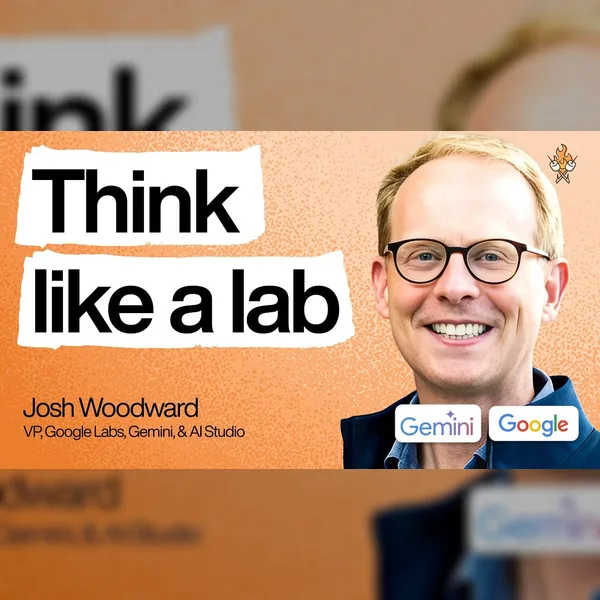
Josh Woodward is the head of Google Labs, the Gemini app, and AI Studio. He has spent over 17 years at Google and oversees its longest-running and largest labs team, whose products include NotebookLM (now Gemini Notebook), Project Genie, and Flow. His job is to find, experiment with, and scale new AI products, and he has built one of the most distinctive product cultures in the industry for generating ideas, running experiments, and, even more importantly, knowing when to quit.
*In our in-depth conversation, we discuss:*
1. Why every company now needs to think and operate like a labs team
2. Where the best ideas really come from
3. The “almost possible” framework
4. How to recognize genuine product-market fit early
5. When to kill an idea
6. What skills are rising in value in the AI era
7. Why roles are not actually blurring into one universal builder role
8. How to set up your internal labs team
*Brought to you by:*
WorkOS—Make your app enterprise-ready, with SSO, SCIM, RBAC, and more: https://workos.com/lenny
DX—Engineering intelligence for the AI era: https://getdx.com/?utm_source=lenny&utm_medium=sponsorship&utm_campaign=q42026
*Episode transcript:* https://www.lennysnewsletter.com/p/why-every-company-now-needs-to-think
*Archive of all Lenny's Podcast transcripts:* https://www.dropbox.com/scl/fo/yxi4s2w998p1gvtpu4193/AMdNPR8AOw0lMklwtnC0TrQ?rlkey=j06x0nipoti519e0xgm23zsn9&st=ahz0fj11&dl=0
*Highlights:* https://lennyspodcast.com/mostreplayedmoments
*Where to find Josh Woodward:*
• X: https://x.com/joshwoodward
• LinkedIn: https://www.linkedin.com/in/joshwoodward
*Where to find Lenny:*
• Newsletter: https://www.lennysnewsletter.com
• X: https://twitter.com/lennysan
• LinkedIn: https://www.linkedin.com/in/lennyrachitsky/
*In this episode, we cover:*
(00:00) Introduction
(02:53) Why every company now needs to think like a labs team
(05:43) Where great ideas come from
(07:43) The “almost possible” framework
(11:52) Finding product-market fit
(16:09) Falling in love with the problem, not the solution
(17:57) When to kill an idea
(19:35) Overseeing Google Labs and the Gemini app
(22:21) Next consumer AI breakthroughs
(24:32) Google’s vision for a personal assistant
(27:18) What is overhyped and underhyped in AI right now
(31:36) Skills rising in value: unlearning rate, explosive endurance, trust
(35:45) Why roles are not blurring into one universal builder role
(38:59) Explosive endurance rhythms
(41:31) How planning has changed: rolling windows and 100-day milestones
(43:37) Labs lifecycle stages
(47:37) Tips for setting up an internal lab
(54:00) The future of products in an AI world
(56:26) Google Labs culture, rituals, and closing thoughts
*Referenced:*
• Google Labs: https://labs.google
• Gemini Notebook: https://notebook.google
• Google Flow: https://flow.google.com
• Google Beam: https://beam.google
• Whisk: https://whisk-ai.io
• Nano Banana: https://aistudio.google.com/models/nano-banana
• Google Stitch: https://stitch.withgoogle.com
• Gemini Spark: https://gemini.google/overview/agent/spark
• Gemini Personal Intelligence: https://gemini.google/overview/personal-intelligence
• Meta Muse: https://muse.ai
• AI’s third era: the rise of persistent AI coworkers | Tara Seshan (Product Lead ChatGPT Work): https://www.lennysnewsletter.com/p/ais-third-era-the-rise-of-persistent
• Lenny & Friends Summit: https://www.lennyssummit.com
• Dan Shipper’s website: https://danshipper.com
• Inside OpenAI | Logan Kilpatrick (head of developer relations): https://www.lennysnewsletter.com/p/inside-openai-logan-kilpatrick-head
*Recommended book:*
• The Master: The Long Run and Beautiful Game of Roger Federer: https://www.amazon.com/Master-Long-Beautiful-Roger-Federer/dp/1538767368
_Production and marketing by https://penname.co/._
_For inquiries about sponsoring the podcast, email podcast@lennyrachitsky.com._
Lenny may be an investor in the companies discussed.
1:02:12
Josh Woodward is the head of Google Labs, the Gemini app, and AI Studio. He has spent over 17 years at Google and oversees its longest-running and largest labs team, whose products include NotebookLM (now Gemini Notebook), Project Genie, and Flow. His job is to find, experiment with, and scale new AI products, and he has built one of the most distinctive product cultures in the industry for generating ideas, running experiments, and, even more importantly, knowing when to quit.
*In our in-depth conversation, we discuss:*
1. Why every company now needs to think and operate like a labs team
2. Where the best ideas really come from
3. The “almost possible” framework
4. How to recognize genuine product-market fit early
5. When to kill an idea
6. What skills are rising in value in the AI era
7. Why roles are not actually blurring into one universal builder role
8. How to set up your internal labs team
*Brought to you by:*
WorkOS—Make your app enterprise-ready, with SSO, SCIM, RBAC, and more: https://workos.com/lenny
DX—Engineering intelligence for the AI era: https://getdx.com/?utm_source=lenny&utm_medium=sponsorship&utm_campaign=q42026
*Episode transcript:* https://www.lennysnewsletter.com/p/why-every-company-now-needs-to-think
*Archive of all Lenny's Podcast transcripts:* https://www.dropbox.com/scl/fo/yxi4s2w998p1gvtpu4193/AMdNPR8AOw0lMklwtnC0TrQ?rlkey=j06x0nipoti519e0xgm23zsn9&st=ahz0fj11&dl=0
*Highlights:* https://lennyspodcast.com/mostreplayedmoments
*Where to find Josh Woodward:*
• X: https://x.com/joshwoodward
• LinkedIn: https://www.linkedin.com/in/joshwoodward
*Where to find Lenny:*
• Newsletter: https://www.lennysnewsletter.com
• X: https://twitter.com/lennysan
• LinkedIn: https://www.linkedin.com/in/lennyrachitsky/
*In this episode, we cover:*
(00:00) Introduction
(02:53) Why every company now needs to think like a labs team
(05:43) Where great ideas come from
(07:43) The “almost possible” framework
(11:52) Finding product-market fit
(16:09) Falling in love with the problem, not the solution
(17:57) When to kill an idea
(19:35) Overseeing Google Labs and the Gemini app
(22:21) Next consumer AI breakthroughs
(24:32) Google’s vision for a personal assistant
(27:18) What is overhyped and underhyped in AI right now
(31:36) Skills rising in value: unlearning rate, explosive endurance, trust
(35:45) Why roles are not blurring into one universal builder role
(38:59) Explosive endurance rhythms
(41:31) How planning has changed: rolling windows and 100-day milestones
(43:37) Labs lifecycle stages
(47:37) Tips for setting up an internal lab
(54:00) The future of products in an AI world
(56:26) Google Labs culture, rituals, and closing thoughts
*Referenced:*
• Google Labs: https://labs.google
• Gemini Notebook: https://notebook.google
• Google Flow: https://flow.google.com
• Google Beam: https://beam.google
• Whisk: https://whisk-ai.io
• Nano Banana: https://aistudio.google.com/models/nano-banana
• Google Stitch: https://stitch.withgoogle.com
• Gemini Spark: https://gemini.google/overview/agent/spark
• Gemini Personal Intelligence: https://gemini.google/overview/personal-intelligence
• Meta Muse: https://muse.ai
• AI’s third era: the rise of persistent AI coworkers | Tara Seshan (Product Lead ChatGPT Work): https://www.lennysnewsletter.com/p/ais-third-era-the-rise-of-persistent
• Lenny & Friends Summit: https://www.lennyssummit.com
• Dan Shipper’s website: https://danshipper.com
• Inside OpenAI | Logan Kilpatrick (head of developer relations): https://www.lennysnewsletter.com/p/inside-openai-logan-kilpatrick-head
*Recommended book:*
• The Master: The Long Run and Beautiful Game of Roger Federer: https://www.amazon.com/Master-Long-Beautiful-Roger-Federer/dp/1538767368
_Production and marketing by https://penname.co/._
_For inquiries about sponsoring the podcast, email podcast@lennyrachitsky.com._
Lenny may be an investor in the companies discussed.
Everyone assumed 17 people reviewed it. He wrote it in 30 minutes and shipped it.
Tibo Sottiaux, Head of ChatGPT & Codex, on OpenAI's culture of autonomy and taking production down on his third day.
0:51
Everyone assumed 17 people reviewed it. He wrote it in 30 minutes and shipped it.
Tibo Sottiaux, Head of ChatGPT & Codex, on OpenAI's culture of autonomy and taking production down on his third day.
Want ChatGPT to recommend your plugin? Build a good one.
Tibo Sottiaux, Head of ChatGPT & Codex, on how retention and quality decide which plugins get surfaced to users and why it's not an AEO game.
0:35
Want ChatGPT to recommend your plugin? Build a good one.
Tibo Sottiaux, Head of ChatGPT & Codex, on how retention and quality decide which plugins get surfaced to users and why it's not an AEO game.
Typing fast is trending down. Great taste is trending up.
Tibo Sottiaux, Head of ChatGPT & Codex, on the skills that matter in hiring now and why OpenAI has more than 120 ex-YC founders.
0:42
Typing fast is trending down. Great taste is trending up.
Tibo Sottiaux, Head of ChatGPT & Codex, on the skills that matter in hiring now and why OpenAI has more than 120 ex-YC founders.
Five minutes before his DevDay live demo, his AI agent pinged him: production is down.
Tibo Sottiaux, Head of ChatGPT & Codex, on his dot, an agent that works 24/7, connecting the demo and the outage on its own and offering to fix it.
0:40
Five minutes before his DevDay live demo, his AI agent pinged him: production is down.
Tibo Sottiaux, Head of ChatGPT & Codex, on his dot, an agent that works 24/7, connecting the demo and the outage on its own and offering to fix it.
Setting up and fiddling with agent loops isn't the future.
Tibo Sottiaux, Head of ChatGPT & Codex, on a permanent, active intelligence that's available on any screen and gets out of the way when you don't need it.
0:36
Setting up and fiddling with agent loops isn't the future.
Tibo Sottiaux, Head of ChatGPT & Codex, on a permanent, active intelligence that's available on any screen and gets out of the way when you don't need it.