What happens when every employee becomes a builder without understanding security, compliance, or where company data goes?
You end up with untracked agents triggering other agents on live enterprise data.
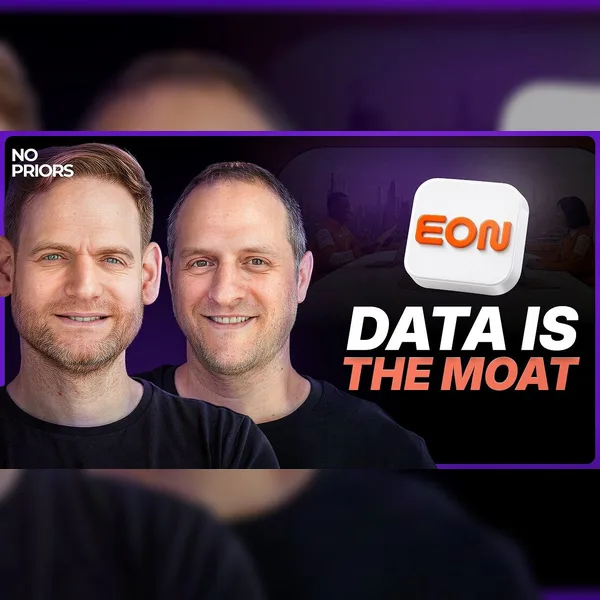
Ofir Ehrlich and Gonen Stein of Eon join Elad Gil on No Priors to discuss the rapid rise of shadow AI, non-human identities, and how to protect enterprise data.
1:03
What happens when every employee becomes a builder without understanding security, compliance, or where company data goes?
You end up with untracked agents triggering other agents on live enterprise data.
Ofir Ehrlich and Gonen Stein of Eon join Elad Gil on No Priors to discuss the rapid rise of shadow AI, non-human identities, and how to protect enterprise data.
Google’s purchase of Spirit Airlines’ data out of bankruptcy signaled a shift in how the tech world values real-world datasets. Although compute and models get much of the attention, in this landscape, it’s data that is a company’s protective moat. Eon CEO / Co-Founder Ofir Ehrlich and President / Co-Founder Gonen Stein join Elad Gil to talk about how Eon is redefining cloud backup into a secure data foundation designed to power and protect enterprise AI. Ofir and Gonen discuss why historical enterprise data is in demand by AI labs, and how Eon facilitates access to scattered and locked data across business units through providing the mapping, classification, and access controls needed to connect it into AI workflows. They also explore how traditional ransomware defenses must now protect against rogue AI agents with legitimate system permissions, concerns around the influx of autonomous agents and non-human identities, and the implications for the breakneck speed of AI adoption compared to the slowness of the cloud era.
Sign up for new podcasts every week. Email feedback to show@no-priors.com
Follow us on Twitter: @NoPriorsPod | @Saranormous | @EladGil | @Eon_io_ | @OfirEhrlich
Chapters:
00:00 – Cold Open Trailer
00:59 – Ofir Ehrlich and Gonen Stein Introduction
01:27 – What Eon Does
02:41 – Data as Moat
06:43 – Training Agents with Good Data
09:39 – Data is the New Oil
15:00 – Autonomous Security Threats
18:15 – How Agents Change the Enterprise Stack
22:11 – Re-imagining Data Infrastructure
27:52 – Cloud vs. AI Era Shift
30:26 – How AI is Changing Companies
34:31 – Conclusion
34:51
Google’s purchase of Spirit Airlines’ data out of bankruptcy signaled a shift in how the tech world values real-world datasets. Although compute and models get much of the attention, in this landscape, it’s data that is a company’s protective moat. Eon CEO / Co-Founder Ofir Ehrlich and President / Co-Founder Gonen Stein join Elad Gil to talk about how Eon is redefining cloud backup into a secure data foundation designed to power and protect enterprise AI. Ofir and Gonen discuss why historical enterprise data is in demand by AI labs, and how Eon facilitates access to scattered and locked data across business units through providing the mapping, classification, and access controls needed to connect it into AI workflows. They also explore how traditional ransomware defenses must now protect against rogue AI agents with legitimate system permissions, concerns around the influx of autonomous agents and non-human identities, and the implications for the breakneck speed of AI adoption compared to the slowness of the cloud era.
Sign up for new podcasts every week. Email feedback to show@no-priors.com
Follow us on Twitter: @NoPriorsPod | @Saranormous | @EladGil | @Eon_io_ | @OfirEhrlich
Chapters:
00:00 – Cold Open Trailer
00:59 – Ofir Ehrlich and Gonen Stein Introduction
01:27 – What Eon Does
02:41 – Data as Moat
06:43 – Training Agents with Good Data
09:39 – Data is the New Oil
15:00 – Autonomous Security Threats
18:15 – How Agents Change the Enterprise Stack
22:11 – Re-imagining Data Infrastructure
27:52 – Cloud vs. AI Era Shift
30:26 – How AI is Changing Companies
34:31 – Conclusion
Most BCI companies want to help you talk to AI faster. Max Hodak explains why Science Corporation is focused instead on restoring vision, hearing, and eventually achieving substrate independence.
1:04
Most BCI companies want to help you talk to AI faster. Max Hodak explains why Science Corporation is focused instead on restoring vision, hearing, and eventually achieving substrate independence.
"If you apply enough compute to matter, you get this thing that looks like intelligence."
Max Hodak on why AI models and brains seem to represent concepts using the same underlying geometry.
0:40
"If you apply enough compute to matter, you get this thing that looks like intelligence."
Max Hodak on why AI models and brains seem to represent concepts using the same underlying geometry.
Do 5 chess puzzles a day.
Multiply that by 1,000. You've done 5,000 puzzles, and you're a different player.
It's not the one day. It's the habit compounding over time.
Chess.com CEO Erik Allebest on why this applies to AI too, it's like having access to a professor's office, except it's in your pocket all the time.
0:46
Do 5 chess puzzles a day.
Multiply that by 1,000. You've done 5,000 puzzles, and you're a different player.
It's not the one day. It's the habit compounding over time.
Chess.com CEO Erik Allebest on why this applies to AI too, it's like having access to a professor's office, except it's in your pocket all the time.
How do you restore vision to the blind?
Max Hodak breaks down PRIMA, the chip implanted under the retina that restores vision to patients who've gone blind.
"You can think of it like a cochlear implant for the eye."
New episode of No Priors, out now.
0:31
How do you restore vision to the blind?
Max Hodak breaks down PRIMA, the chip implanted under the retina that restores vision to patients who've gone blind.
"You can think of it like a cochlear implant for the eye."
New episode of No Priors, out now.
Max Hodak, co-founder and CEO of Science Corporation, joins Sarah Guo to discuss the future of vision, brain-computer interfaces, and the human experience. Max explains how Science’s PRIMA retinal implant could restore functional vision for people who have lost their sight, and why treating the brain as a computational system could unlock new approaches to medicine.
They explore the broader potential of neural devices, from restoring lost capabilities to expanding human potential, as well as deeper questions around identity, consciousness, and whether the human experience can persist as our biological hardware changes.
Max also shares Science’s long-term vision for reducing the fragility of the human condition by repairing, replacing, and ultimately upgrading parts of ourselves. Finally, he discusses the surprising parallels between AI models and biological brains, and why AI may offer a powerful new lens for understanding intelligence.
Chapters:
00:00 – Cold Open Trailer
01:40 – Max Hodak Introduction
02:00 – Science Corporation Overview and Origin
02:53 – A Revolutionary Solve for Blindness
06:32 – Scope of Timeline and Engineer Cost
09:10 – Clinic Trial Process
09:45 - The Response from Clinicians
12:21 – Broader Biotech Landscape
14:59 – Brain’s Relationship to Senses
17:35 – The Study of Consciousness
19:50 – Investments in Brain Computer Interface
22:10 – Fertile Ways to Study Neuroscience
24:46 – Biotech Expansion for Science Corporation
27:50 – What Success Looks Like in Neuroscience and Tech
29:06 - Goals Within Human Preservation vs. Adaptation
30:25 – Conclusion
31:39
Max Hodak, co-founder and CEO of Science Corporation, joins Sarah Guo to discuss the future of vision, brain-computer interfaces, and the human experience. Max explains how Science’s PRIMA retinal implant could restore functional vision for people who have lost their sight, and why treating the brain as a computational system could unlock new approaches to medicine.
They explore the broader potential of neural devices, from restoring lost capabilities to expanding human potential, as well as deeper questions around identity, consciousness, and whether the human experience can persist as our biological hardware changes.
Max also shares Science’s long-term vision for reducing the fragility of the human condition by repairing, replacing, and ultimately upgrading parts of ourselves. Finally, he discusses the surprising parallels between AI models and biological brains, and why AI may offer a powerful new lens for understanding intelligence.
Chapters:
00:00 – Cold Open Trailer
01:40 – Max Hodak Introduction
02:00 – Science Corporation Overview and Origin
02:53 – A Revolutionary Solve for Blindness
06:32 – Scope of Timeline and Engineer Cost
09:10 – Clinic Trial Process
09:45 - The Response from Clinicians
12:21 – Broader Biotech Landscape
14:59 – Brain’s Relationship to Senses
17:35 – The Study of Consciousness
19:50 – Investments in Brain Computer Interface
22:10 – Fertile Ways to Study Neuroscience
24:46 – Biotech Expansion for Science Corporation
27:50 – What Success Looks Like in Neuroscience and Tech
29:06 - Goals Within Human Preservation vs. Adaptation
30:25 – Conclusion
Alex Rives on ESMFold, BioHub's open source system for scientific discovery in protein biology:
1. They folded over 1.1 billion proteins and predicted every single structure.
2. The model learned protein biology so well it hit state of the art on every benchmark they threw at it.
3. They never once trained it on antibodies, but antibody design came out the other side anyway.
Experiments that used to mean screening millions of antibodies in a lab can now just run on a computer.
1:01
Alex Rives on ESMFold, BioHub's open source system for scientific discovery in protein biology:
1. They folded over 1.1 billion proteins and predicted every single structure.
2. The model learned protein biology so well it hit state of the art on every benchmark they threw at it.
3. They never once trained it on antibodies, but antibody design came out the other side anyway.
Experiments that used to mean screening millions of antibodies in a lab can now just run on a computer.
The startup playbook says: hire a technical co-founder, raise a bunch of money, get an office, go after a big market, spend on customer acquisition.
Chess.com's CEO did the opposite of every single one of those.
Hired a friend from a state school. Worked remotely. Never raised a dollar. Picked a tiny market nobody wanted.
His advice for founders today: stop listening to the advice.
0:57
The startup playbook says: hire a technical co-founder, raise a bunch of money, get an office, go after a big market, spend on customer acquisition.
Chess.com's CEO did the opposite of every single one of those.
Hired a friend from a state school. Worked remotely. Never raised a dollar. Picked a tiny market nobody wanted.
His advice for founders today: stop listening to the advice.
Chess.com CEO Erik Allebest has a new side project:
Revamping poker to rank players by rating, not chip count.
His bet? People will end up caring about their poker rating as much as their bankroll.
On the latest episode of No Priors, Erik breaks down Gambit.com and applying the Chess.com playbook to a whole new game:
0:58
Chess.com CEO Erik Allebest has a new side project:
Revamping poker to rank players by rating, not chip count.
His bet? People will end up caring about their poker rating as much as their bankroll.
On the latest episode of No Priors, Erik breaks down Gambit.com and applying the Chess.com playbook to a whole new game:
While the rest of the nuclear industry still relies on simulations and paper designs, Valar Atomics is busy splitting atoms. In fact, they just powered an NVIDIA Blackwell chip directly with a live nuclear reactor in order to power the world’s first nuclear powered website. Sarah Guo joins Valar Atomics founder and CEO Isaiah Taylor on-site at their Utah nuclear facility to talk about how Valar is shifting nuclear energy from the theoretical to the practical by building and perfecting reactors via hardware iteration. Isaiah discusses why the US stopped building nuclear reactors in the 1970s, and how Valar utilized a little-known pathway via the Department of Energy, revived by a Trump administration executive order, to successfully develop and run their advanced reactor. He also shares Valar’s strategy for vertical integration, their venture-backed approach to financing, their giga-site plans, and why he believes cheap, abundant atomic energy has the power to vastly improve the quality of human life.
Sign up for new podcasts every week. Email feedback to show@no-priors.com
Follow us on Twitter: @NoPriorsPod | @Saranormous | @EladGil | @isaiah_p_taylor | @valaratomics
Chapters:
00:00 – Cold Open
00:57 – Isaiah Taylor Introduction
01:30 - Valar’s Mission and Origin
04:24 - Why Nuclear Development Stalled
07:18 - Reviving Nuclear through DoE and Executive Order
10:59 - Control Room Tour
16:17 - Misunderstandings About Nuclear
20:07 - Issues with Reliability
22:14 - Nuclear is a Hardware Execution Problem
24:32 - Timeline to Scale Production
26:32 - Introducing Ward 250
30:42 - Speed Through Simplicity
33:33 - AI Drives Nuclear Demand
35:02 - Running a Reactor with NVIDIA Blackwell
36:27 - Valar’s Nuclear Conviction
40:16 - Verticalization as Path to Scale
43:58 - Valar’s Control Skid
48:00 - Venture-Backed Nuclear
50:51 - Gigasite Strategy
53:11 - CEO Tick Rate
55:37 - Abundant Energy and Hyper-Techno Industrialism
1:01:27 – Conclusion
1:01:27
While the rest of the nuclear industry still relies on simulations and paper designs, Valar Atomics is busy splitting atoms. In fact, they just powered an NVIDIA Blackwell chip directly with a live nuclear reactor in order to power the world’s first nuclear powered website. Sarah Guo joins Valar Atomics founder and CEO Isaiah Taylor on-site at their Utah nuclear facility to talk about how Valar is shifting nuclear energy from the theoretical to the practical by building and perfecting reactors via hardware iteration. Isaiah discusses why the US stopped building nuclear reactors in the 1970s, and how Valar utilized a little-known pathway via the Department of Energy, revived by a Trump administration executive order, to successfully develop and run their advanced reactor. He also shares Valar’s strategy for vertical integration, their venture-backed approach to financing, their giga-site plans, and why he believes cheap, abundant atomic energy has the power to vastly improve the quality of human life.
Sign up for new podcasts every week. Email feedback to show@no-priors.com
Follow us on Twitter: @NoPriorsPod | @Saranormous | @EladGil | @isaiah_p_taylor | @valaratomics
Chapters:
00:00 – Cold Open
00:57 – Isaiah Taylor Introduction
01:30 - Valar’s Mission and Origin
04:24 - Why Nuclear Development Stalled
07:18 - Reviving Nuclear through DoE and Executive Order
10:59 - Control Room Tour
16:17 - Misunderstandings About Nuclear
20:07 - Issues with Reliability
22:14 - Nuclear is a Hardware Execution Problem
24:32 - Timeline to Scale Production
26:32 - Introducing Ward 250
30:42 - Speed Through Simplicity
33:33 - AI Drives Nuclear Demand
35:02 - Running a Reactor with NVIDIA Blackwell
36:27 - Valar’s Nuclear Conviction
40:16 - Verticalization as Path to Scale
43:58 - Valar’s Control Skid
48:00 - Venture-Backed Nuclear
50:51 - Gigasite Strategy
53:11 - CEO Tick Rate
55:37 - Abundant Energy and Hyper-Techno Industrialism
1:01:27 – Conclusion
The AI supply chain is completely dominated by China. And if you think it's just about chips, you're wrong.
China leads the world in robotics too. Under Secretary of State Jacob Helberg says that's exactly where America is making its next big bet.
0:39
The AI supply chain is completely dominated by China. And if you think it's just about chips, you're wrong.
China leads the world in robotics too. Under Secretary of State Jacob Helberg says that's exactly where America is making its next big bet.
"A superhuman intelligence can be used for good or for evil. It's going to depend on the people in charge."
On No Priors, Chess.com CEO Erik Allebest shares why AGI isn't just a technology problem; it's a cultural one:
0:39
"A superhuman intelligence can be used for good or for evil. It's going to depend on the people in charge."
On No Priors, Chess.com CEO Erik Allebest shares why AGI isn't just a technology problem; it's a cultural one:
In a world of infinite gaming and entertainment possibilities, how does a centuries-old game stay so popular? Chess.com co-founder and CEO Erik Allebest joins Sarah Guo to explain how the evolution of technology has kept people coming back to chess, even when machines can beat us at the game. Erik talks about how the desire to build a MySpace-like community for chess led to the purchase of a domain name from a bankruptcy sale back in 2005, and scaled into a community with 10 million daily active users and 250 million total registered members. He also discusses the growth of the cultural relevance of chess, how investments from private equity firms General Atlantic and CVC helped grow and strengthen their platform, and how Chess.com is leveraging AI both within the business itself and to make a better product for its community.
Sign up for new podcasts every week. Email feedback to show@no-priors.com
Follow us on Twitter: @NoPriorsPod | @Saranormous | @EladGil | @chesscom | @erikallebest
Chapters:
00:00 – Cold Open Trailer
01:05 – Erik Allebest Introduction
01:48 – Chess.com Today
02:57 – Buying and Scaling Chess.com
06:29 – Competition and Growth
11:52 – Chess and Cultural Relevance
14:32 – Private Equity Investment
19:31 – Playing Games Amid Evolving Tech
25:09 – Tech, Skill Distribution, and Expertise
28:40 – Chess and Cheating
31:20 – What Makes Chess Special
33:17 – Chess.com Future Vision
34:54 – Founder Advice
36:48 – AGI/ASI Predictions
40:02 – AI Investments at Chess.com
42:13 – How AI May Change Product at Chess.com
43:27 – Poker Rating Algorithms
46:07 – Conclusion
46:08
In a world of infinite gaming and entertainment possibilities, how does a centuries-old game stay so popular? Chess.com co-founder and CEO Erik Allebest joins Sarah Guo to explain how the evolution of technology has kept people coming back to chess, even when machines can beat us at the game. Erik talks about how the desire to build a MySpace-like community for chess led to the purchase of a domain name from a bankruptcy sale back in 2005, and scaled into a community with 10 million daily active users and 250 million total registered members. He also discusses the growth of the cultural relevance of chess, how investments from private equity firms General Atlantic and CVC helped grow and strengthen their platform, and how Chess.com is leveraging AI both within the business itself and to make a better product for its community.
Sign up for new podcasts every week. Email feedback to show@no-priors.com
Follow us on Twitter: @NoPriorsPod | @Saranormous | @EladGil | @chesscom | @erikallebest
Chapters:
00:00 – Cold Open Trailer
01:05 – Erik Allebest Introduction
01:48 – Chess.com Today
02:57 – Buying and Scaling Chess.com
06:29 – Competition and Growth
11:52 – Chess and Cultural Relevance
14:32 – Private Equity Investment
19:31 – Playing Games Amid Evolving Tech
25:09 – Tech, Skill Distribution, and Expertise
28:40 – Chess and Cheating
31:20 – What Makes Chess Special
33:17 – Chess.com Future Vision
34:54 – Founder Advice
36:48 – AGI/ASI Predictions
40:02 – AI Investments at Chess.com
42:13 – How AI May Change Product at Chess.com
43:27 – Poker Rating Algorithms
46:07 – Conclusion
Are founders scared of the big labs?
Elad Gil says some of the most talented builders are now going after niche markets, not because the opportunity is small, but because they're scared of competing head-on with the labs.
1:00
Are founders scared of the big labs?
Elad Gil says some of the most talented builders are now going after niche markets, not because the opportunity is small, but because they're scared of competing head-on with the labs.
70% of France's grid is powered by nuclear energy with zero major accidents.
The U.S. stalled at 18% and hasn't built a reactor in 40 years.
Elad Gil and Sarah Guo on how the anti-nuclear safety lobby of the 1970s killed abundant clean energy in America, and why AI is facing the same crossroads today.
0:45
70% of France's grid is powered by nuclear energy with zero major accidents.
The U.S. stalled at 18% and hasn't built a reactor in 40 years.
Elad Gil and Sarah Guo on how the anti-nuclear safety lobby of the 1970s killed abundant clean energy in America, and why AI is facing the same crossroads today.
18 years ago, Intel CEO Lip-Bu Tan would walk into a room of VC partners to pitch semiconductors, and half of them would walk out before he finished.
Today, Jensen Huang runs a $5.3 trillion company. Lisa Su runs one near $800 billion. Tan's is close to $600 billion.
Nobody seems to be walking out of the room anymore.
1:16
18 years ago, Intel CEO Lip-Bu Tan would walk into a room of VC partners to pitch semiconductors, and half of them would walk out before he finished.
Today, Jensen Huang runs a $5.3 trillion company. Lisa Su runs one near $800 billion. Tan's is close to $600 billion.
Nobody seems to be walking out of the room anymore.
"People keep talking about someday there'll be a multi-billion dollar single-person company. That was basically Minecraft. It already happened 15 years ago."
Elad Gil on how AI is supercharging that:
1:11
"People keep talking about someday there'll be a multi-billion dollar single-person company. That was basically Minecraft. It already happened 15 years ago."
Elad Gil on how AI is supercharging that:
On the latest No Priors episode, Sarah Guo and Elad Gil discuss the intense pace of AI development, and why timelines toward AGI remain so difficult to predict.
1:11
On the latest No Priors episode, Sarah Guo and Elad Gil discuss the intense pace of AI development, and why timelines toward AGI remain so difficult to predict.
Is the tech industry moving too quickly, or are founders letting fear of AI labs stunt their ambitions? Sarah and Elad explore the current landscape of artificial intelligence, venture capital, and startup dynamics. They discuss the realities of building multi-trillion-dollar companies, shifting market sizes and outcome-based pricing models, and how founders are reacting to the rise of major AI labs. They also talk about what the framework for startup exits should look like, the potential for researcher burnouts in the next eighteen months as ASI looms on the horizon, bottlenecks for compute, and the impact of regulatory capture and shifting ecosystems from California to Texas.
Apply for Embed - Conviction’s Catalyst for AI-Native Startups: https://embed.conviction.com/
Sign up for new podcasts every week. Email feedback to show@no-priors.com
Follow us on Twitter: @NoPriorsPod | @Saranormous | @EladGil
Chapters:
00:00 – Cold Open Trailer
00:31 – Episode Introduction
01:44 – The Next Trillion-Dollar Company
03:12 – Tech Waves as Punctuated Equilibria
04:42 – TAM vs. Revenue Reality
07:14 – Market Size vs. Speed
10:32 – When Founders Should Sell
14:04 – Financing and Time Cost
17:57 – RSI and the Looming Promise of ASI
21:49 – Compute Power Laws
28:12 – Regulations and Disruption
33:06 – Beyond Transformers
34:26 – Tradeoffs - Safety vs. Progress
39:11 – Conclusion
39:30
Is the tech industry moving too quickly, or are founders letting fear of AI labs stunt their ambitions? Sarah and Elad explore the current landscape of artificial intelligence, venture capital, and startup dynamics. They discuss the realities of building multi-trillion-dollar companies, shifting market sizes and outcome-based pricing models, and how founders are reacting to the rise of major AI labs. They also talk about what the framework for startup exits should look like, the potential for researcher burnouts in the next eighteen months as ASI looms on the horizon, bottlenecks for compute, and the impact of regulatory capture and shifting ecosystems from California to Texas.
Apply for Embed - Conviction’s Catalyst for AI-Native Startups: https://embed.conviction.com/
Sign up for new podcasts every week. Email feedback to show@no-priors.com
Follow us on Twitter: @NoPriorsPod | @Saranormous | @EladGil
Chapters:
00:00 – Cold Open Trailer
00:31 – Episode Introduction
01:44 – The Next Trillion-Dollar Company
03:12 – Tech Waves as Punctuated Equilibria
04:42 – TAM vs. Revenue Reality
07:14 – Market Size vs. Speed
10:32 – When Founders Should Sell
14:04 – Financing and Time Cost
17:57 – RSI and the Looming Promise of ASI
21:49 – Compute Power Laws
28:12 – Regulations and Disruption
33:06 – Beyond Transformers
34:26 – Tradeoffs - Safety vs. Progress
39:11 – Conclusion
Valar Atomics was quoted $5 million and 2.5 years to build the brain of their nuclear reactor.
That wasn't fast enough.
Isaiah Taylor shares what they did instead:
0:38
Valar Atomics was quoted $5 million and 2.5 years to build the brain of their nuclear reactor.
That wasn't fast enough.
Isaiah Taylor shares what they did instead:
"Look outside your window. Every building would need to be 3D printed for robotics to do what we're doing today."
Will humanoid robots replace blue-collar trades? Netic founder Melisa Tokmak explains why physical automation in essential services is much further out than people think.
0:49
"Look outside your window. Every building would need to be 3D printed for robotics to do what we're doing today."
Will humanoid robots replace blue-collar trades? Netic founder Melisa Tokmak explains why physical automation in essential services is much further out than people think.
"Silicon Valley embodies the quintessence of the underdog mentality."
This wasn't said by a VC or a founder. It was said by Under Secretary of State Jacob Helberg.
His take: like an underestimated founder, every time the world counted America out, it came back harder.
America's foreign policy is starting to sound a lot like Silicon Valley.
0:49
"Silicon Valley embodies the quintessence of the underdog mentality."
This wasn't said by a VC or a founder. It was said by Under Secretary of State Jacob Helberg.
His take: like an underestimated founder, every time the world counted America out, it came back harder.
America's foreign policy is starting to sound a lot like Silicon Valley.
Netic CEO Melisa Tokmak explains why winning in enterprise AI takes more than great models. It takes focus, deep product work, and solving the last mile.
0:53
Netic CEO Melisa Tokmak explains why winning in enterprise AI takes more than great models. It takes focus, deep product work, and solving the last mile.
When your AC fails in a heatwave, you don’t want a busy signal; you need a solution. Netic founder and CEO Melisa Tokmak joins host Elad Gil to explain how Netic’s autonomous AI platform acts as an intermediary between companies and customers, deploying agents to instantly handle essential services, from emergency home repairs to hospitality to pet care. Melisa describes the complexity of these real-world workloads, which have traditionally relied on large human support teams, and how over 70% of Netic’s customers interact first with AI. She also talks about the reasoning behind building a scalable product company rather than an AI roll-up, why she believes robotics will not catch up in these industries in the near future, why she doesn’t view large frontier labs as competitive threats, and how private equity’s playbook has shifted toward measurable ROI in the AI-era. Plus, why Melisa is optimistic about the impact AI will have on education.
Sign up for new podcasts every week. Email feedback to show@no-priors.com
Follow us on Twitter: @NoPriorsPod | @Saranormous | @EladGil | @netic_AI | @melisatokmak
Chapters:
00:00 – Melisa Tokmak Introduction
00:32 – What Netic Builds
03:53 – Automating Workflows for Essential Services
06:26 – Building a Service vs. AI Roll-Up
10:38 – AI for the Real World Timeline
12:56 – Can Big Labs Compete?
15:35 – Modern Founder Mindset
19:09 – Screening for Agency
22:25 – Five Year Vision
23:53 – Selling to Slow Industries
27:23 – How Private Equity Approached AI
31:14 – What Excites Melisa About the Future of AI
34:27 – Conclusion
34:30
When your AC fails in a heatwave, you don’t want a busy signal; you need a solution. Netic founder and CEO Melisa Tokmak joins host Elad Gil to explain how Netic’s autonomous AI platform acts as an intermediary between companies and customers, deploying agents to instantly handle essential services, from emergency home repairs to hospitality to pet care. Melisa describes the complexity of these real-world workloads, which have traditionally relied on large human support teams, and how over 70% of Netic’s customers interact first with AI. She also talks about the reasoning behind building a scalable product company rather than an AI roll-up, why she believes robotics will not catch up in these industries in the near future, why she doesn’t view large frontier labs as competitive threats, and how private equity’s playbook has shifted toward measurable ROI in the AI-era. Plus, why Melisa is optimistic about the impact AI will have on education.
Sign up for new podcasts every week. Email feedback to show@no-priors.com
Follow us on Twitter: @NoPriorsPod | @Saranormous | @EladGil | @netic_AI | @melisatokmak
Chapters:
00:00 – Melisa Tokmak Introduction
00:32 – What Netic Builds
03:53 – Automating Workflows for Essential Services
06:26 – Building a Service vs. AI Roll-Up
10:38 – AI for the Real World Timeline
12:56 – Can Big Labs Compete?
15:35 – Modern Founder Mindset
19:09 – Screening for Agency
22:25 – Five Year Vision
23:53 – Selling to Slow Industries
27:23 – How Private Equity Approached AI
31:14 – What Excites Melisa About the Future of AI
34:27 – Conclusion
Under Secretary of State Jacob Helberg just revealed the US claimed 4,000 acres in the Philippines for AI.
That's a third of Manhattan, handed over for one purpose: building a private sector industrial base to secure America's AI supply chain.
This is what competing with China actually looks like.
Pax Silica is the 14-country coalition behind it, and it's the most ambitious economic security plan America has ever built.
0:54
Under Secretary of State Jacob Helberg just revealed the US claimed 4,000 acres in the Philippines for AI.
That's a third of Manhattan, handed over for one purpose: building a private sector industrial base to secure America's AI supply chain.
This is what competing with China actually looks like.
Pax Silica is the 14-country coalition behind it, and it's the most ambitious economic security plan America has ever built.