Software Huddle

@softwarehuddle

节目详情

For Engineers, By Engineers Join us in insightful and in-depth conversations with tech experts, covering software development, entrepreneurship, and technology trends. Visit softwarehuddle.com or contact team@softwarehuddle.com

单集更新

Limiting the Network’s Blast Radius with Shankar Somasundaram

6:44

As AI tools like Mythos uncover vulnerabilities faster than ever, organizations need more than visibility. They need network segmentation to reduce risk. In this conversation, Shankar explains how Asimily helps enterprises achieve it. Visit https://asimily.com/

Pulse | Open Source Infra for AI Agents to Access the Internet with Catherine Jue

14:02

Catherine Jue from Kernel joins us in this episode of Pulse. Kernel is building Open Source Infra for AI Agents to access the internet. Timestamps 00:29 What's the history behind naming the company? 01:21 Can you walk us through Kernel at a surface level? 03:23 Who is Kernel meant for? 06:11 Any indie hacker use cases? 07:22 Any books that you'd recommend to the viewers? 08:29 Views on PlanetScale? 09:31 Are you hiring right now? 11:14 3 people one should follow in tech? 12:50 Was the Chromium source code intimidating? Visit kernel.sh to learn more.

3 Qualities for New Hires #hiring #agentic

1:40

Catherine from Kernel talks about what her team looks for in new hires. Visit kernel.sh to learn more about how Kernel is creating Open Source Infra for AI Agents

AI and Proactive Reliability with Kolton Andrus

55:12

Today we're talking with Kolton Andrus, the Founder and CEO of Gremlin, about what happens to reliability when AI is writing most of the code. Kolton helped build the Chaos Engineering practice of both Amazon and Netflix before starting Gremlin. In our conversation we talk about scar tissue, the intuition engineers develop from being woken up at 3:00 AM to fix production outages, and how AI doesn't have any of it. It generates code in an afternoon that maybe took a team previously weeks to build, but none of those painful lessons come along for the ride. We dig into why 10x more code might mean 10x more failures. The concept of reliability guardrails, think ethical guardrails, but for keeping your systems up. Why you still have to test in production no matter how good your staging environment is? How Gremlin is rethinking their product for the world where agents, not engineers, are essentially the primary users. And why we're entering a painful, narrow part of the hourglass before AI gets good enough to handle all of this on its own.

Fast infrastructure for AI Agents to use the internet

0:57

@trykernel provides really fast infrastructure for AI agents to use the internet. Catherine shares how @PlanetScale is helping achieve that with predictable performance at scale.

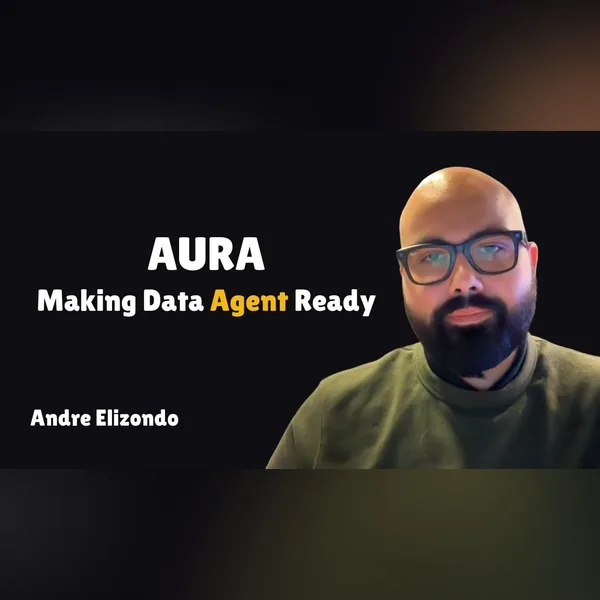
Making Data Agent Ready with Andre Elizondo

51:50

Today we are talking with Andre Elizondo, the Director of Innovation at Mezmo about their open source agentic harness for SREs called AURA. Mezmo got their start handling observability data at scale. Logs, traces, metrics, the usual stuff. AURA is their answer to a growing problem, as system complexity outpaces humans' ability to make sense of all that data, how do you actually make it actionable for AI agents? We get into their approach to context engineering, essentially making data agent ready before it hits the model. Why they built their own orchestrator in Rust? How they handle memory and self-correction in agent loops? Their take on MCP and where it fits versus Skills and code sandboxing and how the SRE role is evolving as agents become trusted teammates. Visit mezmo.com/aura

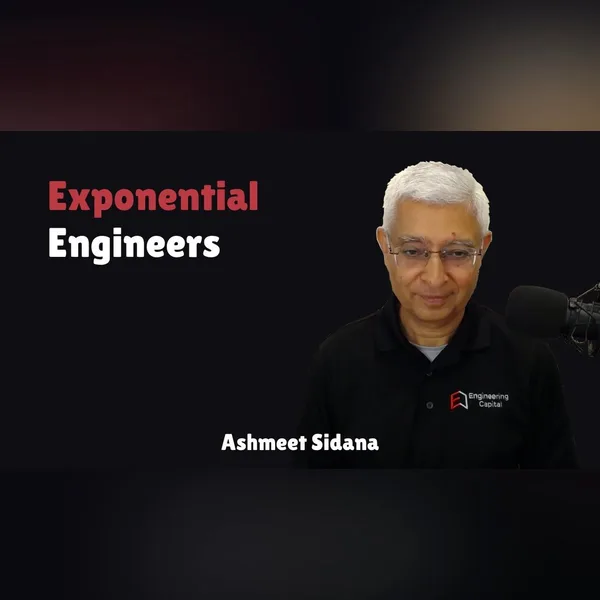
Exponential Engineers with Ashmeet Sidana

53:21

Today on the show, we have a special guest — Ashmeet Sidana, the founder of Engineering Capital. Ashmeet started his career as an engineer at some great companies like Hewlett-Packard and Silicon Graphics before founding his own company, getting it acquired, and eventually starting his venture capital firm, Engineering Capital. With his strong engineering background, Ashmeet looks for startups that have a technical insight — something unique that gives them an edge over their competitors. This focus on technical insight sets Engineering Capital apart from other VC firms that often emphasize market insight or distribution insight or some other kind of advantage. We talked about AI, Exponential Engineers, Entrepreneurship, and had a lot of fun.

Powered by Neurons with Ewelina Kurtys

42:34

Today we have Dr. Ewelina Kurtys on the show. Ewelina has a background in Neuroscience and is currently working at FinalSpark. FinalSpark is using live Neurons for computations instead of traditional electric CPUs. The advantage is that live Neurons are significantly more energy efficient than traditional computing, and given all the energy concerns right now with regards to running AI workloads and data centers, this seems quite relevant, even though bioprocessors are still very much in the research phase.

Lessons from Building AI Agents with Rafal Wilinski

1:08:52

Today we're talking with one of our favorite engineers, Rafal Wilinski. Rafal has been on the cutting edge of AI development in the last few years as he has led AI teams at Zapier and Vendr. Rafal walks us through the hard-won lessons about actually integrating AI tools into the applications you're building. One of the hardest things in integrating these AI tools is how to ensure you're getting better and not regressing as you improve your prompts and upgrade your models. He shows how using evals is one part of the story along with deeply investigating customer signals to see how they are or aren't succeeding with AI. Along the way, we also talk about RAG, his favorite models, his AI development toolset, and why Poland has been killing it lately. Check it out and be sure to follow Rafal if you want to learn more on building with AI. *Timestamps* 01:10 Start 08:05 Zapier Agents 09:41 How does it differ from previous workflows? 13:10 Does text transform into a workflow? 14:31 Using Zapier's existing tools to power Agents? 15:48 Agents are given a only set of actions from which they can choose 17:45 Browser related stuff? 21:16 Choosing a model 25:28 Different prompts for different models? 40:36 Most often used models 41:45 TypeScript or Python 44:19 Cost 45:35 Less talk about non AI stuff 47:32 On regular devs building with AI 52:18 Protecting against user behaviour 54:25 Future of RAG 56:26 Is AI progress slowing down? 01:00:43 Personal AI tools 01:02:41 Losing understanding of repos? 01:04:33 Would you need Software Background in a few years? 01:06:08 GitHub Actions 01:07:31 Poland

Building a High-Ownership Engineering Culture with Matt Watson

51:38

If you’ve ever felt like engineering teams are stuck in execution mode—heads down, building what they’re told—then today’s episode is for you. We're talking about what it really takes to build high ownership engineering cultures where devs aren't simply just shipping code, but they're helping shape the product. And our guest this week is Matt Watson. He's a long time founder, engineer, and now the CEO of Full Scale, a company that helps startups and scale ups, grow their engineering teams with top talent from the Philippines. Matt's also the author of a book called Product Driven that shows how engineers can build with more clarity, purpose, customer focus and we get into some of the details in that book during this podcast. So in this episode, we get into everything from the downsides of specialization to the importance of empathy, to why code shipped isn't the same as value delivered. We hope you enjoy it.

Building CI for the Age of AI Agents with Aayush Shah

1:04:02

Today's episode is with Aayush Shah. Aayush is one of the co-founders of Blacksmith, which is a CI compute platform. Basically, Blacksmith will run your GitHub Actions jobs faster and with more visibility with the standard GitHub Actions CI runners. The founding team has a fun background doing systems work at Cockroach and Faire, and they're taking on a big problem in running this massive CI fleet. The explosion in AI agents has really changed the CI world. CI is more useful than ever, as you want to be sure the changes from your agents aren't breaking your existing functionality. At the same time, there's a huge increase in demand and spikiness of CI workloads as developers can fire off multiple agents to work in parallel, each needing to run the CI suite before merging. Aayush talked about how they're handling this load and facilitating visibility into test failures. We also covered cloud economics. Aayush said the traditional cloud-based storage options don't work for them -- EBS and locally attached SSDs are too expensive for their workloads where they don't need the standard durability guarantees. He walks us through building their own fleet outside the hyperscalers and the plans going forward, along with some of the economics of multi-tenancy that Blacksmith has previously written about. *Blacksmith will be at KubeCon | CloudNativeCon North America 2025. Register Here* https://events.linuxfoundation.org/kubecon-cloudnativecon-north-america/register/ 01:09 Start 08:38 Github Actions 23:07 Cockroach 27:22 Forced bundling 31:11 Compute Locations 39:32 Network I/O Costs 40:51 Multi tenancy 46:04 Pricing Model 52:42 Seed Round 54:13 YC Experience 56:27 Office Locations 59:06 Codebase 01:01:24 AI Workflow

Operational Excellence Is the Moat with Sam Lambert

1:06:13

Today, Sam Lambert from Planetscale is back for a third time. Planetscale just announced Planetscale Postgres, so we had to get Sam back to tell us how and why they decided to add support for Postgres. It's always great to have Sam on -- he brings great stories about real customers and honest insight about the state of the database industry. In this episode, we talk about the road to Postgres and how operational excellence is the only true advantage in database providers. Sam walks us through the current Planetscale Postgres offering, along with details on Nova, a new sharded Postgres project that Planetscale is working on. Along the way, we get updates on Planetscale Metal, how demand has been for Planetscale Postgres, and future plans for Planetscale. *Timestamps* 01:16 Start 06:37 The Timeline 15:15 Not Much IP in the Database Market 21:48 PSBouncer 24:17 Zonal affinity 27:38 Query Insights 29:34 How to sign up 32:02 Convex 34:37 Other data stores? 56:18 Acquisitions

与Arvid Kahl一起转录和索引350万播客的经验教训

1:06:45

今天我们有幸邀请到重量级嘉宾Arvid Kahl。他是我最喜欢的那类嘉宾——既深谙技术又能畅谈初创企业技术与商业挑战的创始人。本期节目精彩纷呈,不容错过。 Arvid以"自举创业者"(Bootstrapped Founder)闻名,曾完整记录2019年出售Feedback Panda的全过程。如今他正在打造Podscan,并持续分享创业历程。 Podscan是个引人入胜的项目。它让全球*所有*播客单集内容实现完全可搜索。目前已完成350万集播客的转录,并以每天3万至5万集的速度持续增长。 这涉及大量技术挑战:如何利用最新大语言模型获得最佳转录效果、该使用公共供应商API还是自建大语言模型、如何高效实现跨TB级转录数据的全文搜索。Arvid分享了多年积累的经验与尝试过的各种策略。 但项目还面临独特的商业挑战。对多数技术型企业而言,基础设施成本与客户增长成正比——更多客户意味着更多数据与服务器。而Podscan必须索引整个播客生态,无论客户多寡。这意味着在拓展客户群时需要大量前期投入。Arvid将讲述如何优化基础设施以应对这一特殊挑战。 *时间戳* 01:44 开场 08:09 如何发现所有内容? 13:58 转录基础设施 24:25 文件大小与质量权衡 28:26 优先级排序 36:40 本地运行大语言模型 38:35 系统演进历程 40:42 搜索功能 58:56 PHP Laravel框架 01:04:47 警报系统 01:07:12 独立开发者创业 01:14:00 再次退出?

Valkey After the Fork: A Conversation with Madelyn Olson

1:21:15

Today, we're talking Valkey, Redis, and all things caching. Our guest is Madelyn Olson, who is a principal engineer at AWS working on Elasticache and is one of the most well-known people in the caching community. She was a core maintainer of Redis prior to the fork and was one of the creators of Valkey, an open-source fork of Redis. In this episode, we talk about Madelyn's road to becoming a Redis maintainer and how she found out about the March 2024 license change. Then, Madelyn shares the story of Valkey being created, philosophical differences between the projects, and her reaction to re-relicensing of Redis in May 2025. Next, we dive into the performance improvements of recent Valkey releases, including the I/O threads improvements and the new hash table layout. Along the way, Madelyn dispels the notion that the single-threaded nature of Redis / Valkey is that big of a hindrance for most workloads. Finally, she compares some of the Valkey improvements to some of the other recent cache competitors in the space. Check it out! *Timestamps* 01:10 Start 07:52 TLS for Redis 12:44 Core Maintainer 15:03 Maintaining a Fork 17:38 License Change 19:14 How quick was the decision on fork? 21:33 When was the first Valkey release? 25:53 How does compatibility look right now? 27:18 Improvements 51:23 Valkey written in C 57:32 Tradeoffs? 01:02:49 KeyDB 01:04:35 MemoryDB 01:11:31 Roadmap? 01:13:14 Major Bumps vs Minor Bumps 01:14:48 Finding Good Maintainers 01:16:16 ChatGPT for specialized stuff?

It's time to build Jarvis with Kent C. Dodds

1:21:18

Today we have the excellent Kent C. Dodds on the program. Kent is an amazing teacher in the web development space, and many have learned a ton from him about React, JavaScript testing, and general web dev. Lately, Kent has been going all-in on AI, especially with the model context protocol (MCP) space. He's sharing a ton of useful material in this area as he works on a new course. We spent a lot of time going over what MCP is, why it's useful, and why Kent thinks our own personal Jarvis is the next step. We cover a bunch of other topics too, like what it's like putting on a conference (Epic Web Conf) plus how AI has changed the educational space. Check it out! *Timestamps* 01:12 Start 06:52 The pitch for MCP 14:30 Where does MCP architecturally sit? 17:27 Contrasting with REST 23:07 Should I be building these now? 23:47 Are there any frameworks? 26:31 Why Cloudflare 34:10 MCP Spec 35:35 Authentication 38:29 A2A by Google 41:50 What caught Kent's attention? 44:28 What got Kent interested in React? 46:16 Jarvis 47:44 Frontend Development in the long run 51:44 What needs to get better for this to happen? 57:42 How has AI impacted education landscape? 01:04:46 Like the travel? 01:12:35 App Stack 01:13:48 React Server Components Epic AI Pro: https://www.epicai.pro/ Follow Kent: https://twitter.com/kentcdodds Follow Alex: https://twitter.com/alexbdebrie Follow Sean: https://twitter.com/seanfalconer *Software Huddle ⤵︎* X: https://twitter.com/SoftwareHuddle

Rewriting in Rust + Being a Learning Machine with AJ Stuyvenberg

1:21:37

Today's guest is AJ Stuyvenberg, a Staff Engineer at @DatadogHQ working on their Serverless observability project. He had a great article recently about how they rewrote their AWS Lambda extension in Rust. It's a really interesting look at a big, hard project, from thinking about when it's a good idea to do a rewrite to talking about their focus on performance and reliability above all else and what he thinks about the Rust ecosystem. Beyond that, AJ is just a learning machine, so I got his thoughts on all kinds of software development topics, from underrated AWS services and our favorite databases to the AWS Free Tier and the annoyances of a new AWS account. Finally, AJ dishes out some career advice for curious, ambitious developers. *Timestamps* 01:11 Start 03:54 Rewriting in Rust 14:44 Beta Users 18:59 Convincing People 21:51 A Demo is worth a Thousand words 28:07 Written any Rust before? 32:19 Rust harder than Go? 45:14 On using AI Day to day 50:40 App Runner 54:53 Container images over zip files 58:37 Free Tier + New AWS account 01:02:16 AWS Network costs 01:10:53 Cloudflare 01:12:27 Database Ecosystem 01:16:58 Career Advice for ambitious developers Follow AJ: https://twitter.com/astuyve Follow Alex: https://twitter.com/alexbdebrie Follow Sean: https://twitter.com/seanfalconer *Software Huddle ⤵︎* X: https://twitter.com/SoftwareHuddle

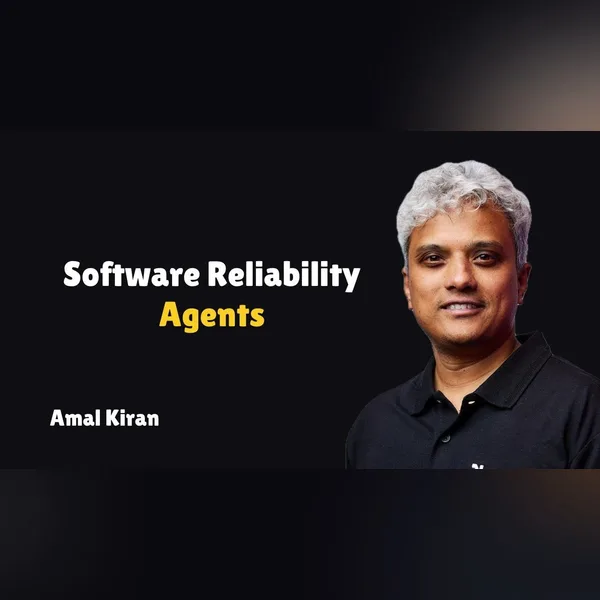
Software Reliability Agents with Amal Kiran

51:08

So if you're writing code or keeping systems running, you probably know the drill. Late night pages, chasing down weird bugs, dealing with alert storms. It's tough! It costs money when things break, and honestly, nobody loves that experience. So the big question is, can we actually use something like AI, AI agents in particular, to make reliability less painful, more systematic? That's what we're talking about today. We have on the show with us Amal Kiran, the CEO and Co-founder of Temperstack. They're building tools aimed at automating SRE tasks, think, automatically finding monitoring gaps, alerts, helping with root cause analysis, even generating Runbooks using AI.  So if you wanna hear about applying AI to real world SRE problems and all the tech behind it, we think you're gonna enjoy this.

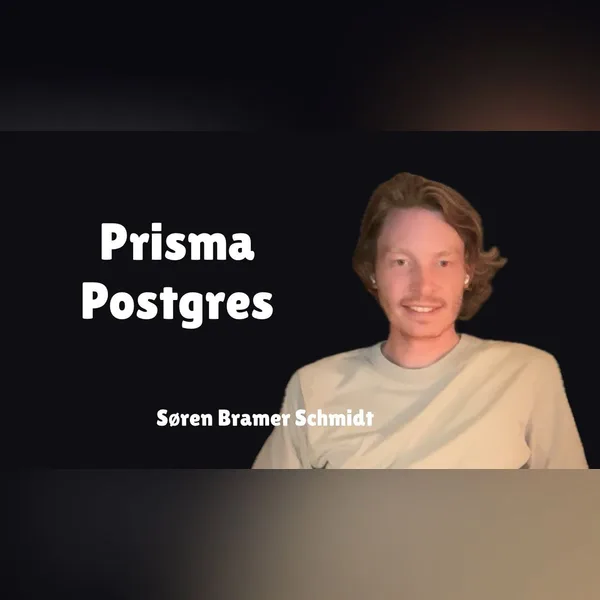
From ORM to Infra: Prisma Postgres with Søren Bramer Schmidt

1:02:23

Today we have Søren from Prisma on the show. Prisma has been the most popular ORM in the TypeScript world for a while, and now they’re moving more into hosted infrastructure. We spend a lot of time talking about their new offering called Prisma Postgres, which is this unikernel-based Postgres offering. It’s a really unique offering from both a technical and a product perspective. On the technical side, they’re doing some interesting work compared to other Postgres providers. They’re running on bare metal in a colocation facility rather than the default public clouds like AWS, GCP, and Azure. Further, they’re using unikernels in a Firecracker VM, giving them unique startup and security characteristics. These technical decisions give them unique economics compared to standard providers, so they’re able to have a generous free tier and a unique billing model that works great for serverless applications with spiky workloads. Around all of this, it’s very interesting to see a company with such a unique spread of products — a popular, mature open-source library paired with a mission-critical infrastructure service offering. We talked about the difficulties in building a company that accommodates these two very different products. *Timestamps* 01:51 Start 06:08 Prisma Postgres 09:10 Accelerate 11:39 Why Postgres 17:32 How Prisma Postgres Works 21:32 Colocation Facility 22:05 Unikernels 27:56 CoLo vs Public Cloud 29:11 Building the team 31:46 Missing Features that are being worked on 32:31 Use Cases 33:37 Colo Locations 34:53 Cloudflare 35:42 Biggest surprises since release 37:34 More Unikernel adoption? 39:08 Supporting Prisma ORM 46:43 Mongo 47:51 Life as A CEO 53:04 MCP 57:23 Søren Questions Alex

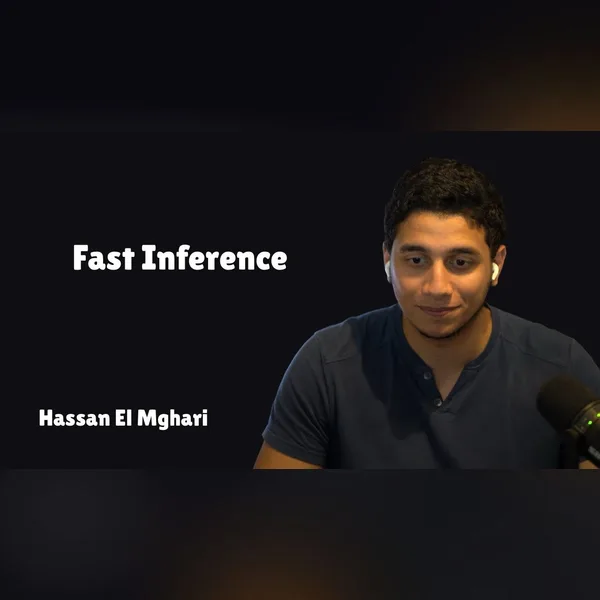
Fast Inference with Hassan El Mghari

53:07

Today we have Hassan back on the show. Hassan was one of our first guests for Huddle when he was working at Vercel, but since then, he's joined Together AI, one of the hottest companies in the world. They just raised a massive series B round. Hassan joins us to talk about Together AI, inference optimization and building AI applications. We touch on a bunch of topics like customer uses of AI, best practices for building apps, and what's next for Together AI. Timestamps 00:55 Start 01:42 Opportunity at Together AI 04:26 Together raised a big round 06:06 Vision Behind Together AI 08:32 Problems in running Open Source Models 11:40 Speed For Inference 14:24 Fine Tuning 19:23 One or Two Models or a Combination of them 21:32 Serverless 22:21 Cold Start issues? 27:46 How much data do you need? 30:00 Balancing Reliability and Cost 34:07 How customers are using Together 42:36 Agent Recipes 47:03 Typical Mistakes buiilding AI apps

Seattle Startups, AI’s Future & Big Acquisitions with Yujian Tang

1:02:55

Today on the show, we talked with Yujian Tang. He was on the show previously when he worked at Zilliz, when we talked about vector databases and RAG. He's since branched out on his own, building the tech startup scene in Seattle and organizing AI events all over the place. We talk about his latest venture, the Seattle Startup Summit, coming up on March 28th. They're still Early Bird Tickets available if you're interested. We also talk about AI models, the impact AI is having on programming, including our own programming projects and share our takes on some of the recent acquisitions that have happened in tech, including Voyage AI. Timestamps 01:32 Start 13:00 Summit Agenda 24:10 Thoughts on New AI Models 32:20 Preferred Models 50:45 Recent Acquisitions