Subscribe for more NFX insights 👉 https://www.nfx.com/subscribe
AI may be the biggest revolution in human history.
Bigger than steam.
Bigger than the internet.
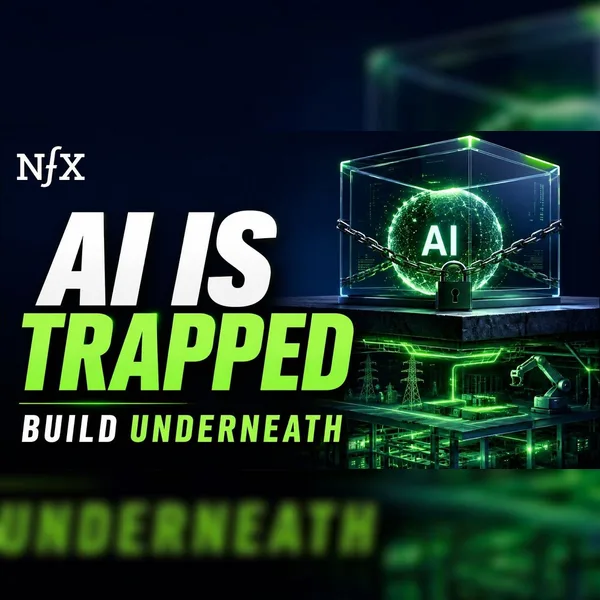
But right now, it’s trapped.
We have the intelligence. But we don’t yet have enough power to run it — or enough physical-world systems to act on it.
That gap is one of the biggest opportunities we’re seeing for founders right now. In this new NFX video, Anna Piñol breaks down why the next wave of AI opportunity may not be another app or chatbot.
It may be underneath the apps:
Energy.
Physical AI.
Robots.
Raw materials.
Old industrial systems rebuilt with technology.
The founders who win the next era of AI may be the ones building the power, action, and materials layer that intelligence needs to become a real economic revolution.
4:36
Subscribe for more NFX insights 👉 https://www.nfx.com/subscribe
AI may be the biggest revolution in human history.
Bigger than steam.
Bigger than the internet.
But right now, it’s trapped.
We have the intelligence. But we don’t yet have enough power to run it — or enough physical-world systems to act on it.
That gap is one of the biggest opportunities we’re seeing for founders right now. In this new NFX video, Anna Piñol breaks down why the next wave of AI opportunity may not be another app or chatbot.
It may be underneath the apps:
Energy.
Physical AI.
Robots.
Raw materials.
Old industrial systems rebuilt with technology.
The founders who win the next era of AI may be the ones building the power, action, and materials layer that intelligence needs to become a real economic revolution.
Picasso mastered realism by 15. Then he walked away from it. When photography made realistic documentation abundant, painting didn’t die. It expanded: Impressionism. Expressionism. Cubism.
AI is creating the same kind of moment for founders.
Craft is becoming abundant. Code, design, writing, production, analysis — AI is paying the entry fee for everyone. Taste still matters, but AI is learning patterns fast.
So what’s left? Expression. Your worldview. Your conviction. Your ability to see what others don’t. That is the new edge.
In this video, Pete Flint breaks down what Picasso’s leap from craft to expression can teach founders building in the AI era — and why the biggest opportunities won’t come from making old workflows 20% cheaper, but from creating entirely new behavior.
Weekly insights in your inbox: https://www.nfx.com/subscribe
#AI #Startups #Founders #NFX #Picasso #VentureCapital
5:02
Picasso mastered realism by 15. Then he walked away from it. When photography made realistic documentation abundant, painting didn’t die. It expanded: Impressionism. Expressionism. Cubism.
AI is creating the same kind of moment for founders.
Craft is becoming abundant. Code, design, writing, production, analysis — AI is paying the entry fee for everyone. Taste still matters, but AI is learning patterns fast.
So what’s left? Expression. Your worldview. Your conviction. Your ability to see what others don’t. That is the new edge.
In this video, Pete Flint breaks down what Picasso’s leap from craft to expression can teach founders building in the AI era — and why the biggest opportunities won’t come from making old workflows 20% cheaper, but from creating entirely new behavior.
Weekly insights in your inbox: https://www.nfx.com/subscribe
#AI #Startups #Founders #NFX #Picasso #VentureCapital
More founder frameworks → https://www.nfx.com/subscribe
Founders are quietly burning out — not from overwork, but from a
crisis of self. The smartest person in the room used to be you.
Now there's a model on your laptop that thinks faster, writes
better, and never sleeps. That dissonance has a name.
In this video, James Currier (NFX) introduces "Zen Sickness" —
the 1800s Buddhist term for the unsettled feeling that arrives
right before awakening. He argues the founders who push through
it will define the next decade. The ones who don't will be left
behind by their own pessimism.
Three moves to get there. One personal moment that stops you
cold. And a clear answer to the question every founder is
quietly asking: what am I actually worth in a world where
cognition is free?
—
NFX is a pre-seed and seed-stage venture firm investing in
founders building network effects businesses. We've backed
companies like Lyft, DoorDash, Trulia, Houzz, and Patreon.
Apply for funding → https://signal.nfx.com/brieflink
Read the essays → https://www.nfx.com/essays
Subscribe for more founder frameworks from James, Pete, Gigi,
Morgan, and the NFX team.
#AIFounders #StartupAdvice #AIZen #VentureCapital #NFX
6:32
More founder frameworks → https://www.nfx.com/subscribe
Founders are quietly burning out — not from overwork, but from a
crisis of self. The smartest person in the room used to be you.
Now there's a model on your laptop that thinks faster, writes
better, and never sleeps. That dissonance has a name.
In this video, James Currier (NFX) introduces "Zen Sickness" —
the 1800s Buddhist term for the unsettled feeling that arrives
right before awakening. He argues the founders who push through
it will define the next decade. The ones who don't will be left
behind by their own pessimism.
Three moves to get there. One personal moment that stops you
cold. And a clear answer to the question every founder is
quietly asking: what am I actually worth in a world where
cognition is free?
—
NFX is a pre-seed and seed-stage venture firm investing in
founders building network effects businesses. We've backed
companies like Lyft, DoorDash, Trulia, Houzz, and Patreon.
Apply for funding → https://signal.nfx.com/brieflink
Read the essays → https://www.nfx.com/essays
Subscribe for more founder frameworks from James, Pete, Gigi,
Morgan, and the NFX team.
#AIFounders #StartupAdvice #AIZen #VentureCapital #NFX
The last decade of software was built to capture your attention. The next decade will give it back.
👉 Subscribe now for more insights: https://www.nfx.com/subscribe
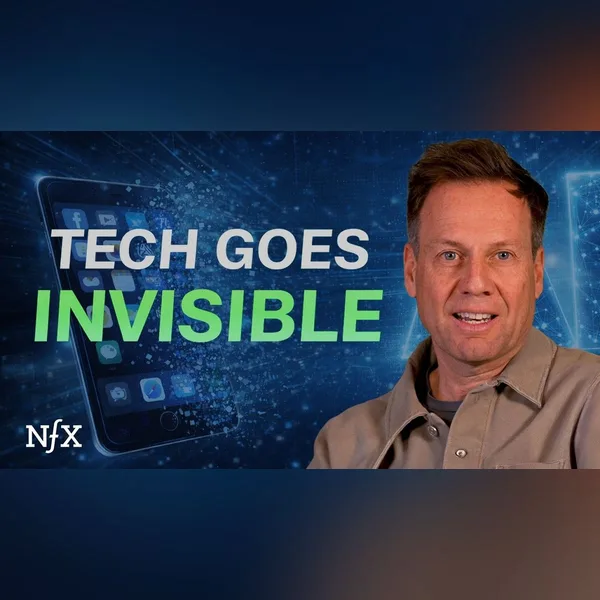
In this video, Pete Flint breaks down a major shift happening in AI: the move toward “screenless” products. Not literally no screens, but software that removes the need for constant attention.
From ChatGPT to Cursor to AI agents that act on your behalf, the best products are starting to disappear. You set them up, and they work in the background.
This isn’t about new devices. Early attempts like Rabbit and Humane showed that replacing the phone isn’t the answer. The real shift is behavioral — software that does the work for you.
We cover:
- Why technology always moves toward invisibility
- The idea of “calm technology” from Silicon Valley’s early days
- How AI changes what software can actually do
- Why removing attention is the new competitive advantage
- What this means for founders building the next generation of startups
The winners in AI won’t be the products you can’t look away from.
They’ll be the ones that let you finally look up.
4:10
The last decade of software was built to capture your attention. The next decade will give it back.
👉 Subscribe now for more insights: https://www.nfx.com/subscribe
In this video, Pete Flint breaks down a major shift happening in AI: the move toward “screenless” products. Not literally no screens, but software that removes the need for constant attention.
From ChatGPT to Cursor to AI agents that act on your behalf, the best products are starting to disappear. You set them up, and they work in the background.
This isn’t about new devices. Early attempts like Rabbit and Humane showed that replacing the phone isn’t the answer. The real shift is behavioral — software that does the work for you.
We cover:
- Why technology always moves toward invisibility
- The idea of “calm technology” from Silicon Valley’s early days
- How AI changes what software can actually do
- Why removing attention is the new competitive advantage
- What this means for founders building the next generation of startups
The winners in AI won’t be the products you can’t look away from.
They’ll be the ones that let you finally look up.
👉 Apply now: https://fast.nfx.com
FAST is a new kind of fundraising experience built on one principle: founders deserve better. No more guessing games, no more chasing investors — just a transparent, founder-first process from one of the top Pre-Seed and Seed firms in the world.
Here's what makes FAST different:
✅ You know the deal terms upfront
✅ You know exactly where you are at every step of the process
✅ Funded founders join the NFX Guild — a portfolio of 400+ top founders who actively support each other
NFX has built 10 companies with $10B+ in exits. They invest in early-stage companies across the US, Israel, LatAm, and Europe — with a strong focus on network effects businesses.
Ready to apply? Create a private BriefLink with a deck, a video, and answers to 12 questions. No idea is too early.
3:06
👉 Apply now: https://fast.nfx.com
FAST is a new kind of fundraising experience built on one principle: founders deserve better. No more guessing games, no more chasing investors — just a transparent, founder-first process from one of the top Pre-Seed and Seed firms in the world.
Here's what makes FAST different:
✅ You know the deal terms upfront
✅ You know exactly where you are at every step of the process
✅ Funded founders join the NFX Guild — a portfolio of 400+ top founders who actively support each other
NFX has built 10 companies with $10B+ in exits. They invest in early-stage companies across the US, Israel, LatAm, and Europe — with a strong focus on network effects businesses.
Ready to apply? Create a private BriefLink with a deck, a video, and answers to 12 questions. No idea is too early.
Most people haven't experienced natural conversations with AI yet, beyond typing in chatbots, but talking to AI can be an awesome experience, especially when it takes on different roles. We believe that conversational AI is going to be a huge part of the future and a major part of entertainment.
#AI #ArtificialIntelligence #VoiceAI #ConversationalAI #FutureOfTech #AIEntertainment #RolePlayingAI #TechTrends #Innovation #AIExperience
0:37
Most people haven't experienced natural conversations with AI yet, beyond typing in chatbots, but talking to AI can be an awesome experience, especially when it takes on different roles. We believe that conversational AI is going to be a huge part of the future and a major part of entertainment.
#AI #ArtificialIntelligence #VoiceAI #ConversationalAI #FutureOfTech #AIEntertainment #RolePlayingAI #TechTrends #Innovation #AIExperience
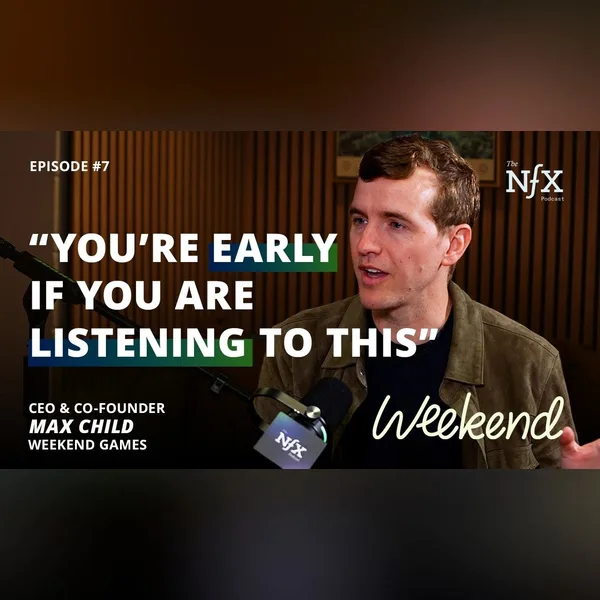
In this episode of the NFX Podcast, Max Child (Founder & CEO of Weekend, the #1 voice AI games company in the world, formerly Volley) breaks down why AI will turn everyone into a gamer — not just the hardcore players.
We dive into how voice AI, large language models, and smart TVs are unlocking a new kind of interactive entertainment — where games are powered by conversation, not controllers.
You’ll learn:
- Why AI expands gaming to billions of new users
- How conversation is becoming the new gameplay mechanic
- Why the living room (TV) is the next major platform shift
- The 3 real growth strategies every founder needs to know
- The founder lesson that matters most: staying alive long enough for luck to hit
Max also shares how AI is already 2–2.5x’ing engineering productivity and what that means for building faster, better products. This isn’t just about gaming — it’s about how AI creates entirely new categories, and how founders can position themselves to win.
Chapters:
00:00 Intro
01:12 What Weekend is building (AI games on TV)
05:30 Why AI will create a new gaming category
10:45 Founder lessons: survival, speed, and luck
18:00 The 3 growth strategies that actually work
23:30 AI and the future of product development
27:00 The long-term vision: Roblox for TV
If you're a founder, builder, or operator working in AI, gaming, or consumer — subscribe for more conversations on network effects, startup strategy, and building enduring companies.
#AI #Startups #Gaming #Founders #VentureCapital #NFX
30:54
In this episode of the NFX Podcast, Max Child (Founder & CEO of Weekend, the #1 voice AI games company in the world, formerly Volley) breaks down why AI will turn everyone into a gamer — not just the hardcore players.
We dive into how voice AI, large language models, and smart TVs are unlocking a new kind of interactive entertainment — where games are powered by conversation, not controllers.
You’ll learn:
- Why AI expands gaming to billions of new users
- How conversation is becoming the new gameplay mechanic
- Why the living room (TV) is the next major platform shift
- The 3 real growth strategies every founder needs to know
- The founder lesson that matters most: staying alive long enough for luck to hit
Max also shares how AI is already 2–2.5x’ing engineering productivity and what that means for building faster, better products. This isn’t just about gaming — it’s about how AI creates entirely new categories, and how founders can position themselves to win.
Chapters:
00:00 Intro
01:12 What Weekend is building (AI games on TV)
05:30 Why AI will create a new gaming category
10:45 Founder lessons: survival, speed, and luck
18:00 The 3 growth strategies that actually work
23:30 AI and the future of product development
27:00 The long-term vision: Roblox for TV
If you're a founder, builder, or operator working in AI, gaming, or consumer — subscribe for more conversations on network effects, startup strategy, and building enduring companies.
#AI #Startups #Gaming #Founders #VentureCapital #NFX
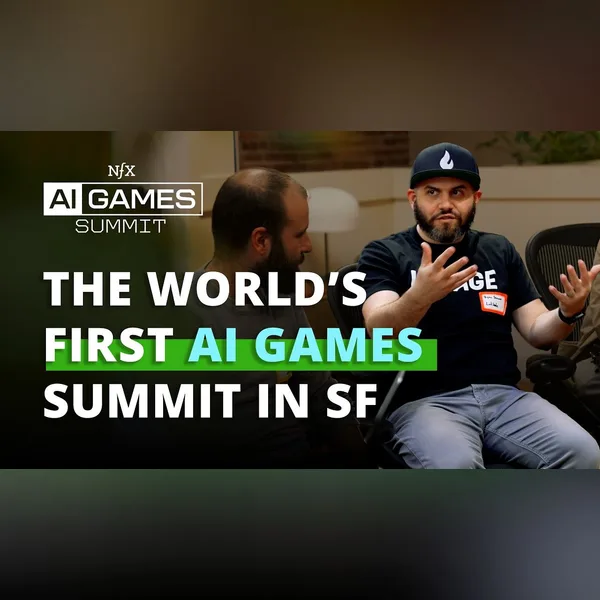
On March 8, just before GDC, we brought together some of the top builders in AI games for a private summit at NFX in San Francisco.
128 founders, operators, and creators in one room.
No panels. No fluff. Just real conversations about where AI is taking games.
For years, this moment felt far off. Now it’s here.
Teams are rethinking gameplay, production, and entire categories from the ground up. What used to take studios now takes small teams. What used to be static is becoming dynamic.
This was the first time this group came together. It won’t be the last. If you’re building in AI games, pay attention.
Follow NFX for more: nfx.com/subscribe
1:45
On March 8, just before GDC, we brought together some of the top builders in AI games for a private summit at NFX in San Francisco.
128 founders, operators, and creators in one room.
No panels. No fluff. Just real conversations about where AI is taking games.
For years, this moment felt far off. Now it’s here.
Teams are rethinking gameplay, production, and entire categories from the ground up. What used to take studios now takes small teams. What used to be static is becoming dynamic.
This was the first time this group came together. It won’t be the last. If you’re building in AI games, pay attention.
Follow NFX for more: nfx.com/subscribe
Software is about to be built very differently.
In this clip of the NFX Podcast, Latitude Games CEO Nick Walton explains how his team is already shifting toward an AI-driven development process — where engineers spend less time writing code and more time directing systems that generate, test, and ship it.
Instead of the traditional model where features get handed off to engineers, teams write detailed specs and let AI implement large portions of the work. AI reviews code, analyzes user feedback at scale, and helps teams ship faster than ever before.
Nick also talks about why this shift demands a different kind of team — people with strong product judgment, high agency, and the ability to move quickly as the technology evolves.
For founders, engineers, and builders, this is a glimpse into how the next generation of software teams will actually operate.
Topics in this clip:
• Why AI will write more and more of the code
• The rise of spec-driven development
• AI reviewing pull requests and testing code
• Using AI to process thousands of user feedback reports
• Why small, talent-dense teams move faster
• The new skillset engineers will need in the AI era
About Nick Walton
Nick Walton is the CEO of Latitude Games, the company behind AI Dungeon and Voyage. Latitude has been experimenting with AI-powered interactive worlds since the early GPT-2 days and is pushing the frontier of what AI can do in games.
5:13
Software is about to be built very differently.
In this clip of the NFX Podcast, Latitude Games CEO Nick Walton explains how his team is already shifting toward an AI-driven development process — where engineers spend less time writing code and more time directing systems that generate, test, and ship it.
Instead of the traditional model where features get handed off to engineers, teams write detailed specs and let AI implement large portions of the work. AI reviews code, analyzes user feedback at scale, and helps teams ship faster than ever before.
Nick also talks about why this shift demands a different kind of team — people with strong product judgment, high agency, and the ability to move quickly as the technology evolves.
For founders, engineers, and builders, this is a glimpse into how the next generation of software teams will actually operate.
Topics in this clip:
• Why AI will write more and more of the code
• The rise of spec-driven development
• AI reviewing pull requests and testing code
• Using AI to process thousands of user feedback reports
• Why small, talent-dense teams move faster
• The new skillset engineers will need in the AI era
About Nick Walton
Nick Walton is the CEO of Latitude Games, the company behind AI Dungeon and Voyage. Latitude has been experimenting with AI-powered interactive worlds since the early GPT-2 days and is pushing the frontier of what AI can do in games.
AI won’t just help engineers code faster - it will change how companies build software entirely. But most organizations are not mentally prepared for it. The next wave of startups already are.
#AI #Tech #Startups #NFX #software
0:57
AI won’t just help engineers code faster - it will change how companies build software entirely. But most organizations are not mentally prepared for it. The next wave of startups already are.
#AI #Tech #Startups #NFX #software
Nick Walton was experimenting with GPT-2 and trained it to generate interactive stories. He launched the prototype online…100,000 players showed up overnight.
#AI #Gaming #StartupStory #GPT
1:09
Nick Walton was experimenting with GPT-2 and trained it to generate interactive stories. He launched the prototype online…100,000 players showed up overnight.
#AI #Gaming #StartupStory #GPT
GPT-2 was tiny. Barely coherent. But Nick Walton saw the signal:
AI could finally recreate the magic of D&D in digital worlds.
Infinite stories. Infinite games.
#Founders #AIGames #Startups #NFX #chatgpt
0:53
GPT-2 was tiny. Barely coherent. But Nick Walton saw the signal:
AI could finally recreate the magic of D&D in digital worlds.
Infinite stories. Infinite games.
#Founders #AIGames #Startups #NFX #chatgpt
AI is transforming gaming — not incrementally, but fundamentally. Subscribe for more conversations with the founders building what’s next - nfx.com/subscribe
In this episode of The NFX Podcast, James Currier sits down with Nick Walton, CEO of Latitude (AI Dungeon, Voyage), to break down what it really means to build an AI-native game company — and why traditional AAA studios may be unprepared for what’s coming.
Nick was experimenting with GPT-2 in 2019 before most people had heard of it. Since then, Latitude has become one of the earliest and most advanced players in AI-powered games, pioneering dynamic storytelling, infinite RPG worlds, and multiplayer AI experiences.
This is a deep dive into the future of interactive entertainment.
Topics We Cover:
- What “AI-native” actually means in gaming
- Why AI games improve overnight (and traditional games don’t)
- The shift from scripted content to infinite, dynamic worlds
- Building Voyage: a genre-agnostic RPG platform powered by AI
- How world models (like Google Genie) fit into the future of games
- Why mental models must change every 1–3 months
- AI-native software development and ultra-high talent density teams
- The resistance to AI inside gaming studios
- UGC, long-tail IP, and unlocking infinite fandoms
- The magic of multiplayer AI storytelling
- Why AI games will feel more personal — and more emotional
If you’re a founder, game developer, or AI builder, this episode breaks down how fast this space is moving — and what it takes to win.
46:29
AI is transforming gaming — not incrementally, but fundamentally. Subscribe for more conversations with the founders building what’s next - nfx.com/subscribe
In this episode of The NFX Podcast, James Currier sits down with Nick Walton, CEO of Latitude (AI Dungeon, Voyage), to break down what it really means to build an AI-native game company — and why traditional AAA studios may be unprepared for what’s coming.
Nick was experimenting with GPT-2 in 2019 before most people had heard of it. Since then, Latitude has become one of the earliest and most advanced players in AI-powered games, pioneering dynamic storytelling, infinite RPG worlds, and multiplayer AI experiences.
This is a deep dive into the future of interactive entertainment.
Topics We Cover:
- What “AI-native” actually means in gaming
- Why AI games improve overnight (and traditional games don’t)
- The shift from scripted content to infinite, dynamic worlds
- Building Voyage: a genre-agnostic RPG platform powered by AI
- How world models (like Google Genie) fit into the future of games
- Why mental models must change every 1–3 months
- AI-native software development and ultra-high talent density teams
- The resistance to AI inside gaming studios
- UGC, long-tail IP, and unlocking infinite fandoms
- The magic of multiplayer AI storytelling
- Why AI games will feel more personal — and more emotional
If you’re a founder, game developer, or AI builder, this episode breaks down how fast this space is moving — and what it takes to win.
Get more weekly insights - nfx.com/subscribe
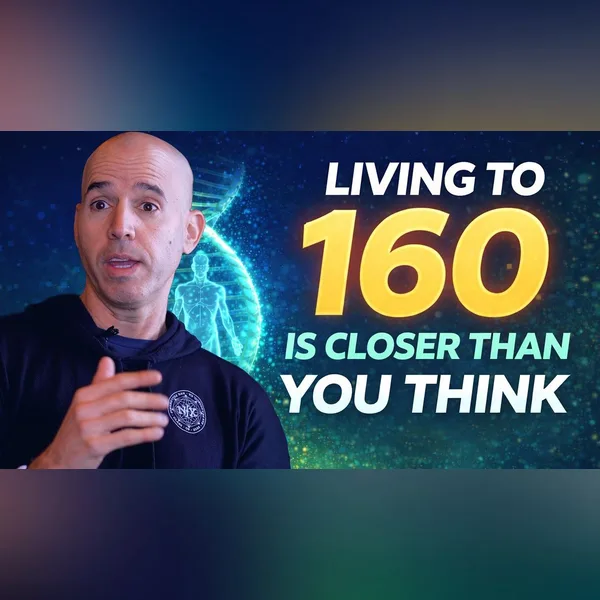
What if we stopped treating disease one by one - and started treating the root cause of aging itself? In this video, we break down the 3 Rs of Longevity as a framework for radically extending healthy human lifespan: Reprogramming, Regeneration, Replacement.
If aging is the root cause of most major diseases, then curing aging could mean curing them all.
We cover:
- Why aging is the biggest risk factor for disease
- Yamanaka factors and cellular reprogramming
- Partial reprogramming and eye rejuvenation trials
- Unlocking regeneration in human organs
- Turning fibrosis into regeneration
- Stem-cell derived embryo models
- Growing genetically identical young tissues
- The path to living to 160
- Why longevity is more than supplements
- Treating root causes vs. treating symptoms
This isn’t about incremental health hacks. It’s about attacking the core biological driver of decline. If you’re building in reprogramming, regeneration, or replacement — we want to talk.
4:34
Get more weekly insights - nfx.com/subscribe
What if we stopped treating disease one by one - and started treating the root cause of aging itself? In this video, we break down the 3 Rs of Longevity as a framework for radically extending healthy human lifespan: Reprogramming, Regeneration, Replacement.
If aging is the root cause of most major diseases, then curing aging could mean curing them all.
We cover:
- Why aging is the biggest risk factor for disease
- Yamanaka factors and cellular reprogramming
- Partial reprogramming and eye rejuvenation trials
- Unlocking regeneration in human organs
- Turning fibrosis into regeneration
- Stem-cell derived embryo models
- Growing genetically identical young tissues
- The path to living to 160
- Why longevity is more than supplements
- Treating root causes vs. treating symptoms
This isn’t about incremental health hacks. It’s about attacking the core biological driver of decline. If you’re building in reprogramming, regeneration, or replacement — we want to talk.
Weekly insights in your inbox at the link here - https://www.nfx.com/subscribe
Early-stage founders ask. NFX answers. In this episode of Ask NFX, General Partner James Currier answers real questions from early-stage founders — covering how to think about building, scaling, and avoiding common early mistakes.
0:00 - Is saying 'I don't know' acceptable as a founder?
2:22 - What's a 3-Person Unicorn and why are you looking for them?
3:35 - Why does speed matter in a startup so much?
5:00 - What do you focus on instead of the macro environment? (hint: your “technology window”)
5:45 - When do you know that it's time to pivot?
6:42 - What's your take on remote vs in-person teams in startups?
These are the questions founders actually ask when they’re in it. No slides. No prep. Just direct answers from someone who’s seen thousands of startups up close.
8:05
Weekly insights in your inbox at the link here - https://www.nfx.com/subscribe
Early-stage founders ask. NFX answers. In this episode of Ask NFX, General Partner James Currier answers real questions from early-stage founders — covering how to think about building, scaling, and avoiding common early mistakes.
0:00 - Is saying 'I don't know' acceptable as a founder?
2:22 - What's a 3-Person Unicorn and why are you looking for them?
3:35 - Why does speed matter in a startup so much?
5:00 - What do you focus on instead of the macro environment? (hint: your “technology window”)
5:45 - When do you know that it's time to pivot?
6:42 - What's your take on remote vs in-person teams in startups?
These are the questions founders actually ask when they’re in it. No slides. No prep. Just direct answers from someone who’s seen thousands of startups up close.
Weekly insights in your inbox at the link here - https://www.nfx.com/subscribe
Every day, billions of ideas are born — in garages, labs, road trips, and quiet moments no one sees. Most fade. But a rare few endure, reshaping how we live, work, and connect. This short film is about those ideas — and the builders willing to take the risk to bring them to life. We believe there has never been a better moment to build. Creation has no limits. The window is wide open. This is the golden age of startups.
1:53
Weekly insights in your inbox at the link here - https://www.nfx.com/subscribe
Every day, billions of ideas are born — in garages, labs, road trips, and quiet moments no one sees. Most fade. But a rare few endure, reshaping how we live, work, and connect. This short film is about those ideas — and the builders willing to take the risk to bring them to life. We believe there has never been a better moment to build. Creation has no limits. The window is wide open. This is the golden age of startups.
Weekly insights in your inbox at the link here - https://www.nfx.com/subscribe
Read the essay here - https://www.nfx.com/post/hidden-structure-startups
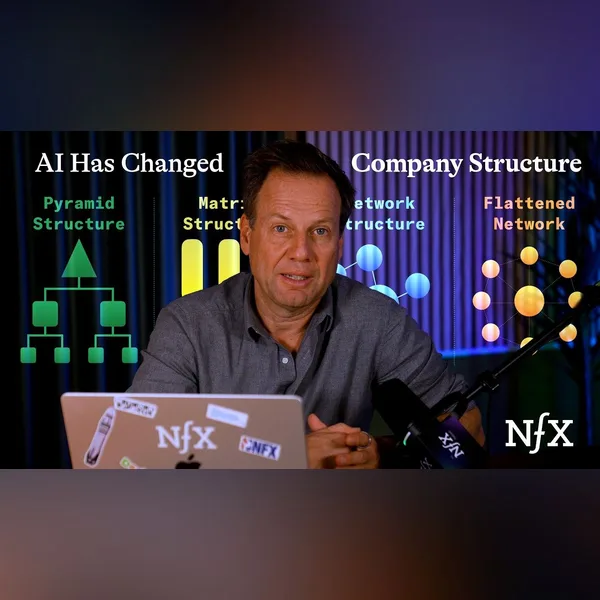
AI didn’t just change how startups build products. It changed how startups should be built. At NFX, we’re seeing seed-stage companies reach real traction with teams in the low double digits — not because they’re understaffed, but because they’re over-leveraged.
In this video, Pete Flint breaks down:
- Why AI breaks traditional org charts
- How early structure quietly kills momentum
- What founders should rethink about hiring, roles, and leadership
- How the fastest teams design for speed, not coordination
If you’re building an early-stage company, this is a mental shift you can’t afford to miss. Subscribe for more insights on startups, AI, network effects, and company design.
5:25
Weekly insights in your inbox at the link here - https://www.nfx.com/subscribe
Read the essay here - https://www.nfx.com/post/hidden-structure-startups
AI didn’t just change how startups build products. It changed how startups should be built. At NFX, we’re seeing seed-stage companies reach real traction with teams in the low double digits — not because they’re understaffed, but because they’re over-leveraged.
In this video, Pete Flint breaks down:
- Why AI breaks traditional org charts
- How early structure quietly kills momentum
- What founders should rethink about hiring, roles, and leadership
- How the fastest teams design for speed, not coordination
If you’re building an early-stage company, this is a mental shift you can’t afford to miss. Subscribe for more insights on startups, AI, network effects, and company design.
Old playbooks don’t work when tokens replace servers.
In AI, margin starts tight and widens only if you capture value early.
Founders who underprice train customers to expect miracles for pennies.
The next wave isn’t “buy software for access” it’s “buy outcomes for work delivered.”
1:25
Old playbooks don’t work when tokens replace servers.
In AI, margin starts tight and widens only if you capture value early.
Founders who underprice train customers to expect miracles for pennies.
The next wave isn’t “buy software for access” it’s “buy outcomes for work delivered.”
Startups can’t outspend incumbents, but they can outthink them.
While legacy firms bolt AI onto bloated stacks, new entrants rebuild the contract itself.
Outcome-based pricing turns alignment into a weapon “I win when you win.”
Disruption doesn’t start with technology; it starts with how you charge for it.
1:30
Startups can’t outspend incumbents, but they can outthink them.
While legacy firms bolt AI onto bloated stacks, new entrants rebuild the contract itself.
Outcome-based pricing turns alignment into a weapon “I win when you win.”
Disruption doesn’t start with technology; it starts with how you charge for it.
As AI accelerates, pricing drifts toward outcomes, not effort.
Machines will soon negotiate with machines, value measured by results, not bias.
Even CIOs chasing predictability are warming to aligned incentives.
In a world of superintelligence, outcome isn’t a model, it’s the only logic left.
1:04
As AI accelerates, pricing drifts toward outcomes, not effort.
Machines will soon negotiate with machines, value measured by results, not bias.
Even CIOs chasing predictability are warming to aligned incentives.
In a world of superintelligence, outcome isn’t a model, it’s the only logic left.
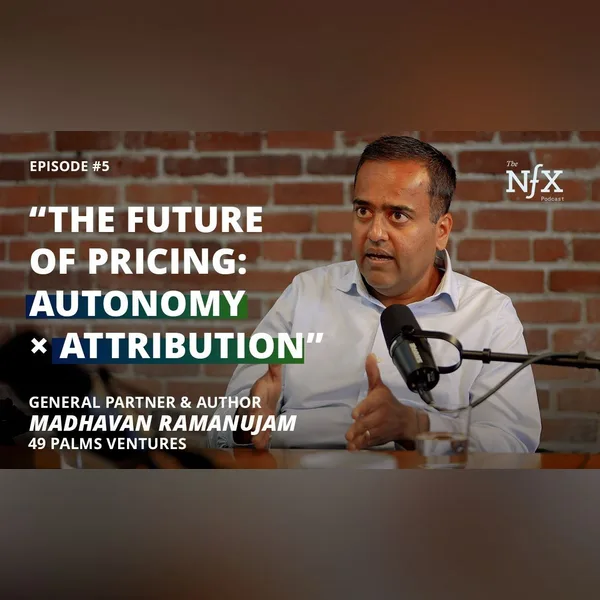
AI founders are learning that pricing evolves with autonomy.
The more an agent thinks and acts on its own, the closer you get to outcome-based value.
Attribution is the bridge show me the impact, and I’ll pay for the outcome.
Great startups don’t pick a quadrant; they build the map to move across it.
1:26
AI founders are learning that pricing evolves with autonomy.
The more an agent thinks and acts on its own, the closer you get to outcome-based value.
Attribution is the bridge show me the impact, and I’ll pay for the outcome.
Great startups don’t pick a quadrant; they build the map to move across it.