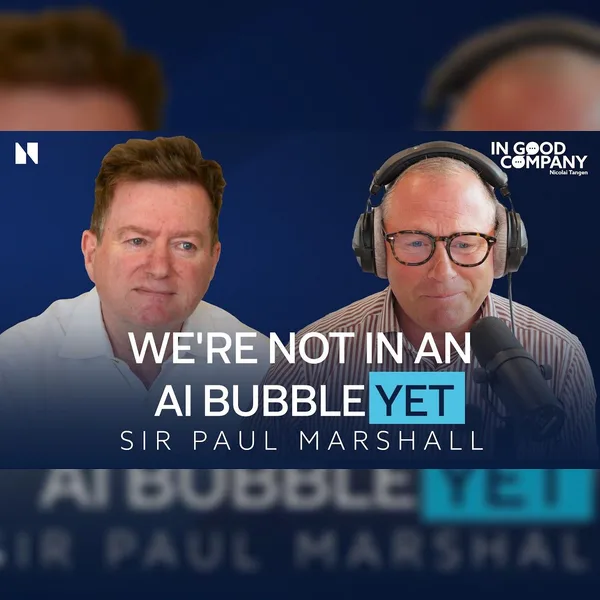
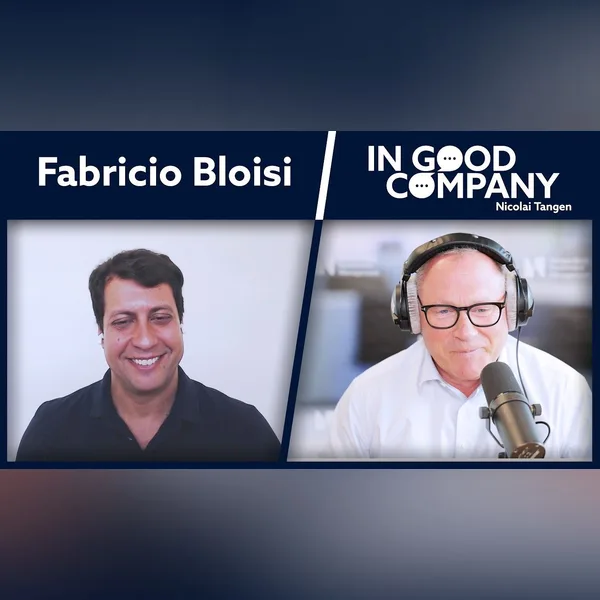
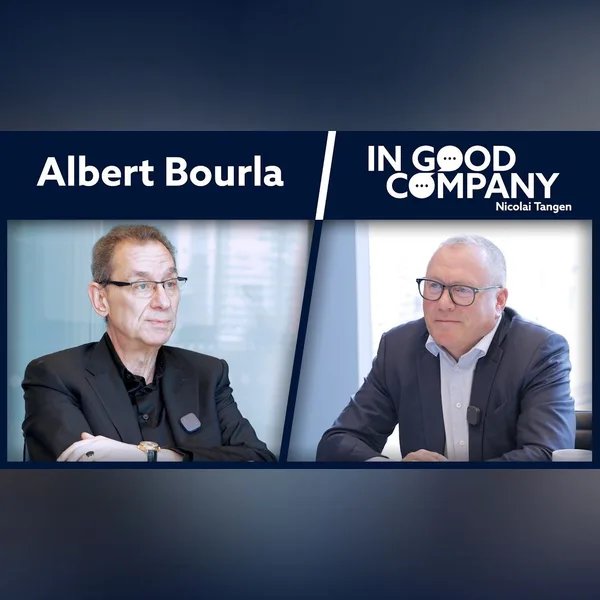
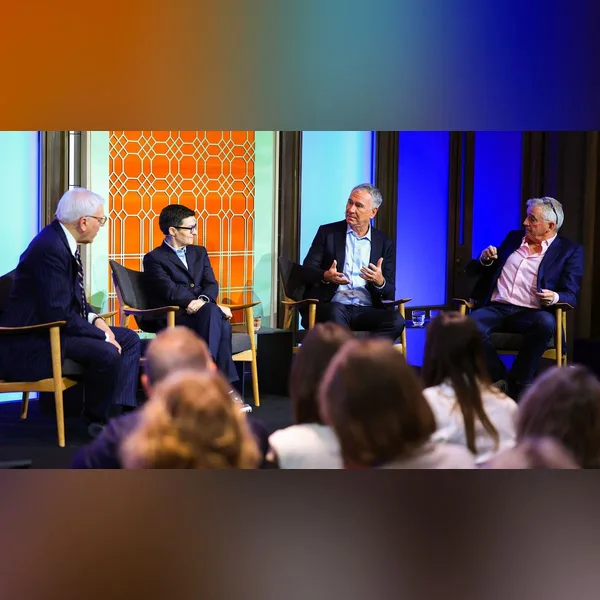
What does it take to build one of the world's most successful hedge funds, and keep innovating for nearly 30 years? Nicolai Tangen sits down with Sir Paul Marshall, co-founder of Marshall Wace, to unpack the firm's journey from a $50 million startup in 1997 to a firm managing $90 billion today. They dig into TOPS, the pioneering AlphaCapture system that reshaped how buy-side and sell-side interact, the "man plus machine beats a machine" philosophy that shapes how Marshall Wace blends human judgment with AI, and why disagreeableness and agency now matter more than a fancy degree. Paul also opens up on his Christian faith, his education charity ARK, and his ventures into media through UnHerd, GB News, and The Spectator. Tune in for an insightful conversation!
In Good Company is hosted by Nicolai Tangen, CEO of Norges Bank Investment Management. New episode out every Wednesday.
The podcast In Good Company is part of Norges Bank Investment Management, a podcast about our investments. We are transparent about how the fund is invested. In this podcast, you get a deeper insight into the companies the fund is invested in.
Our CEO, Nicolai Tangen, has in-depth interviews with the leaders of some of the largest companies in the world. You will get insight into their leadership principles, the company’s strategy and how they are dealing with a large investor like us. You will also learn more about our role as an owner of the companies.
You can read more about the podcast on https://www.nbim.no/en/publications/podcast/
1:11:24
What does it take to build one of the world's most successful hedge funds, and keep innovating for nearly 30 years? Nicolai Tangen sits down with Sir Paul Marshall, co-founder of Marshall Wace, to unpack the firm's journey from a $50 million startup in 1997 to a firm managing $90 billion today. They dig into TOPS, the pioneering AlphaCapture system that reshaped how buy-side and sell-side interact, the "man plus machine beats a machine" philosophy that shapes how Marshall Wace blends human judgment with AI, and why disagreeableness and agency now matter more than a fancy degree. Paul also opens up on his Christian faith, his education charity ARK, and his ventures into media through UnHerd, GB News, and The Spectator. Tune in for an insightful conversation!
In Good Company is hosted by Nicolai Tangen, CEO of Norges Bank Investment Management. New episode out every Wednesday.
The podcast In Good Company is part of Norges Bank Investment Management, a podcast about our investments. We are transparent about how the fund is invested. In this podcast, you get a deeper insight into the companies the fund is invested in.
Our CEO, Nicolai Tangen, has in-depth interviews with the leaders of some of the largest companies in the world. You will get insight into their leadership principles, the company’s strategy and how they are dealing with a large investor like us. You will also learn more about our role as an owner of the companies.
You can read more about the podcast on https://www.nbim.no/en/publications/podcast/
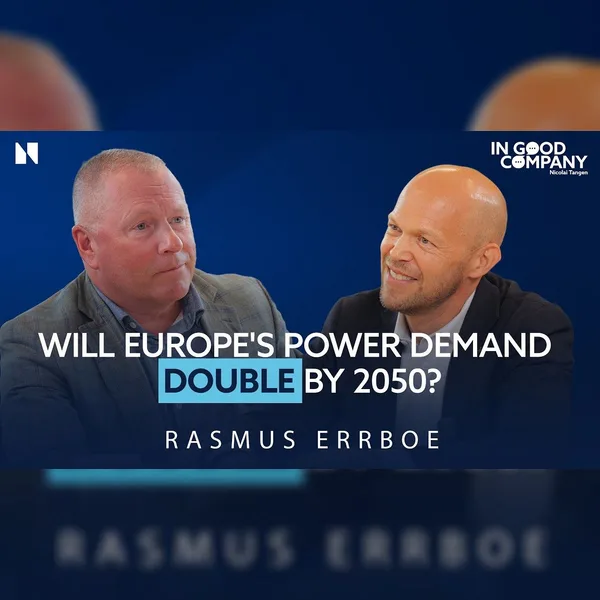
Nicolai Tangen sits down with Rasmus Errboe, CEO of Ørsted, the world's largest offshore wind company, to discuss the company's evolution from a Danish oil and gas business into a pure-play renewables leader. They talk through the US government's stop-work order on an 80%-built project, the lawsuit that followed, and the record €8 billion capital raise that supported Ørsted's turnaround plan. The conversation also covers what has driven offshore wind costs up and down over the past decade, and how Errboe has approached leadership during a demanding period. He also reflects on a personal decision from earlier in his life that he later came to see differently. Tune in!
In Good Company is hosted by Nicolai Tangen, CEO of Norges Bank Investment Management. New episode out every Wednesday.
The podcast In Good Company is part of Norges Bank Investment Management, a podcast about our investments. We are transparent about how the fund is invested. In this podcast, you get a deeper insight into the companies the fund is invested in.
Our CEO, Nicolai Tangen, has in-depth interviews with the leaders of some of the largest companies in the world. You will get insight into their leadership principles, the company’s strategy and how they are dealing with a large investor like us. You will also learn more about our role as an owner of the companies.
You can read more about the podcast on https://www.nbim.no/en/publications/podcast/
49:33
Nicolai Tangen sits down with Rasmus Errboe, CEO of Ørsted, the world's largest offshore wind company, to discuss the company's evolution from a Danish oil and gas business into a pure-play renewables leader. They talk through the US government's stop-work order on an 80%-built project, the lawsuit that followed, and the record €8 billion capital raise that supported Ørsted's turnaround plan. The conversation also covers what has driven offshore wind costs up and down over the past decade, and how Errboe has approached leadership during a demanding period. He also reflects on a personal decision from earlier in his life that he later came to see differently. Tune in!
In Good Company is hosted by Nicolai Tangen, CEO of Norges Bank Investment Management. New episode out every Wednesday.
The podcast In Good Company is part of Norges Bank Investment Management, a podcast about our investments. We are transparent about how the fund is invested. In this podcast, you get a deeper insight into the companies the fund is invested in.
Our CEO, Nicolai Tangen, has in-depth interviews with the leaders of some of the largest companies in the world. You will get insight into their leadership principles, the company’s strategy and how they are dealing with a large investor like us. You will also learn more about our role as an owner of the companies.
You can read more about the podcast on https://www.nbim.no/en/publications/podcast/
Kan Oljefondet forsvinne?
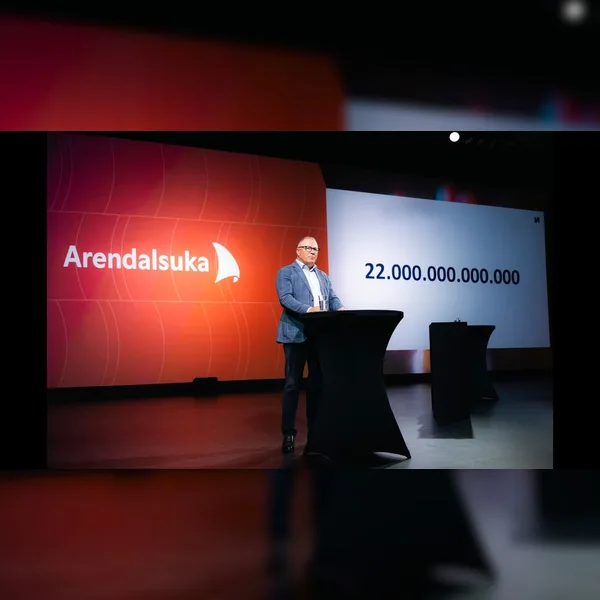
I årets finanstale på Arendalsuka stiller oljefondsjef Nicolai Tangen spørsmålet få liker å tenke på: kan formuen vår faktisk gå tapt?
2026 er både Totalforsvarsåret og 30-årsjubileet for Oljefondet. Den 30. mai 1996 ble de første pengene satt inn. Siden har fondet vokst fra snaue 2 milliarder til over 22 000 milliarder kroner, og dekker i dag en firedel av statsbudsjettet.
Men Tangen minner om at ingen stor formue har overlevd historien uskadd. Fra Arendals eget bankkrakk i 1886, via Spania og Storbritannias fall som finansmakter, til Argentinas gjentatte kriser og Nederlands «hollandske syke» — historien er full av advarsler.
Han trekker også paralleller til 1920-tallet og Den store depresjonen, og spør om dagens AI-boom, handelskrig og høye markedspriser kan ende på samme måte. Et tankeeksperiment viser hva et fall på 80 prosent i aksjeverdiene faktisk ville betydd for norsk økonomi — og hvorfor mental beredskap er like viktig som hermetikken i kjelleren.
Talen er holdt av Nicolai Tangen, CEO for Norges Bank Investment Management, under Arendalsuka 2026.
English below:
Could the fund disappear?
In this year's finance speech at Arendalsuka, NBIM CEO Nicolai Tangen asks the question few like to think about: could our wealth actually be lost?
2026 marks both Norway's Total Defence Year and the 30th anniversary of the Government Pension Fund Global. The first money was deposited on 30 May 1996. Since then, the fund has grown from a modest 2 billion kroner to more than 22,000 billion kroner, and today covers a quarter of the state budget.
But Tangen points out that no great fortune has survived history unscathed. From Arendal's own bank collapse in 1886, through Spain and Britain's fall as financial powers, to Argentina's repeated crises and the Netherlands' "Dutch disease," history is full of warnings.
He also draws parallels to the 1920s and the Great Depression, asking whether today's AI boom, trade war, and high market valuations could end the same way. A thought experiment shows what an 80 percent drop in equity values would actually mean for the Norwegian economy, and why mental preparedness matters just as much as canned food in the basement.
The speech was given by Nicolai Tangen, CEO of Norges Bank Investment Management, at Arendalsuka 2026.
25:02
Kan Oljefondet forsvinne?
I årets finanstale på Arendalsuka stiller oljefondsjef Nicolai Tangen spørsmålet få liker å tenke på: kan formuen vår faktisk gå tapt?
2026 er både Totalforsvarsåret og 30-årsjubileet for Oljefondet. Den 30. mai 1996 ble de første pengene satt inn. Siden har fondet vokst fra snaue 2 milliarder til over 22 000 milliarder kroner, og dekker i dag en firedel av statsbudsjettet.
Men Tangen minner om at ingen stor formue har overlevd historien uskadd. Fra Arendals eget bankkrakk i 1886, via Spania og Storbritannias fall som finansmakter, til Argentinas gjentatte kriser og Nederlands «hollandske syke» — historien er full av advarsler.
Han trekker også paralleller til 1920-tallet og Den store depresjonen, og spør om dagens AI-boom, handelskrig og høye markedspriser kan ende på samme måte. Et tankeeksperiment viser hva et fall på 80 prosent i aksjeverdiene faktisk ville betydd for norsk økonomi — og hvorfor mental beredskap er like viktig som hermetikken i kjelleren.
Talen er holdt av Nicolai Tangen, CEO for Norges Bank Investment Management, under Arendalsuka 2026.
English below:
Could the fund disappear?
In this year's finance speech at Arendalsuka, NBIM CEO Nicolai Tangen asks the question few like to think about: could our wealth actually be lost?
2026 marks both Norway's Total Defence Year and the 30th anniversary of the Government Pension Fund Global. The first money was deposited on 30 May 1996. Since then, the fund has grown from a modest 2 billion kroner to more than 22,000 billion kroner, and today covers a quarter of the state budget.
But Tangen points out that no great fortune has survived history unscathed. From Arendal's own bank collapse in 1886, through Spain and Britain's fall as financial powers, to Argentina's repeated crises and the Netherlands' "Dutch disease," history is full of warnings.
He also draws parallels to the 1920s and the Great Depression, asking whether today's AI boom, trade war, and high market valuations could end the same way. A thought experiment shows what an 80 percent drop in equity values would actually mean for the Norwegian economy, and why mental preparedness matters just as much as canned food in the basement.
The speech was given by Nicolai Tangen, CEO of Norges Bank Investment Management, at Arendalsuka 2026.
I 1996 gikk de første kronene inn i Oljefondet. Nesten tre tiår senere er fondet verdens største statlige investeringsfond, fellesskapets sparegris, forvaltet for både dagens og fremtidige generasjoner.
Vi markerer 30-årsjubileet med en times reise gjennom fondets historie, nåtid og fremtid. Hvordan startet det hele? Hvem forvalter fellesskapets sparepenger i dag? Og hvordan vil kunstig intelligens og ny teknologi forme forvaltningen fremover?
Der det startet
Æresgjest Knut Kjær, fondets første leder, i samtale om de første årene, den brede politiske enigheten og den norske idéen om å spare på tvers av generasjoner.
Menneskene i fondet
Emily Nathan, Simran Sahajpal og Anders Bennæs gir et innblikk i hvem som forvalter fondet i dag.
Veien videre
Nicolai Tangen om reisen så langt, teknologien som endrer forvaltningen, og hvordan han vil lede fondet fremover.
Samtalene ledes av Cecilie Langum Becker, tidligere økonomikommentator i NRK.
English below:
In 1996, the first kroner were deposited into the Government Pension Fund Global. Nearly three decades later, the fund is the world's largest sovereign investment fund — the nation's savings, managed for both current and future generations.
We're marking the 30th anniversary with an hour-long journey through the fund's past, present and future. How did it all begin? Who manages the nation's savings today? And how will artificial intelligence and new technology shape the fund's management going forward?
Where it started
Guest of honor Knut Kjær, the fund's first CEO, discusses the early years, the broad political consensus, and the Norwegian idea of saving across generations.
The people behind the fund
Emily Nathan, Simran Sahajpal and Anders Bennæs give insight into who manages the fund today.
The road ahead
Nicolai Tangen on the journey so far, the technology reshaping asset management, and how he plans to lead the fund forward.
The conversations are hosted by Cecilie Langum Becker, former economics commentator at NRK.
41:06
I 1996 gikk de første kronene inn i Oljefondet. Nesten tre tiår senere er fondet verdens største statlige investeringsfond, fellesskapets sparegris, forvaltet for både dagens og fremtidige generasjoner.
Vi markerer 30-årsjubileet med en times reise gjennom fondets historie, nåtid og fremtid. Hvordan startet det hele? Hvem forvalter fellesskapets sparepenger i dag? Og hvordan vil kunstig intelligens og ny teknologi forme forvaltningen fremover?
Der det startet
Æresgjest Knut Kjær, fondets første leder, i samtale om de første årene, den brede politiske enigheten og den norske idéen om å spare på tvers av generasjoner.
Menneskene i fondet
Emily Nathan, Simran Sahajpal og Anders Bennæs gir et innblikk i hvem som forvalter fondet i dag.
Veien videre
Nicolai Tangen om reisen så langt, teknologien som endrer forvaltningen, og hvordan han vil lede fondet fremover.
Samtalene ledes av Cecilie Langum Becker, tidligere økonomikommentator i NRK.
English below:
In 1996, the first kroner were deposited into the Government Pension Fund Global. Nearly three decades later, the fund is the world's largest sovereign investment fund — the nation's savings, managed for both current and future generations.
We're marking the 30th anniversary with an hour-long journey through the fund's past, present and future. How did it all begin? Who manages the nation's savings today? And how will artificial intelligence and new technology shape the fund's management going forward?
Where it started
Guest of honor Knut Kjær, the fund's first CEO, discusses the early years, the broad political consensus, and the Norwegian idea of saving across generations.
The people behind the fund
Emily Nathan, Simran Sahajpal and Anders Bennæs give insight into who manages the fund today.
The road ahead
Nicolai Tangen on the journey so far, the technology reshaping asset management, and how he plans to lead the fund forward.
The conversations are hosted by Cecilie Langum Becker, former economics commentator at NRK.
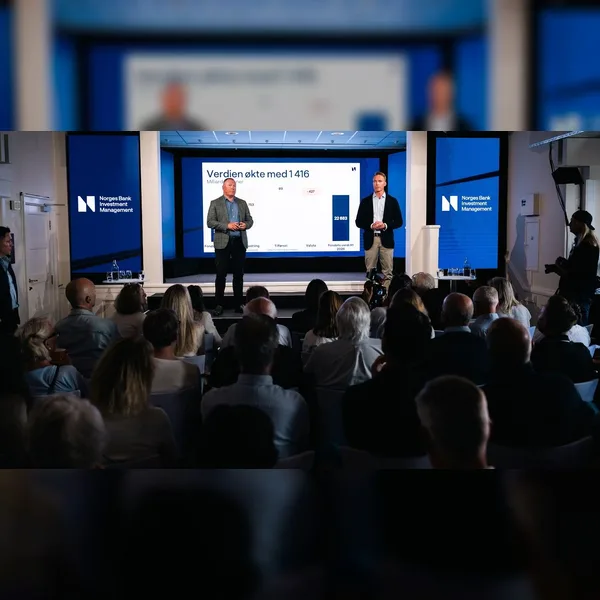
Oljefondet fikk en avkastning på 9,4 prosent i første halvår 2026, den høyeste kroneavkastningen i et halvår noensinne, på 1 753 milliarder kroner.
Aksjeinvesteringene ga 13,0 prosent avkastning, drevet særlig av asiatiske teknologiaksjer. Renteinvesteringene endte på 0,9 prosent, unotert eiendom på 3,0 prosent, mens unotert infrastruktur for fornybar energi falt 0,2 prosent.
En sterkere kronekurs trakk fondets verdi ned med 427 milliarder kroner, men tilførsel av 89 milliarder kroner og god avkastning gjorde at fondet likevel økte med 1 416 milliarder kroner i første halvår.
Ved utgangen av juni var fondet verdt 22 683 milliarder kroner, fordelt på 72,1 prosent aksjer, 25,8 prosent rentepapirer, 1,6 prosent unotert eiendom og 0,5 prosent unotert infrastruktur.
English below:
The fund returned 9.4 percent in the first half of 2026, the highest half-year krone return on record, at 1,753 billion kroner.
Equity investments returned 13.0 percent, driven in particular by Asian technology stocks. Fixed income returned 0.9 percent, unlisted real estate 3.0 percent, while unlisted renewable energy infrastructure fell 0.2 percent.
A stronger krone reduced the fund's value by 427 billion kroner, but inflows of 89 billion kroner combined with strong returns still pushed the fund's value up by 1,416 billion kroner for the half.
At the end of June, the fund was worth 22,683 billion kroner, split between 72.1 percent equities, 25.8 percent fixed income, 1.6 percent unlisted real estate, and 0.5 percent unlisted infrastructure.
Watch the press conference on the results for the first half of 2026, with NBIM CEO Nicolai Tangen.
43:18
Oljefondet fikk en avkastning på 9,4 prosent i første halvår 2026, den høyeste kroneavkastningen i et halvår noensinne, på 1 753 milliarder kroner.
Aksjeinvesteringene ga 13,0 prosent avkastning, drevet særlig av asiatiske teknologiaksjer. Renteinvesteringene endte på 0,9 prosent, unotert eiendom på 3,0 prosent, mens unotert infrastruktur for fornybar energi falt 0,2 prosent.
En sterkere kronekurs trakk fondets verdi ned med 427 milliarder kroner, men tilførsel av 89 milliarder kroner og god avkastning gjorde at fondet likevel økte med 1 416 milliarder kroner i første halvår.
Ved utgangen av juni var fondet verdt 22 683 milliarder kroner, fordelt på 72,1 prosent aksjer, 25,8 prosent rentepapirer, 1,6 prosent unotert eiendom og 0,5 prosent unotert infrastruktur.
English below:
The fund returned 9.4 percent in the first half of 2026, the highest half-year krone return on record, at 1,753 billion kroner.
Equity investments returned 13.0 percent, driven in particular by Asian technology stocks. Fixed income returned 0.9 percent, unlisted real estate 3.0 percent, while unlisted renewable energy infrastructure fell 0.2 percent.
A stronger krone reduced the fund's value by 427 billion kroner, but inflows of 89 billion kroner combined with strong returns still pushed the fund's value up by 1,416 billion kroner for the half.
At the end of June, the fund was worth 22,683 billion kroner, split between 72.1 percent equities, 25.8 percent fixed income, 1.6 percent unlisted real estate, and 0.5 percent unlisted infrastructure.
Watch the press conference on the results for the first half of 2026, with NBIM CEO Nicolai Tangen.
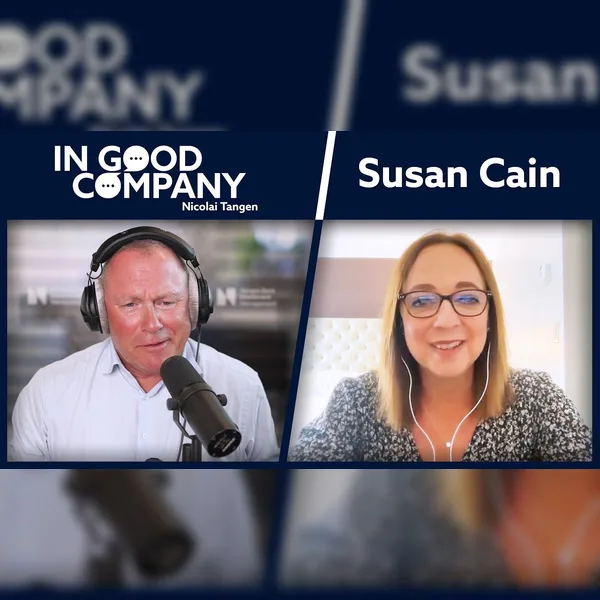
What does it take to thrive as a quiet person in a world that rewards the loudest voice? Nicolai Tangen sits down with Susan Cain, author of the bestsellers "Quiet" and "Bittersweet", whose work gave millions of introverts a voice. They explore why authenticity will be the great advantage in the age of AI, what defines the "highly sensitive" 15 to 20 percent of the population, and how our culture shifted from valuing character to valuing personality. Susan explains why introverted leaders often deliver stronger results, the hidden cost of "toxic positivity", and how she calibrates her own days to avoid burnout. She also reflects on the bittersweet outlook, the joy found in sorrow, and her advice on how young people can rediscover who they really are.
In Good Company is hosted by Nicolai Tangen, CEO of Norges Bank Investment Management. New episode out every Wednesday.
The podcast In Good Company is part of Norges Bank Investment Management, a podcast about our investments. We are transparent about how the fund is invested. In this podcast, you get a deeper insight into the companies the fund is invested in.
Our CEO, Nicolai Tangen, has in-depth interviews with the leaders of some of the largest companies in the world. You will get insight into their leadership principles, the company’s strategy and how they are dealing with a large investor like us. You will also learn more about our role as an owner of the companies.
You can read more about the podcast on https://www.nbim.no/en/publications/podcast/
38:15
What does it take to thrive as a quiet person in a world that rewards the loudest voice? Nicolai Tangen sits down with Susan Cain, author of the bestsellers "Quiet" and "Bittersweet", whose work gave millions of introverts a voice. They explore why authenticity will be the great advantage in the age of AI, what defines the "highly sensitive" 15 to 20 percent of the population, and how our culture shifted from valuing character to valuing personality. Susan explains why introverted leaders often deliver stronger results, the hidden cost of "toxic positivity", and how she calibrates her own days to avoid burnout. She also reflects on the bittersweet outlook, the joy found in sorrow, and her advice on how young people can rediscover who they really are.
In Good Company is hosted by Nicolai Tangen, CEO of Norges Bank Investment Management. New episode out every Wednesday.
The podcast In Good Company is part of Norges Bank Investment Management, a podcast about our investments. We are transparent about how the fund is invested. In this podcast, you get a deeper insight into the companies the fund is invested in.
Our CEO, Nicolai Tangen, has in-depth interviews with the leaders of some of the largest companies in the world. You will get insight into their leadership principles, the company’s strategy and how they are dealing with a large investor like us. You will also learn more about our role as an owner of the companies.
You can read more about the podcast on https://www.nbim.no/en/publications/podcast/
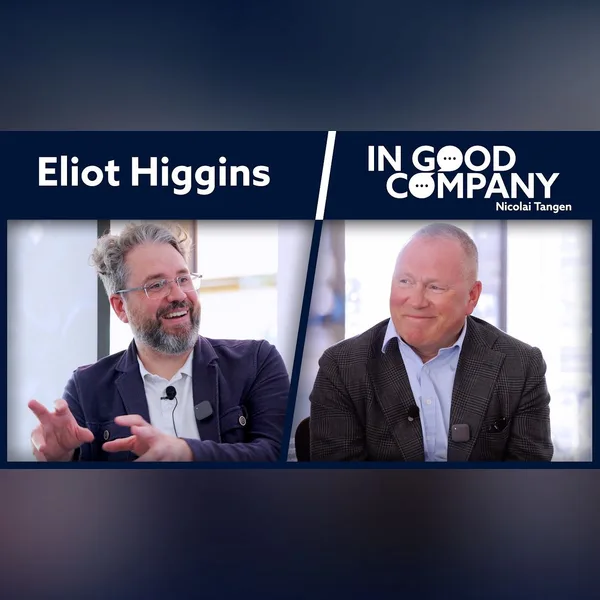
This live recorded episode of In Good Company features Eliot Higgins, founder of Bellingcat, the world's leading open source investigative collective — a self-taught college dropout who began tracking the Syrian war from his kitchen table. Together with Nicolai Tangen, he unpacks how his team unmasked Navalny's poisoners and tracked the downing of flight MH17 using nothing but publicly available data. Eliot explains the discipline at the heart of his work: never prejudge a situation, follow the evidence before forming an opinion, and guard against your own biases. The conversation also explores why speed matters when truth competes with lies, how AI gives people "permission to deny reality," and what disinformation means for democracy. Tune in for a fascinating conversation!
In Good Company is hosted by Nicolai Tangen, CEO of Norges Bank Investment Management. New episode out every Wednesday.
The podcast In Good Company is part of Norges Bank Investment Management, a podcast about our investments. We are transparent about how the fund is invested. In this podcast, you get a deeper insight into the companies the fund is invested in.
Our CEO, Nicolai Tangen, has in-depth interviews with the leaders of some of the largest companies in the world. You will get insight into their leadership principles, the company’s strategy and how they are dealing with a large investor like us. You will also learn more about our role as an owner of the companies.
You can read more about the podcast on https://www.nbim.no/en/publications/podcast/
39:36
This live recorded episode of In Good Company features Eliot Higgins, founder of Bellingcat, the world's leading open source investigative collective — a self-taught college dropout who began tracking the Syrian war from his kitchen table. Together with Nicolai Tangen, he unpacks how his team unmasked Navalny's poisoners and tracked the downing of flight MH17 using nothing but publicly available data. Eliot explains the discipline at the heart of his work: never prejudge a situation, follow the evidence before forming an opinion, and guard against your own biases. The conversation also explores why speed matters when truth competes with lies, how AI gives people "permission to deny reality," and what disinformation means for democracy. Tune in for a fascinating conversation!
In Good Company is hosted by Nicolai Tangen, CEO of Norges Bank Investment Management. New episode out every Wednesday.
The podcast In Good Company is part of Norges Bank Investment Management, a podcast about our investments. We are transparent about how the fund is invested. In this podcast, you get a deeper insight into the companies the fund is invested in.
Our CEO, Nicolai Tangen, has in-depth interviews with the leaders of some of the largest companies in the world. You will get insight into their leadership principles, the company’s strategy and how they are dealing with a large investor like us. You will also learn more about our role as an owner of the companies.
You can read more about the podcast on https://www.nbim.no/en/publications/podcast/
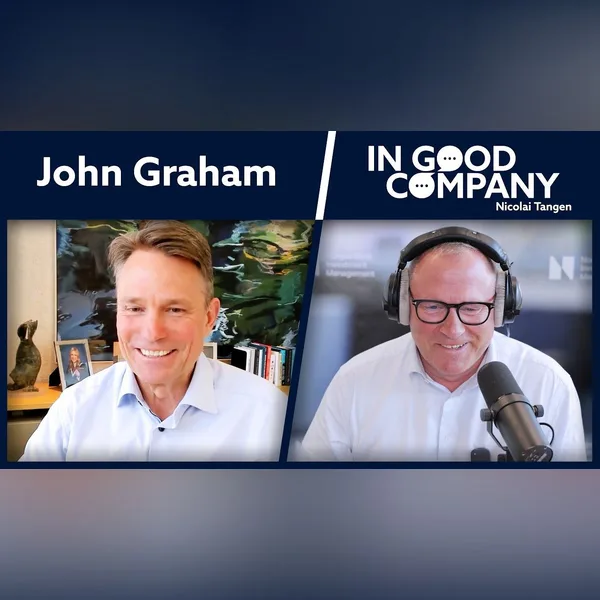
Canada's pension funds have become a blueprint for institutional investing worldwide, and John Graham runs the largest of them. Nicolai Tangen sits down with the CEO of CPP Investments, manager of $800 billion on behalf of 22 million Canadians, for a conversation spanning strategy and leadership. They explore the celebrated "Canadian model" and what imitators get wrong, why Graham calls diversification "an act of humility," and how CPP weighs private markets, the US, and China. A scientist before he was an investor, Graham reflects on leading through COVID, AI's uncertain role in investment decisions, and his belief that investing is "quantitative art" rather than science.
In Good Company is hosted by Nicolai Tangen, CEO of Norges Bank Investment Management. New episode out every Wednesday.
The podcast In Good Company is part of Norges Bank Investment Management, a podcast about our investments. We are transparent about how the fund is invested. In this podcast, you get a deeper insight into the companies the fund is invested in.
Our CEO, Nicolai Tangen, has in-depth interviews with the leaders of some of the largest companies in the world. You will get insight into their leadership principles, the company’s strategy and how they are dealing with a large investor like us. You will also learn more about our role as an owner of the companies.
You can read more about the podcast on https://www.nbim.no/en/publications/podcast/
44:03
Canada's pension funds have become a blueprint for institutional investing worldwide, and John Graham runs the largest of them. Nicolai Tangen sits down with the CEO of CPP Investments, manager of $800 billion on behalf of 22 million Canadians, for a conversation spanning strategy and leadership. They explore the celebrated "Canadian model" and what imitators get wrong, why Graham calls diversification "an act of humility," and how CPP weighs private markets, the US, and China. A scientist before he was an investor, Graham reflects on leading through COVID, AI's uncertain role in investment decisions, and his belief that investing is "quantitative art" rather than science.
In Good Company is hosted by Nicolai Tangen, CEO of Norges Bank Investment Management. New episode out every Wednesday.
The podcast In Good Company is part of Norges Bank Investment Management, a podcast about our investments. We are transparent about how the fund is invested. In this podcast, you get a deeper insight into the companies the fund is invested in.
Our CEO, Nicolai Tangen, has in-depth interviews with the leaders of some of the largest companies in the world. You will get insight into their leadership principles, the company’s strategy and how they are dealing with a large investor like us. You will also learn more about our role as an owner of the companies.
You can read more about the podcast on https://www.nbim.no/en/publications/podcast/
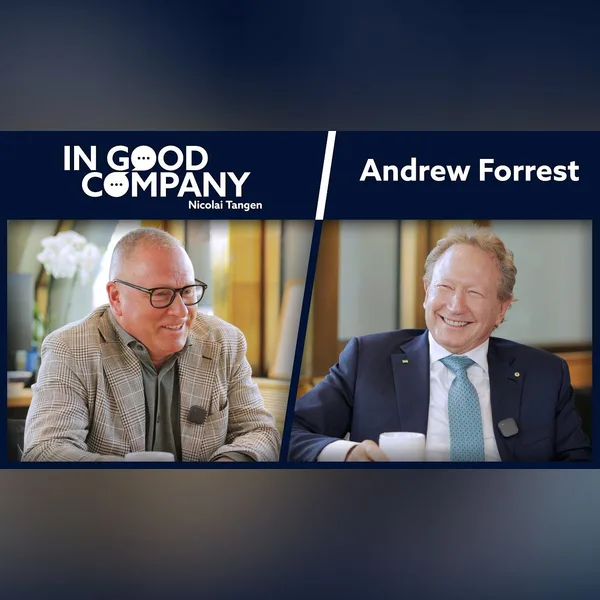
Nicolai Tangen sits down with Andrew Forrest, Chairman and CEO of Fortescue, to explore one of the most remarkable stories in modern business. From building a mining giant from scratch against a 60-year duopoly, to pledging to run the entire company on zero fossil fuels by 2030 with no offsets, Forrest has never been afraid to think big. They discuss his "crazy brave Plan A" philosophy, the role of AI in running smart energy grids, and his disagreements with some of the world's most powerful people over climate policy. Andrew also opens up about the accident that reshaped his priorities, his philanthropic mission tackling modern slavery and ocean conservation, and the simple advice that guides his life: be useful, and enjoy it.
In Good Company is hosted by Nicolai Tangen, CEO of Norges Bank Investment Management. New episode out every Wednesday.
The podcast In Good Company is part of Norges Bank Investment Management, a podcast about our investments. We are transparent about how the fund is invested. In this podcast, you get a deeper insight into the companies the fund is invested in.
Our CEO, Nicolai Tangen, has in-depth interviews with the leaders of some of the largest companies in the world. You will get insight into their leadership principles, the company’s strategy and how they are dealing with a large investor like us. You will also learn more about our role as an owner of the companies.
You can read more about the podcast on https://www.nbim.no/en/publications/podcast/
43:14
Nicolai Tangen sits down with Andrew Forrest, Chairman and CEO of Fortescue, to explore one of the most remarkable stories in modern business. From building a mining giant from scratch against a 60-year duopoly, to pledging to run the entire company on zero fossil fuels by 2030 with no offsets, Forrest has never been afraid to think big. They discuss his "crazy brave Plan A" philosophy, the role of AI in running smart energy grids, and his disagreements with some of the world's most powerful people over climate policy. Andrew also opens up about the accident that reshaped his priorities, his philanthropic mission tackling modern slavery and ocean conservation, and the simple advice that guides his life: be useful, and enjoy it.
In Good Company is hosted by Nicolai Tangen, CEO of Norges Bank Investment Management. New episode out every Wednesday.
The podcast In Good Company is part of Norges Bank Investment Management, a podcast about our investments. We are transparent about how the fund is invested. In this podcast, you get a deeper insight into the companies the fund is invested in.
Our CEO, Nicolai Tangen, has in-depth interviews with the leaders of some of the largest companies in the world. You will get insight into their leadership principles, the company’s strategy and how they are dealing with a large investor like us. You will also learn more about our role as an owner of the companies.
You can read more about the podcast on https://www.nbim.no/en/publications/podcast/
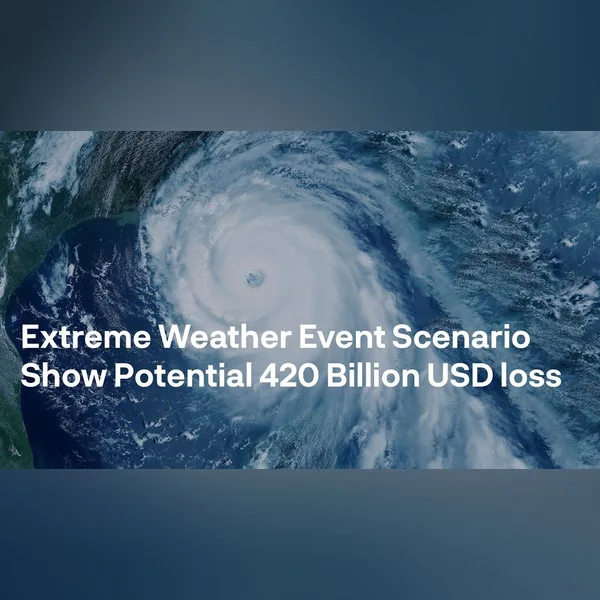
What would happen to the fund if extreme weather triggered a global food shock?
In our latest stress test, we estimate it could wipe around 20% off the fund's value — roughly USD 420 billion.
Here's how the scenario unfolds. Extreme weather hits two major food-producing regions at the same time, causing crop failures. Global food prices spike, and supply-chain disruptions slow growth while pushing inflation higher. Higher inflation feeds through to higher yields, which weigh on bonds — an estimated 10% fall in the fixed-income portfolio. Slower growth and higher yields then hit shares and dividends, an estimated 24% fall in the equity portfolio. Combined at the fund level, that adds up to a loss of around 20%, or about USD 420 billion (around NOK 4,250 billion).
To build a scenario like this, we look first at past events with similar characteristics, then anchor on studies that model how such shocks move the key economic variables. We apply those shocks to the fund as it is invested today.
These scenarios are entirely hypothetical — and far simpler than the real world, where shocks rarely happen in isolation. The point isn't to predict the future. It's to understand how different risks are connected, and to be prepared if severe but plausible events were to happen.
This is one of four scenarios in our 2025 stress testing, alongside an AI correction, a fragmented world and a regional debt crisis. We publish these analyses every year.
We manage the fund to safeguard and build financial wealth for current and future generations in Norway — and that means planning for the difficult years, not only the good ones.
📄 Read the full stress testing report: https://www.nbim.no/contentassets/c7d3b015300d48a1ac0136f069b9bed7/gpfg_stresstesting-2025.pdf
🌍 More about the fund: https://www.nbim.no
—
Norges Bank Investment Management manages the Government Pension Fund Global on behalf of the people of Norway. Follow us on LinkedIn, Instagram and YouTube.
#oljefondet #NBIM #stresstest
1:55
What would happen to the fund if extreme weather triggered a global food shock?
In our latest stress test, we estimate it could wipe around 20% off the fund's value — roughly USD 420 billion.
Here's how the scenario unfolds. Extreme weather hits two major food-producing regions at the same time, causing crop failures. Global food prices spike, and supply-chain disruptions slow growth while pushing inflation higher. Higher inflation feeds through to higher yields, which weigh on bonds — an estimated 10% fall in the fixed-income portfolio. Slower growth and higher yields then hit shares and dividends, an estimated 24% fall in the equity portfolio. Combined at the fund level, that adds up to a loss of around 20%, or about USD 420 billion (around NOK 4,250 billion).
To build a scenario like this, we look first at past events with similar characteristics, then anchor on studies that model how such shocks move the key economic variables. We apply those shocks to the fund as it is invested today.
These scenarios are entirely hypothetical — and far simpler than the real world, where shocks rarely happen in isolation. The point isn't to predict the future. It's to understand how different risks are connected, and to be prepared if severe but plausible events were to happen.
This is one of four scenarios in our 2025 stress testing, alongside an AI correction, a fragmented world and a regional debt crisis. We publish these analyses every year.
We manage the fund to safeguard and build financial wealth for current and future generations in Norway — and that means planning for the difficult years, not only the good ones.
📄 Read the full stress testing report: https://www.nbim.no/contentassets/c7d3b015300d48a1ac0136f069b9bed7/gpfg_stresstesting-2025.pdf
🌍 More about the fund: https://www.nbim.no
—
Norges Bank Investment Management manages the Government Pension Fund Global on behalf of the people of Norway. Follow us on LinkedIn, Instagram and YouTube.
#oljefondet #NBIM #stresstest
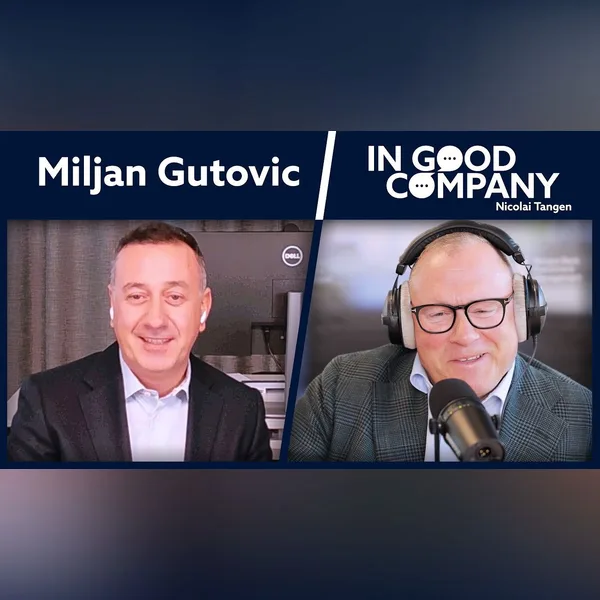
Where would the modern world be without cement? Nicolai Tangen sits down with Miljan Gutovic, CEO of Holcim, to explore the transformation underway in the global building materials industry. They discuss Europe's shortage of nearly 10 million homes and what it means for construction, how Holcim is turning sustainability into a competitive advantage, the logic behind spinning off its North American business, and the booming opportunity in Latin America. Gutovic also shares his three leadership rules: control the controllables, fight complacency, and benchmark relentlessly. Tune in for an insightful conversation!
In Good Company is hosted by Nicolai Tangen, CEO of Norges Bank Investment Management. New episode out every Wednesday.
The podcast In Good Company is part of Norges Bank Investment Management, a podcast about our investments. We are transparent about how the fund is invested. In this podcast, you get a deeper insight into the companies the fund is invested in.
Our CEO, Nicolai Tangen, has in-depth interviews with the leaders of some of the largest companies in the world. You will get insight into their leadership principles, the company’s strategy and how they are dealing with a large investor like us. You will also learn more about our role as an owner of the companies.
You can read more about the podcast on https://www.nbim.no/en/publications/podcast/
33:59
Where would the modern world be without cement? Nicolai Tangen sits down with Miljan Gutovic, CEO of Holcim, to explore the transformation underway in the global building materials industry. They discuss Europe's shortage of nearly 10 million homes and what it means for construction, how Holcim is turning sustainability into a competitive advantage, the logic behind spinning off its North American business, and the booming opportunity in Latin America. Gutovic also shares his three leadership rules: control the controllables, fight complacency, and benchmark relentlessly. Tune in for an insightful conversation!
In Good Company is hosted by Nicolai Tangen, CEO of Norges Bank Investment Management. New episode out every Wednesday.
The podcast In Good Company is part of Norges Bank Investment Management, a podcast about our investments. We are transparent about how the fund is invested. In this podcast, you get a deeper insight into the companies the fund is invested in.
Our CEO, Nicolai Tangen, has in-depth interviews with the leaders of some of the largest companies in the world. You will get insight into their leadership principles, the company’s strategy and how they are dealing with a large investor like us. You will also learn more about our role as an owner of the companies.
You can read more about the podcast on https://www.nbim.no/en/publications/podcast/
The first money was deposited on 30 May 1996, and since then the fund has grown from 2 billion kroner to a full 21,000 billion. The fund is Norway’s collective savings and is meant to benefit both current and future generations. Each year, a quarter of the national budget is covered by money from the fund.
At the same time, analyses show that the years ahead will be tougher for the Norwegian economy. Spending on areas such as health, care, pensions and defence will grow faster than revenues as early as 2029.
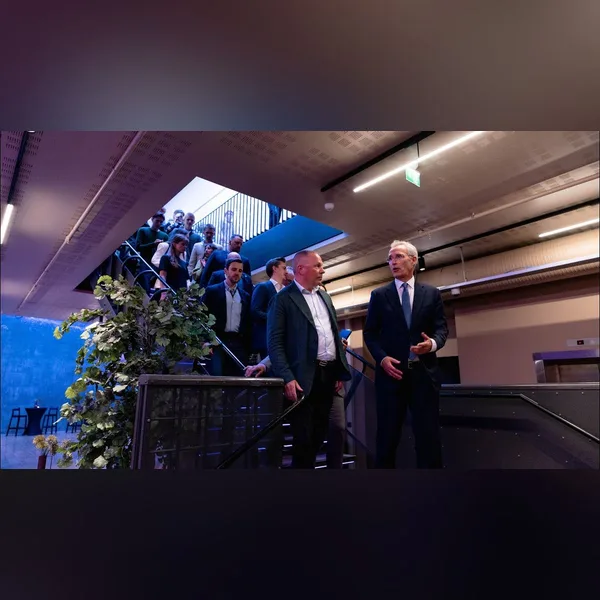
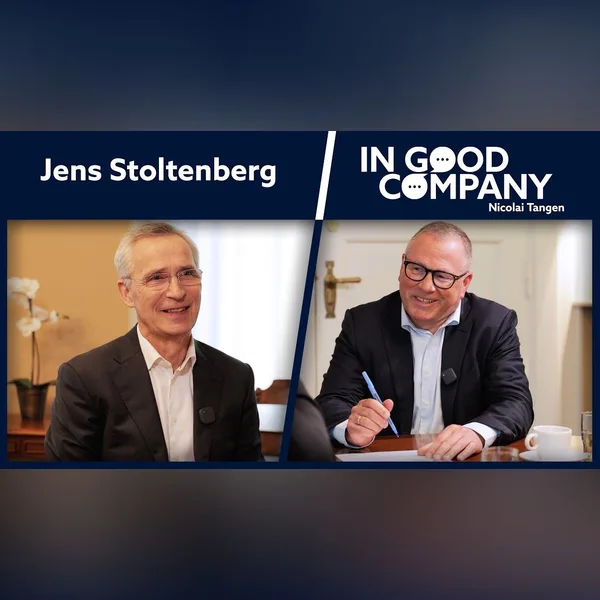
In this video, you’ll meet Minister of Finance Jens Stoltenberg, fund CEO Nicolai Tangen and Erlend Mørch from NRK in a debate about the fund and what kind of economy young Norwegians will inherit. Norges Bank Investment Management and the Ministry of Finance brought together students and teachers at Oslo Event Hub to learn more about the fund and discuss what the Norwegian economy will look like when today’s 17- and 18-year-olds enter adult life.
——————————————————————————————————
Oljefondet fyller 30 år. 30. mai 1996 ble de første pengene satt inni fondet. Siden har fondet vokst fra 2 milliarder kroner til hele 21 000 milliarder. Fondet er hele Norges sparegris og skal komme både nåværende og kommende generasjoner til gode. Hvert år dekkes en firedel av statsbudsjettet med penger fra fondet.
Samtidig viser analyser at det blir tøffere tak i norsk økonomi i årene som kommer. Utgifter til blant annet helse, omsorg, pensjon og forsvar vil vokse raskere enn inntektene allerede fra 2029.
I denne videoen møter du finansminister Jens Stoltenberg, oljefondsjef Nicolai Tangen og Erlend Mørch fra NRK til debatt om Oljefondet og hva slags økonomi norske ungdommer vil arve i fremtiden. Norges Bank Investment Management og Finansdepartementet samlet elever og lærere på Oslo Event Hub for å lære mer om fondet og diskutere hvordan norsk økonomi ser ut når dagens 17- og 18-åringer trer inn i voksenlivet.
1:27:59
The first money was deposited on 30 May 1996, and since then the fund has grown from 2 billion kroner to a full 21,000 billion. The fund is Norway’s collective savings and is meant to benefit both current and future generations. Each year, a quarter of the national budget is covered by money from the fund.
At the same time, analyses show that the years ahead will be tougher for the Norwegian economy. Spending on areas such as health, care, pensions and defence will grow faster than revenues as early as 2029.
In this video, you’ll meet Minister of Finance Jens Stoltenberg, fund CEO Nicolai Tangen and Erlend Mørch from NRK in a debate about the fund and what kind of economy young Norwegians will inherit. Norges Bank Investment Management and the Ministry of Finance brought together students and teachers at Oslo Event Hub to learn more about the fund and discuss what the Norwegian economy will look like when today’s 17- and 18-year-olds enter adult life.
——————————————————————————————————
Oljefondet fyller 30 år. 30. mai 1996 ble de første pengene satt inni fondet. Siden har fondet vokst fra 2 milliarder kroner til hele 21 000 milliarder. Fondet er hele Norges sparegris og skal komme både nåværende og kommende generasjoner til gode. Hvert år dekkes en firedel av statsbudsjettet med penger fra fondet.
Samtidig viser analyser at det blir tøffere tak i norsk økonomi i årene som kommer. Utgifter til blant annet helse, omsorg, pensjon og forsvar vil vokse raskere enn inntektene allerede fra 2029.
I denne videoen møter du finansminister Jens Stoltenberg, oljefondsjef Nicolai Tangen og Erlend Mørch fra NRK til debatt om Oljefondet og hva slags økonomi norske ungdommer vil arve i fremtiden. Norges Bank Investment Management og Finansdepartementet samlet elever og lærere på Oslo Event Hub for å lære mer om fondet og diskutere hvordan norsk økonomi ser ut når dagens 17- og 18-åringer trer inn i voksenlivet.
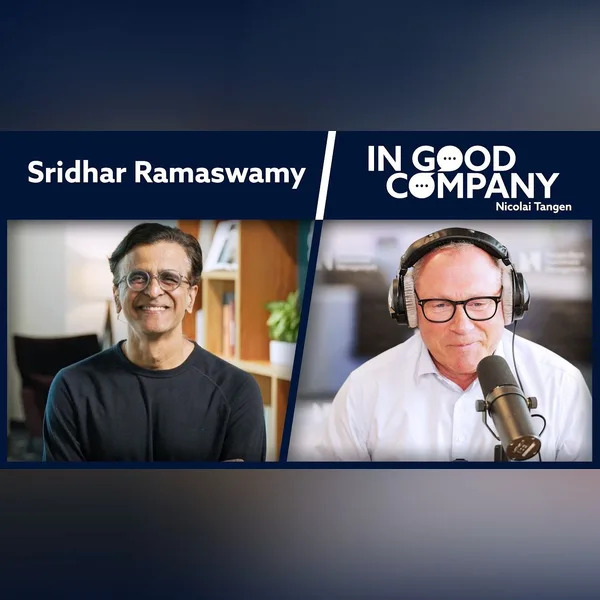
Nicolai Tangen sits down with Sridhar Ramaswamy, CEO of Snowflake, the data platform powering half the world's largest companies, to explore what's really happening at the frontier of data and AI. They dig into how Snowflake's consumption-based pricing sets it apart from traditional software models, why Sridhar now considers AI model companies a bigger competitive threat than anyone else in tech, and how AI agents are transforming everything from data pipelines to software engineering itself. Sridhar also reflects on the lessons learned from founding and failing with Neva, and shares the values of hard work, adaptability, and resilience that have shaped him from Tamil Nadu to the top of the tech industry. Tune in for an insightful conversation!
In Good Company is hosted by Nicolai Tangen, CEO of Norges Bank Investment Management. New episode out every Wednesday.
The podcast In Good Company is part of Norges Bank Investment Management, a podcast about our investments. We are transparent about how the fund is invested. In this podcast, you get a deeper insight into the companies the fund is invested in.
Our CEO, Nicolai Tangen, has in-depth interviews with the leaders of some of the largest companies in the world. You will get insight into their leadership principles, the company’s strategy and how they are dealing with a large investor like us. You will also learn more about our role as an owner of the companies.
You can read more about the podcast on https://www.nbim.no/en/publications/podcast/
29:17
Nicolai Tangen sits down with Sridhar Ramaswamy, CEO of Snowflake, the data platform powering half the world's largest companies, to explore what's really happening at the frontier of data and AI. They dig into how Snowflake's consumption-based pricing sets it apart from traditional software models, why Sridhar now considers AI model companies a bigger competitive threat than anyone else in tech, and how AI agents are transforming everything from data pipelines to software engineering itself. Sridhar also reflects on the lessons learned from founding and failing with Neva, and shares the values of hard work, adaptability, and resilience that have shaped him from Tamil Nadu to the top of the tech industry. Tune in for an insightful conversation!
In Good Company is hosted by Nicolai Tangen, CEO of Norges Bank Investment Management. New episode out every Wednesday.
The podcast In Good Company is part of Norges Bank Investment Management, a podcast about our investments. We are transparent about how the fund is invested. In this podcast, you get a deeper insight into the companies the fund is invested in.
Our CEO, Nicolai Tangen, has in-depth interviews with the leaders of some of the largest companies in the world. You will get insight into their leadership principles, the company’s strategy and how they are dealing with a large investor like us. You will also learn more about our role as an owner of the companies.
You can read more about the podcast on https://www.nbim.no/en/publications/podcast/
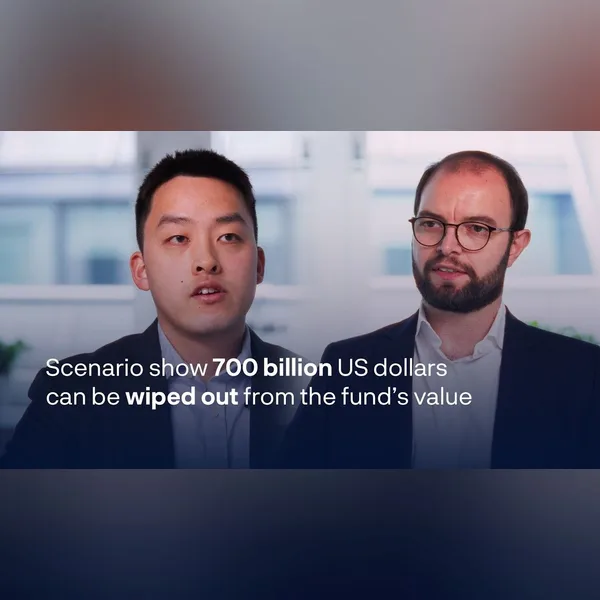
What might happen to the fund's value in a regional debt crisis?
Our 2025 stress test finds the fund could drop 32% in value — that's
around 700 billion dollars.
In this video, you learn more from Strategy Researchers Owen Yang and Andrea Nocera, based in our London office.
A regional loss of confidence in government bonds drives up political
uncertainty and long-term yields, with the shock rippling through global
markets.
We manage the fund with the aim of the highest possible return at moderate
risk. To achieve this, we need to identify, measure and manage the risks
the fund faces. We use multiple approaches:
📊 Risk metrics (tracking error and expected shortfall)
📊 Stress testing
📊 Concentration analysis
📊 Factor exposure
The stress test is a collaborative effort from our Strategy Research team
and our risk department, with input from our internal investment
professionals.
The full report is available here: https://www.nbim.no/contentassets/c7d3b015300d48a1ac0136f069b9bed7/gpfg_stresstesting-2025.pdf
#oljefondet
2:00
What might happen to the fund's value in a regional debt crisis?
Our 2025 stress test finds the fund could drop 32% in value — that's
around 700 billion dollars.
In this video, you learn more from Strategy Researchers Owen Yang and Andrea Nocera, based in our London office.
A regional loss of confidence in government bonds drives up political
uncertainty and long-term yields, with the shock rippling through global
markets.
We manage the fund with the aim of the highest possible return at moderate
risk. To achieve this, we need to identify, measure and manage the risks
the fund faces. We use multiple approaches:
📊 Risk metrics (tracking error and expected shortfall)
📊 Stress testing
📊 Concentration analysis
📊 Factor exposure
The stress test is a collaborative effort from our Strategy Research team
and our risk department, with input from our internal investment
professionals.
The full report is available here: https://www.nbim.no/contentassets/c7d3b015300d48a1ac0136f069b9bed7/gpfg_stresstesting-2025.pdf
#oljefondet
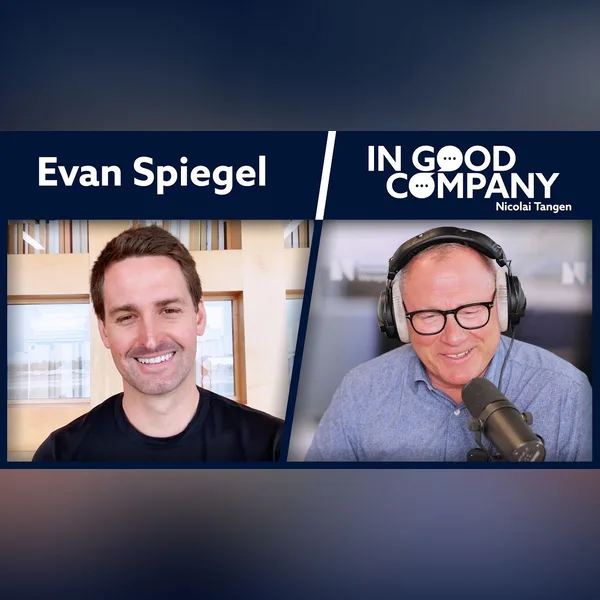
In this episode, Nicolai Tangen speaks with Evan Spiegel, co-founder and CEO of Snap, the company behind Snapchat. Evan reflects on building Snapchat from a Stanford dorm room idea into a platform used by nearly a billion people worldwide. They discuss why Evan turned down a $3 billion offer from Mark Zuckerberg, Snap's bold bet on augmented reality glasses, and how AI is transforming software development from the inside out. Evan also shares his leadership philosophy, built around kindness, creativity, and long-term thinking. Don't miss this conversation with one of Silicon Valley's most unconventional builders.
In Good Company is hosted by Nicolai Tangen, CEO of Norges Bank Investment Management. New episode out every Wednesday.
The podcast In Good Company is part of Norges Bank Investment Management, a podcast about our investments. We are transparent about how the fund is invested. In this podcast, you get a deeper insight into the companies the fund is invested in.
Our CEO, Nicolai Tangen, has in-depth interviews with the leaders of some of the largest companies in the world. You will get insight into their leadership principles, the company’s strategy and how they are dealing with a large investor like us. You will also learn more about our role as an owner of the companies.
You can read more about the podcast on https://www.nbim.no/en/publications/podcast/
0:00 Intro – Nicolai meets Evan Spiegel, co-founder and CEO of Snap
1:34 Building Snap from scratch
2:48 Why disappearing messages — and turning down Zuckerberg's offer
4:33 Building a culture of creativity and innovation
8:57 The biggest bet: augmented reality glasses
9:59 Why Snap will succeed where others have struggled with AR
13:13 Hardware, software, and what's slowing AR down
14:12 Non-negotiable culture values
17:30 The 2022 restructuring and what it did to the culture
22:07 How Evan has changed as a leader — and how AI is transforming Snap
27:28
In this episode, Nicolai Tangen speaks with Evan Spiegel, co-founder and CEO of Snap, the company behind Snapchat. Evan reflects on building Snapchat from a Stanford dorm room idea into a platform used by nearly a billion people worldwide. They discuss why Evan turned down a $3 billion offer from Mark Zuckerberg, Snap's bold bet on augmented reality glasses, and how AI is transforming software development from the inside out. Evan also shares his leadership philosophy, built around kindness, creativity, and long-term thinking. Don't miss this conversation with one of Silicon Valley's most unconventional builders.
In Good Company is hosted by Nicolai Tangen, CEO of Norges Bank Investment Management. New episode out every Wednesday.
The podcast In Good Company is part of Norges Bank Investment Management, a podcast about our investments. We are transparent about how the fund is invested. In this podcast, you get a deeper insight into the companies the fund is invested in.
Our CEO, Nicolai Tangen, has in-depth interviews with the leaders of some of the largest companies in the world. You will get insight into their leadership principles, the company’s strategy and how they are dealing with a large investor like us. You will also learn more about our role as an owner of the companies.
You can read more about the podcast on https://www.nbim.no/en/publications/podcast/
0:00 Intro – Nicolai meets Evan Spiegel, co-founder and CEO of Snap
1:34 Building Snap from scratch
2:48 Why disappearing messages — and turning down Zuckerberg's offer
4:33 Building a culture of creativity and innovation
8:57 The biggest bet: augmented reality glasses
9:59 Why Snap will succeed where others have struggled with AR
13:13 Hardware, software, and what's slowing AR down
14:12 Non-negotiable culture values
17:30 The 2022 restructuring and what it did to the culture
22:07 How Evan has changed as a leader — and how AI is transforming Snap
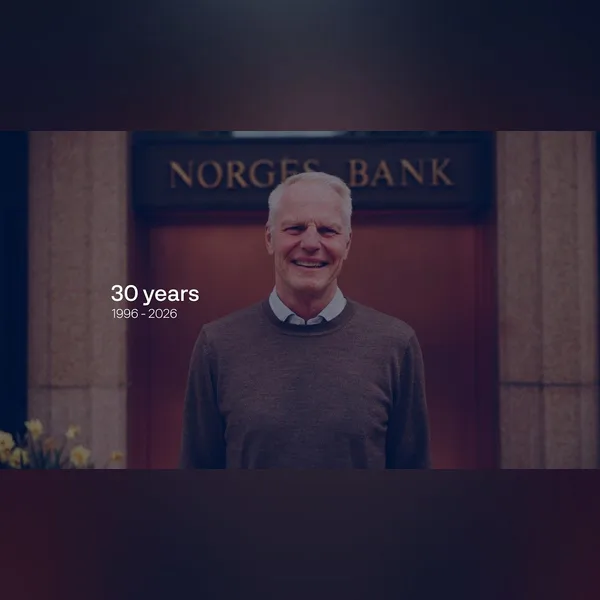
Today, May 30th 2026, marks 30 years since the first inflow to the Norwegian Sovereign Wealth Fund (NBIM). Erik Hilde was one of the portfolio managers handling the first ever transaction, and he still works here to this day.
On a bill dated May 30 1996, it states the transfer of enmilliardnihundreogåttienmillioneretthundreogtjueåttetusenfemhundreogto. In English, that’s about 2 billion Norwegian kroner.
30 years later, the fund manages 2 trillion dollars on behalf of the people of Norway.
1:55
Today, May 30th 2026, marks 30 years since the first inflow to the Norwegian Sovereign Wealth Fund (NBIM). Erik Hilde was one of the portfolio managers handling the first ever transaction, and he still works here to this day.
On a bill dated May 30 1996, it states the transfer of enmilliardnihundreogåttienmillioneretthundreogtjueåttetusenfemhundreogto. In English, that’s about 2 billion Norwegian kroner.
30 years later, the fund manages 2 trillion dollars on behalf of the people of Norway.
Jesper Brodin served as Chief Executive Officer of Ingka Group, the largest IKEA retailer, from 2017 until November 2025, following a career with IKEA spanning more than 30 years. Before becoming CEO, Jesper was Managing Director at IKEA of Sweden, responsible for the development of the product range and supply chain of the IKEA brand.
Jesper began his IKEA career in Pakistan in 1995 as a purchase manager, later becoming Regional Purchase Manager for Southeast Asia. In 1999, he served as assistant to both IKEA founder Ingvar Kamprad and then-CEO Anders Dahlvig.
Jesper serves as Chair of The B Team and Co-Chair of the UN Global Compact, advocating for a future where purpose and profit go hand in hand. In 2024, he was named one of TIME's 100 most influential people.
Jesper holds a Master's degree in Industrial Engineering from Chalmers University of Technology, Sweden.
13:15
Jesper Brodin served as Chief Executive Officer of Ingka Group, the largest IKEA retailer, from 2017 until November 2025, following a career with IKEA spanning more than 30 years. Before becoming CEO, Jesper was Managing Director at IKEA of Sweden, responsible for the development of the product range and supply chain of the IKEA brand.
Jesper began his IKEA career in Pakistan in 1995 as a purchase manager, later becoming Regional Purchase Manager for Southeast Asia. In 1999, he served as assistant to both IKEA founder Ingvar Kamprad and then-CEO Anders Dahlvig.
Jesper serves as Chair of The B Team and Co-Chair of the UN Global Compact, advocating for a future where purpose and profit go hand in hand. In 2024, he was named one of TIME's 100 most influential people.
Jesper holds a Master's degree in Industrial Engineering from Chalmers University of Technology, Sweden.
Mr. Rubenstein is Co-Founder and Co-Chairman of the Board of Carlyle, one of the world’s largest and most diversified global investment firms. Previously, Mr. Rubenstein served as Co-Chief Executive Officer of Carlyle.
Among other philanthropic endeavors, Mr. Rubenstein is Chairman of the Boards of the Council on Foreign Relations, the National Gallery of Art, the Economic Club of Washington, and the University of Chicago; a Trustee of Memorial Sloan-Kettering Cancer Center, the Institute for Advanced Study, the Brookings Institution, and the World Economic Forum; an Emeritus Trustee of Johns Hopkins Medicine; and a Director of Moderna, Inc. and the American Academy of Arts and Sciences.
Mr. Rubenstein is a magna cum laude graduate of Duke University, where he was elected Phi Beta Kappa. Following Duke, Mr. Rubenstein graduated from the University of Chicago Law School, where he was an editor of the Law Review.
8:07
Mr. Rubenstein is Co-Founder and Co-Chairman of the Board of Carlyle, one of the world’s largest and most diversified global investment firms. Previously, Mr. Rubenstein served as Co-Chief Executive Officer of Carlyle.
Among other philanthropic endeavors, Mr. Rubenstein is Chairman of the Boards of the Council on Foreign Relations, the National Gallery of Art, the Economic Club of Washington, and the University of Chicago; a Trustee of Memorial Sloan-Kettering Cancer Center, the Institute for Advanced Study, the Brookings Institution, and the World Economic Forum; an Emeritus Trustee of Johns Hopkins Medicine; and a Director of Moderna, Inc. and the American Academy of Arts and Sciences.
Mr. Rubenstein is a magna cum laude graduate of Duke University, where he was elected Phi Beta Kappa. Following Duke, Mr. Rubenstein graduated from the University of Chicago Law School, where he was an editor of the Law Review.
What does it take to build a culture that performs, not just once, but consistently over time? 🏆
At this year’s Annual Investment Conference, we explored what a winning culture really means across leadership and investing.
Sustained performance is rarely about talent alone. It depends on trust, ownership and the ability to keep improving, even when results are strong.
For the fund, long term thinking shapes how we invest, how we work together and how we continue to build a culture that can evolve over time 🌐
Watch the video with Anders Meland, reflecting on the habits, behaviours and leadership principles that help shape high-performing cultures over time 🎥
hashtag#Oljefondet
0:44
What does it take to build a culture that performs, not just once, but consistently over time? 🏆
At this year’s Annual Investment Conference, we explored what a winning culture really means across leadership and investing.
Sustained performance is rarely about talent alone. It depends on trust, ownership and the ability to keep improving, even when results are strong.
For the fund, long term thinking shapes how we invest, how we work together and how we continue to build a culture that can evolve over time 🌐
Watch the video with Anders Meland, reflecting on the habits, behaviours and leadership principles that help shape high-performing cultures over time 🎥
hashtag#Oljefondet
Christel Heydemann was appointed Chief Executive Officer of the Orange group on April 4, 2022.
She began her career in 1999 at Alcatel, where she held various management positions. In 2011, she was promoted to Director of Human Resources and Transformation and member of the Executive Committee.
Christel Heydemann joined Schneider Electric in 2014. In 2017, she became Executive Director France Operations of Schneider Electric and member of Schneider Electric’s Executive Committee. In 2021, she was named Director Europe Operations, a position she held until the beginning of 2022 when she became Chief Executive Officer of the Orange group, having served as a member of its Board of Directors since 2017.
She is a graduate of École Polytechnique and École Nationale des Ponts et Chaussées. Christel Heydemann is an Officer of the French Order of Merit and a Knight of the French Legion of Honor.
17:05
Christel Heydemann was appointed Chief Executive Officer of the Orange group on April 4, 2022.
She began her career in 1999 at Alcatel, where she held various management positions. In 2011, she was promoted to Director of Human Resources and Transformation and member of the Executive Committee.
Christel Heydemann joined Schneider Electric in 2014. In 2017, she became Executive Director France Operations of Schneider Electric and member of Schneider Electric’s Executive Committee. In 2021, she was named Director Europe Operations, a position she held until the beginning of 2022 when she became Chief Executive Officer of the Orange group, having served as a member of its Board of Directors since 2017.
She is a graduate of École Polytechnique and École Nationale des Ponts et Chaussées. Christel Heydemann is an Officer of the French Order of Merit and a Knight of the French Legion of Honor.
Karin Rådström has been Chief Executive Officer of Daimler Truck since October 2024. She previously served as a Member of the Board of Management responsible for Mercedes-Benz Trucks from February 2021 until her appointment as CEO. She brings extensive international experience in the commercial vehicles industry and a strong track record in building customer-focused sales organisations.
Prior to joining Daimler Truck, Karin spent 16 years at Scania, where she was most recently a member of the Executive Board responsible for sales and marketing. She held various managerial positions within Scania's sales and service organisation, including Head of the bus and coach business and leading the launch of the connected vehicle business.
Karin serves as a Board Member of Atlas Copco since April 2024. She holds a Master of Engineering in Industrial Management from the Royal Institute of Technology in Stockholm.
--
Jesper Brodin – Former Chief Executive Officer of Ingka Group
Jesper Brodin served as Chief Executive Officer of Ingka Group, the largest IKEA retailer, from 2017 until November 2025, following a career with IKEA spanning more than 30 years. Before becoming CEO, Jesper was Managing Director at IKEA of Sweden, responsible for the development of the product range and supply chain of the IKEA brand.
Jesper began his IKEA career in Pakistan in 1995 as a purchase manager, later becoming Regional Purchase Manager for Southeast Asia. In 1999, he served as assistant to both IKEA founder Ingvar Kamprad and then-CEO Anders Dahlvig.
Jesper serves as Chair of The B Team and Co-Chair of the UN Global Compact, advocating for a future where purpose and profit go hand in hand. In 2024, he was named one of TIME's 100 most influential people.
Jesper holds a Master's degree in Industrial Engineering from Chalmers University of Technology, Sweden.
--
Ajay Banga has been President of the World Bank Group since June 2023, leading the institution's transformation with a new vision to create a world free of poverty on a liveable planet.
Prior to joining the World Bank, Ajay was Vice Chairman at General Atlantic and, before that, President and CEO of Mastercard for 12 years, where he led a global workforce of nearly 24,000 and made financial inclusion a core part of the company's strategy. He founded the Mastercard Center for Inclusive Growth to advance equitable and sustainable economic opportunity. Earlier in his career, Ajay spent 13 years at Nestlé India and held senior leadership positions at Citigroup, including CEO of the Asia-Pacific region.
Ajay served as Chairman of the International Chamber of Commerce from 2020 to 2022 and is a co-founder of the Cyber Readiness Institute. He was awarded the Padma Shri by the President of India in 2016.
Ajay holds a Bachelor's degree in Economics from St. Stephen's College, University of Delhi, and an MBA from the Indian Institute of Management Ahmedabad.
--
Roula Khalaf – Editor of the Financial Times
Roula Khalaf has been Editor of the Financial Times since 2020. She previously served as Deputy Editor, overseeing a range of newsroom initiatives and award-winning editorial projects while leading a global network of over 100 foreign correspondents.
Before becoming Deputy Editor, Roula was the FT's Foreign Editor, overseeing operations in Europe, Africa and the Middle East. As Middle East Editor, she launched a Middle East edition and led coverage of the Arab Spring. She joined the FT in 1995 as North Africa correspondent, having previously been a staff writer for Forbes magazine in New York.
Roula is a Board Member of the Committee to Protect Journalists. She was named Foreign Commentator of the Year at the Editorial Intelligence Comment Awards in 2016.
25:00
Karin Rådström has been Chief Executive Officer of Daimler Truck since October 2024. She previously served as a Member of the Board of Management responsible for Mercedes-Benz Trucks from February 2021 until her appointment as CEO. She brings extensive international experience in the commercial vehicles industry and a strong track record in building customer-focused sales organisations.
Prior to joining Daimler Truck, Karin spent 16 years at Scania, where she was most recently a member of the Executive Board responsible for sales and marketing. She held various managerial positions within Scania's sales and service organisation, including Head of the bus and coach business and leading the launch of the connected vehicle business.
Karin serves as a Board Member of Atlas Copco since April 2024. She holds a Master of Engineering in Industrial Management from the Royal Institute of Technology in Stockholm.
--
Jesper Brodin – Former Chief Executive Officer of Ingka Group
Jesper Brodin served as Chief Executive Officer of Ingka Group, the largest IKEA retailer, from 2017 until November 2025, following a career with IKEA spanning more than 30 years. Before becoming CEO, Jesper was Managing Director at IKEA of Sweden, responsible for the development of the product range and supply chain of the IKEA brand.
Jesper began his IKEA career in Pakistan in 1995 as a purchase manager, later becoming Regional Purchase Manager for Southeast Asia. In 1999, he served as assistant to both IKEA founder Ingvar Kamprad and then-CEO Anders Dahlvig.
Jesper serves as Chair of The B Team and Co-Chair of the UN Global Compact, advocating for a future where purpose and profit go hand in hand. In 2024, he was named one of TIME's 100 most influential people.
Jesper holds a Master's degree in Industrial Engineering from Chalmers University of Technology, Sweden.
--
Ajay Banga has been President of the World Bank Group since June 2023, leading the institution's transformation with a new vision to create a world free of poverty on a liveable planet.
Prior to joining the World Bank, Ajay was Vice Chairman at General Atlantic and, before that, President and CEO of Mastercard for 12 years, where he led a global workforce of nearly 24,000 and made financial inclusion a core part of the company's strategy. He founded the Mastercard Center for Inclusive Growth to advance equitable and sustainable economic opportunity. Earlier in his career, Ajay spent 13 years at Nestlé India and held senior leadership positions at Citigroup, including CEO of the Asia-Pacific region.
Ajay served as Chairman of the International Chamber of Commerce from 2020 to 2022 and is a co-founder of the Cyber Readiness Institute. He was awarded the Padma Shri by the President of India in 2016.
Ajay holds a Bachelor's degree in Economics from St. Stephen's College, University of Delhi, and an MBA from the Indian Institute of Management Ahmedabad.
--
Roula Khalaf – Editor of the Financial Times
Roula Khalaf has been Editor of the Financial Times since 2020. She previously served as Deputy Editor, overseeing a range of newsroom initiatives and award-winning editorial projects while leading a global network of over 100 foreign correspondents.
Before becoming Deputy Editor, Roula was the FT's Foreign Editor, overseeing operations in Europe, Africa and the Middle East. As Middle East Editor, she launched a Middle East edition and led coverage of the Arab Spring. She joined the FT in 1995 as North Africa correspondent, having previously been a staff writer for Forbes magazine in New York.
Roula is a Board Member of the Committee to Protect Journalists. She was named Foreign Commentator of the Year at the Editorial Intelligence Comment Awards in 2016.